

Digitalisation: not my business?
Kalmars Frank Kho explains the benefits that increased digitalisation brings to the port sector
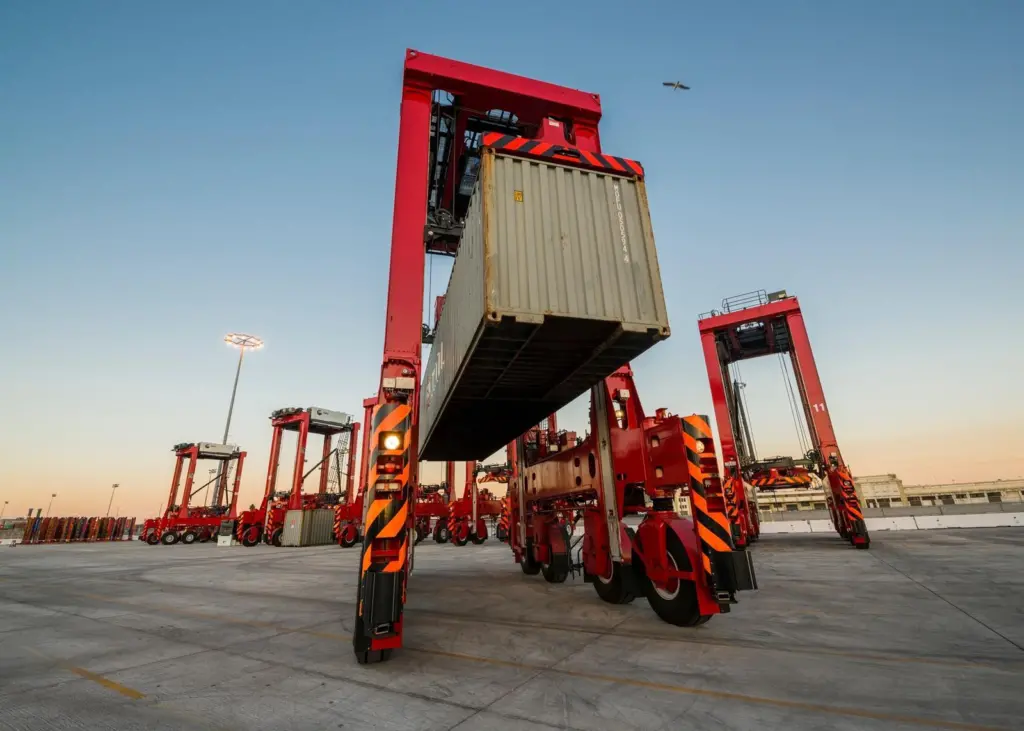
Heavy industry, construction, mining and transportation have been the most recent sectors to be hit by the waves of digitalisation that have already transformed industries such as retail trade, financial services and entertainment. While the container industry is one of the last late adopters of digitalisation, but it will, inevitably, follow follow suit.
Just because you happen to work in a field that deals primarily with containers and heavy equipment, don’t think that digitalisation is not your business – it is. ‘This doesn’t concern me’ is a notion that few can afford in today’s networked world.
Certainly, digitalisation will have a big impact on our industry, but more as a tool and a means rather than a fundamental game changer.
The core business of a terminal operator is to move boxes as efficiently as possible and to earn a profit for stakeholders. A terminal operator will not invest in new solutions just for the sake of digitalisation; there has to be a solid business case behind measuring how technology improves safety, sustainability and overall terminal productivity. On top of that, the risks of implementing new technology need to be understood and managed properly.
If a terminal operator’s view is that digitalisation is not their business, the output of digitalisation is. Suppliers like Kalmar need to prove that new solutions enabled by digitalisation will bring better returns for the terminal operator.
Gadget man
At an entry level, digitalisation is about gadgets. It’s about collecting information and creating better tools to manage growing complexity. It is about linking hardware to smart systems that optimise equipment usage and maintenance. Remote and cloud-based solutions are available for monitoring, diagnostics, testing and optimisation.
As an example, the Kalmar SmartFleet process automation solution improves operational transparency and reduces downtime through remote equipment monitoring and reporting. Bromma GreenZone applications help prioritise spreader maintenance operations and detect, understand and resolve potential problems before they become real problems. Xvela is the latest example of a cloud-based collaboration platform helping the shipping industry optimise vessel stowage.
Terminal automation is also gaining ground, not only through greenfield projects but also in existing terminals. An essential part in an automation project is a digital ecosystem to build and maintain an automated terminal. The ability to simulate, emulate, test and pre-integrate system components is crucial to ensure smooth and efficient deployment of new technology and compatibility of all systems. Remote connection enables 24/7 testing during the project and after the delivery in the optimisation and maintenance phases – even when the supplier and the terminal operator are on the other side of the world.
It is certainly true that new technology greatly increases the possibilities to improve container logistics. And the potential is there to achieve far greater productivity with fewer resources, lower emissions and enhanced safety – ultimately, optimised terminal performance over its lifetime.
It is up to the port industry as a whole to have the understanding and openness to see how new technology can create improvement opportunities for business. So ask not whether ditigalisation concerns you, but instead how digitalisation concerns you.
Frank Kho is vice president, offering development at Kalmar, www.kalmarglobal.com.
Related Articles
 PORT TALK
 PORT TALK
 PORT TALK