

Integrate with information
ABBs Fredrik Johansson and Björn Henriksson explain why integration can meet changing container trade dynamics
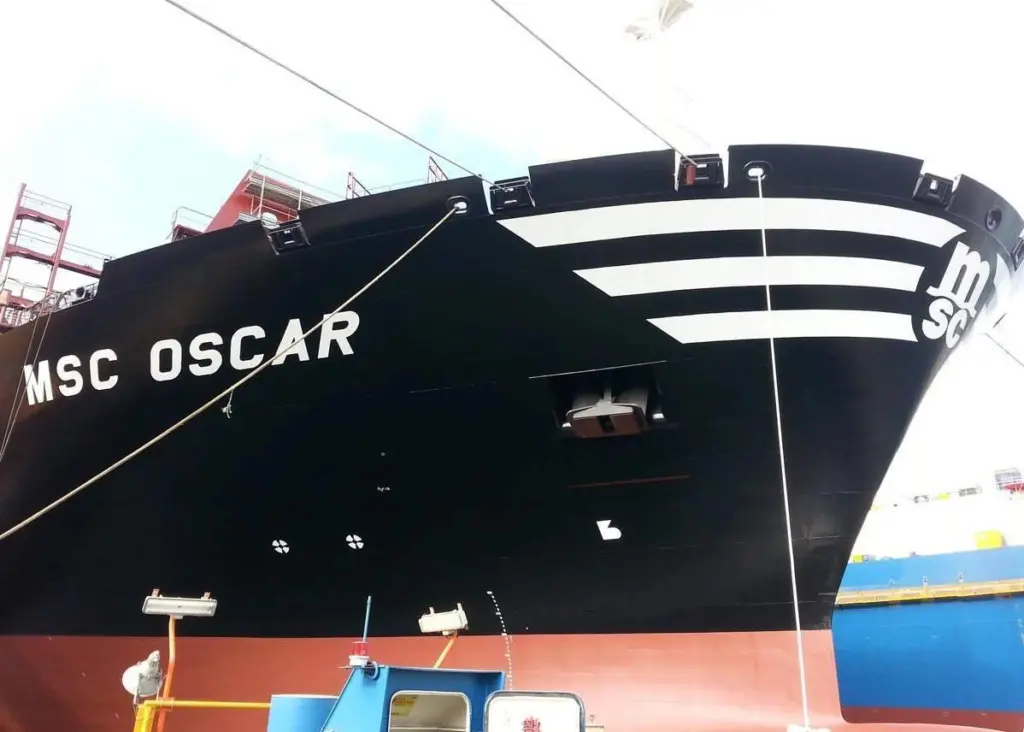
Many terminal operators are currently making the necessary investments to meet the challenge of larger ships and the subsequent high peaks of containers that need to be handled. Taller cranes with double hoisting and double trolleys are being ordered just to keep up with changing shipping patterns and yet the size of ships continues to increase – the first 24,000 teu ship is probably not too far away.
Increasing ship sizes, accelerated cascading, and a reduction in the number of loops on the main trades have meant that container terminals now must constantly toggle between low activity and high peak periods. These, and other contributing factors, have created new competitive and operating environments for container terminals.
Clearly, container terminals will need to keep on top of productivity under these circumstances in order to stay competitive. Some ports have already taken steps to address this with changes to crane design and the introduction of automation in response to these new challenges.
With automation and remote supervision already standard in stacking cranes, quay cranes are now becoming more automated, and thus more intelligent. Intermodal cranes are also starting to be equipped with the same automation functionalities as stacking cranes and unmanned units are starting to be introduced.
Through automation and connectivity both intermodal and quay cranes are becoming part of an equipment network that is capable of handling real-time information and then acting on it. With the addition of automatic horizontal transport, everyone is getting ‘online’.
The various types of cranes are being increasingly equipped with the capability to collect information, identify and verify both containers and vehicles. This enables an automated container hand-off at transfer points that is faster and more reliable than a manual hand-off. Information has become an integral part of the process and the driver for more efficient and safer container handling in terminals.
Beyond the container
So container terminal operations are no longer solely about the container; they are now also about the information on the container received at all the hand-off points and the effective utilisation of that information to create a more efficient and reliable process that has the ability to move a large number of containers from ship to gate and vice versa, as fast as possible. Ideally, information should arrive with the hand-off point before the container reaches it so that the next piece of equipment in chain can use the information to optimise the next steps in the process.
How can the different systems and equipment in this integrated process contribute to speed, efficiency and reliability? Here’s an example of how: the TOS submits all known work orders at once to intelligent cranes. The intelligent cranes optimise the execution of the work orders and react on changes in a distributed work order list. They also automatically handle the sequence exceptions based on dynamic calculations of handover positions to balance the workload of the equipment involved.
Intelligent cranes interface with not only the TOS but also with the vehicle control system, kiosks and gate systems. With the information from these systems and real-time information of its own position, the intelligent crane can take decisions that optimise the whole chain of actions instead of just an individual action.
In our example, the intelligent stacking cranes are able to respond to varying seaside and landside volumes and ensure timely delivery of containers for quay and rail terminal processes. The scheduling function allows optimisation of the use of the cranes within the block based on all known work orders and time constraints. This improves productivity and reduces empty travel and, consequently, also energy consumption.
On the quay side, intelligent quay cranes can exchange information about bay/tier/cell locations in real-time for faster loading and discharging, and to optimise moves. They can also collect accurate stowage information in real-time and notify the TOS of possible mis-stows. This information can be handed over to the shipping line in a standard BAPLIE format.
This type of intelligent system calls for centralising of employees to a control room where they supervise, handle all exceptions in a unified way, and work with analysis to eliminating bottlenecks in the process.
This example shows how information is key to creating integrated processes for safer, more efficient and reliable container handling in the terminals of tomorrow and throughout the logistics chain. Information can be used as a basis for exploring innovative ways to optimise container flow, tasks and responsibilities of different systems and equipment in a terminal.
Fredrik Johanson is general manager of marketing and sales at ABB Crane Systems. He joined ABB in 1984 as a systems design engineer and has long and versatile experience on electrification and automation of cranes. Björn Henriksson is the global technology manager of ABB Port Systems. He joined ABB in 2001 as an R&D engineer and has long and versatile experience on electrification and automation of cranes.
Related Articles
 PORT TALK
 PORT TALK
 PORT TALK