


Air quality: top of the environmental agenda?
Scientific research into air pollution at ports and climate change was top of the agenda at the HAQCC 2008 conference in Rotterdam, organised earlier this year. Sef van den Elshout of the DCMR Environmental Protection Agency in Rijnmond, reports.
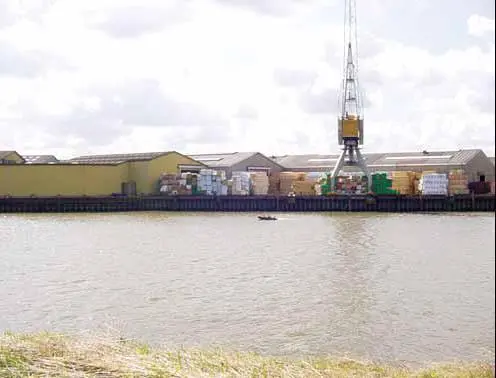
The 2nd international, scientific conference on Harbours, Air Quality and Climate Change was held in Rotterdam on 29-30 May 2008. A total of 130 participants, representing 17 countries or international institutions, convened for this two-day event. The purpose of the conference was to present and discuss recent scientific studies, experiences and developments in policy concerning air pollution and climate change with specific attention to shipping and port-industrial areas. The program comprised 41 talks and 17 posters (accessible at www.haqcc.org). Most of the participants came from countries near busy shipping routes in Europe (Baltic Sea, North Sea and the Mediterranean); and also work from China, Russia and Ghana was presented.
Hot topic
For this second conference on harbours and air quality, climate change was specifically added to the agenda. The latter is not only a “hot” topic – the subjects of air quality and climate change also have many linkages. The two can – and should – be seen in conjunction, as was stressed in the welcome address by Jan van den Heuvel, director of DCMR EPA, one of organising parties. The opening speech was given by André Toet, Chief Operations Officer of the Port of Rotterdam Authority. Toet stated that the port of Rotterdam might no longer be the biggest port, but it certainly wants to be the best port; sound environmental and climate policies are part and parcel of that ambition. Environmental management is also needed to continue to grow as a port. Legislation increasingly sets ceilings to emissions and conditions to ambient environmental quality. Emission reductions and other environmental innovations are therefore essential to avoid exceeding limit values and accommodate further growth. The container terminal in the planned port extension will, environmentally, be the cleanest terminal in the world. Both opening speakers also welcomed the proposals made by the Environment Protection Committee of the IMO early this year to further reduce the sulphur content of marine fuel in the near future. Low sulphur fuel is good for air quality in coastal areas, often the site of large population centres, as was shown in one of the papers. However, rules have to be enforced and a number of presentations dealt with methods of measuring shipping emissions from a distance, providing a tool to police the existing sulphur control areas (SECA) and future emission standards for ships. Cleaning-up marine fuels might be good for air quality but it has an important climate drawback as it leads to higher CO2 emissions. A study by ECN analysed both aspects and estimates that 40% of the extra CO2 needed to produce these clean fuels is compensated by increased engine efficiency. They also assumed that the high prices of these fuels will lead to additional energy efficiency measures by the sector, further diminishing the negative climate aspects of producing clean marine fuels.
The port-industrial challenge
Port-industrial regions are complex areas. They are inter-modal knots where different forms of transport are connected. They are preferred sites for industries transforming raw materials and for power plants. Often, big cities are nearby. This mix of functions goes hand in hand with a mix of sources, making both the management as well as the correct assessment of air quality a challenging task. A number of papers addressed methodological issues such as: improving emission measurements, source apportionment of emissions, integrated models, emission reductions, avoiding nuisance, remote sensing, etc. Ports are energy hubs: oil, coal, gas, biomass arrive for further transshipment and on the spot use in industry and power plants. Reducing CO2 footprints in port-industrial areas might seem difficult but opportunities exist. Often there are opportunities to reuse excess heat and CO2 Capture and Storage (CCS) provides an interim solution until a more profound energy transition can be made. In port-industrial areas the technology and critical mass to explore and implement these possibilities is often available. In a number of cases, offshore empty gas fields with existing pipelines are an additional advantage, increasing the feasibility and acceptance of CCS.
A number of presentations addressed the potential of CCS. It was noted that at current CO2 prices CCS is not yet feasible but pilots are needed to test and improve the technology. The downside of CCS is that the process itself costs energy, potentially leading to additional emissions of air pollutants.
Linking air pollution and climate
An overview of air pollution and climate linkages was given by TNO. Though some measures are good for both (energy savings) this is not always the case. For example, the use of biomass reduces the use of non-renewable CO2 sources but leads to different, and not necessarily less, air pollution. A lot of the greenhouse gas reduction technology is relatively new and emission factors for the use of biomass, biofuels and for CCS will have to be watched carefully in the coming years. Climate change also leads, depending on where you are on the globe, to weather conditions that might favour extra formation of secondary aerosol and ozone. As an example a model calculation was done for the Netherlands using 2003 data (an exceptionally unfavourable year that might be an average year by 2050) showing that air quality improvements achieved by costly emission reduction programs can be simply offset by changing weather conditions. A case study from China further demonstrated the link between air pollution and climate. In the Pearl River delta the emission of particulate matter potentially has a four times higher climate forcing effect
than the emissions of CO2. Currently the emission of cooling and warming particulates appear in equilibrium but the composition of the emitted aerosols is, from a climate point of view, a delicate balance. Energy efficiency is an increasing concern in China, if not from a climate change perspective, simply to meet ever-growing energy demand at the current high prices. Other speakers mentioned as well that the current energy prices are a blessing in disguise both for the air quality and climate concerns.
Emission inventories
Several papers dealt with emission inventories for shipping both at sea, while maneuvering and at berth. They still exhibit large variations due to the enormous variety of ship, engine and fuel combinations that occur. Combining emission inventories with modeling and checking results with remote sensing (airplanes, satellites) shore based monitoring and even a seagoing monitoring station aboard a Mediterranean cruise ship (as presented by JRC) is an ongoing effort to improve insight in the environmental impact of the sector. Though several technical measures to reduce emissions were presented (fuels, exhaust gas cleaning), other aspects were discussed as well: better planning and communication avoiding waiting times in ports, shifting onward transport by trucks to off-peak hours, speed reduction, incentive schemes (Green Award), training of crew members, etc. Some examples of linkages between air quality and climate (source: Timmermans et al.)
Synergies Opposite effects
Reduction of methane emissions Less particulates
+ less greenhouse gas + better air quality
+ less ozone formation – faster warming of atmosphere
Reduction of industrial and Biofuels
transport emissions + less CO2 emissions
+ less greenhouse gas – more particulates (more VOCs)
+ less SOX, NOX and particulates Use of diesel fuel
Reduction of soot emissions + less CO2 emissions
+ less health impacts – more soot emissions
+ less warming of atmosphere – faster warming of atmosphere
The 1st and 2nd Harbours and Air Quality Conferences were organised by groups of people concerned about, and involved in this issue. The Group is hoping that another port, university or environmental agency will come forward to organise a third conference. For further information, visit www.haqcc.org or email haqcc@dcmr.nl
Related Articles
 REGULATION & POLICY GREENPORT
 REGULATION & POLICY GREENPORT
 REGULATION & POLICY GREENPORT