

Showcasing the development of Indian ports
The first GreenPort South Asia Conference, organised by Mercator Media, took place in Mumbai from 20 to 21 March with as aim to be a catalyst in driving forward the green agenda in maritime ports and terminals across the South Asia region. A few weeks prior to the conference, GreenPort editor Daniëlla Arbyn Havugimana spoke to Shri. L. Radhakrishnan, Chairman of Jawaharlal Nehru Port Trust, the Supporting Port Authority for the conference, to find out how the port has been dealing with climate change so far.
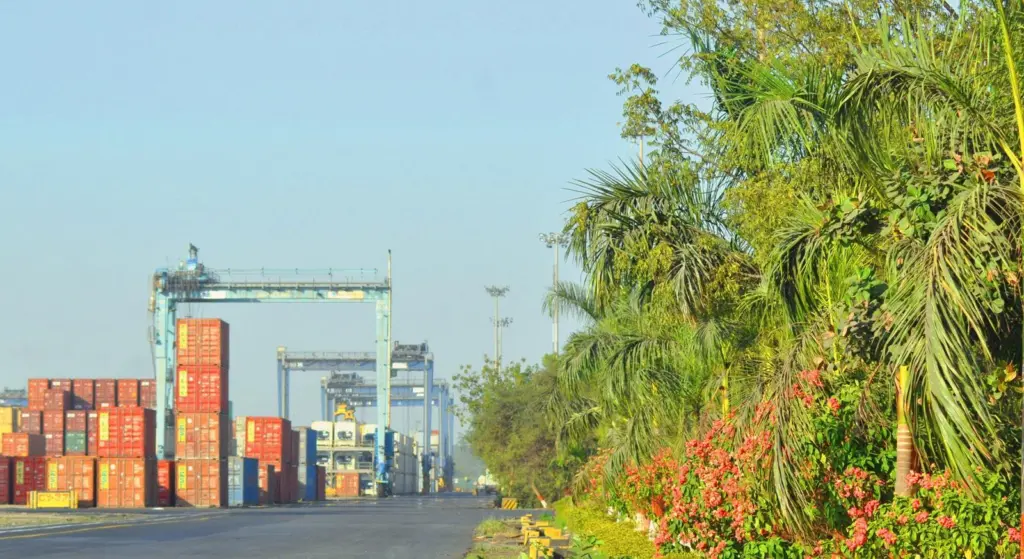
Shri. L. Radhakrishnan has been Chairman of the Jawaharlal Nehru Port Trust (JNPT) since 2010. Before joining JNPT, Shri. Radhakrishnan was the Secretary-General for Water Resources in the Kerala Government and Chairman of the Kerala Water Authority. Furthermore, he has been Trustee of the Cochin port Trust, Managing Director & CEO of Vizhinjam International Seaport Ltd. and Secretary-General of both the Power and Ports Departments of the Kerala State Power Finance & Infrastructure Corporation.
What are the characteristics of Jawaharlal Nehru Port and which projects are currently under development?
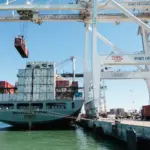
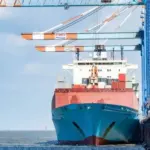
Jawaharlal Nehru Port (JN Port) is the largest solid cargo handling port of India which also handles around 50% of the container movement in and out of India. The port handled about 4.5 Million TEUs traffic this year and stands at the 26th position in the world container port rank. The port is planning a considerable increase in its cargo handling capacity for container as well as for other cargo like liquid cargo, chemical, break bulk etc. Furthermore, the port is revisiting its master plan in order to address the pressure to join the global supply chain and to respond to the demands from various stakeholders. The port has undertaken various expansion projects like the development of 5th Mega Container Terminal, the Liquid Terminal (of 10 m TEU p.a. capacity) and the Break Bulk berths (of 75 to 100 million tonnes p.a. capacity). In the coming year the port expect to award the 4th container terminal project which will add 5 million TEUs p.a. capacity. In order to facilitate the movement of post panamax ships having a capacity of more-than 6000 TEUs, the port has started deepening works up to 14 meters and the widening of its channel, which will be conducted in different phases. Phase 1 of the deepening is being carried out by M/s. Boskalis International b.v. and phase 2 is likely to be taken up by the end of 2014. The second phase, which is being designed by M/s. Tata Consulting Engineers and Ernst &Young, will deepen the channel to 17 meters.
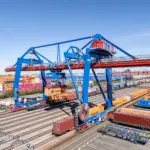
The port is also upgrading its container handling equipment, which will provide the port with more capacity and improve the port operational efficiency. On the land side, the port is also planning adequate evacuation facilities to the hinterland like the road network and railway connectivity. A Dedicated Freight Corridor (DFC) from JN Port to the Delhi capital region is currently under implementation and is expected to provide for the transport of 50% of the cargo from the port in the coming decade. Finally, two out of the three port’s container terminals are operated by private operators through the Build, Operation & Transfer (BOT) mode. For improved facilities for stakeholders and port based industries, a Special Economic Zone (SEZ) and Multi Model Logistic Park (MMLP) are to be implemented in the next two years in the port area. About 3 km of quay length is to be built based on PPP for non-container cargo, converting JN Port to a multipurpose rather than container focused port. These facilities will enhance the Port’s traffic status and efficiency.
Which are currently the most promising projects?
All our up-coming projects are very promising. The 4th Container Terminal project, which has been broken up into 2 projects, will be bid out in March 2013 and is expected to be completed 3 years after the signing of the concession agreement. This will add 5 million TEUs. p.a., increasing the current port capacity by 150%. The reconstruction of JN Port to a multipurpose port is also strategically very important.
The renovation is expected to be completed in around 3 years’ time adding 75 to 100 million tonnes per annum capacity in break bulk, bulk cargo, ro-ro, coastal shipping cargo and chemicals handling, converting the port into a full fledged multi-purpose port.
The Special Economic Zones (SEZ) project, which was announced in April 2000 with a view to attract larger foreign investments in India, is significant and can be expected to contribute substantially to the core business of the port while adding value to infrastructure for exports/imports and logistics industries. Moreover, different port city infrastructure and commercial buildings are also to be built. Given that 2700 acres land is earmarked for this, by the end of the decade, a full-fledged port city will be developed.
When projecting further into the future, we are confident that the 5th container terminal, adding 10 million TEUs per annum capacity will definitely lead JN Port into the league of large world class ports.
How does Jawaharlal Nehru Port Trust deals with climate change?
The port believes in planning and operations based on sustainability principles. Port operations are examined and improved upon with respect to the perspective of energy savings and zero effluent emissions. The port not only aims to obtain economic efficiencies, but also to focus on ecological and social stability. Environmental protection is an integrated aspect in JN Port’s planning and operations.
A third of the port’s area i.e. about 2100 acres of land consist of natural and planted forest/mangroves. The port is also addressing the ballast water issue and hosted therefore a seminar in 2011 about the issue, in which port’s officers have been given training regarding ballast water management. Furthermore, we ensure that ships submit their ballast water data before they call at the port. Jawaharlal Nehru Port’s environmental quality is being monitored since 1992 through prominent institutes like IIT Bombay. The port’s Environmental Management Plan (EMP) is based on various statutory requirements and guidelines specified by the Indian Ministry of Environment and Forest (MOEF). Within the Environmental Management Plan, the port monitors the ambient noise and air quality, marine water quality, marine ecology sewage water, drinking water quality etc. Any non-conformity is addressed by taking corrective and preventive measures.
The port also follows international conventions regarding port operations. Jawaharlal Nehru Port has taken up initiatives to reduce its carbon foot print by switching over to non-conventional energy, which is used in port operations. Street lights are being replaced by LED lights, solar energy is used in some of the port’s buildings to minimise conventional energy needs. Furthermore, the port is in the process of acquiring a wind energy farm with a capacity of 7 MW. In the 1st phase, 50% of the port’s total requirement will be met through wind power.
These are other measures which are underway:
➢ Monitoring excessive use of lights and air conditioners,
➢ Introducing water and energy conservation plans like:
Water harvesting in port buildings;
The use of treated STP water for gardening;
Solid waste management;
The development of eco friendly buildings;
The conservation and storage of fresh water;
The use of solar energy to illuminate offices.
Our private terminal operators are also implementing environmental measures in a significant way by:
• Introducing Compressed Natural Gas (CNG) buses for the staff;
• Harvesting rain water during the monsoon season e.g. at the engineering department’s workshop shed, using the catchment area of the workshop’s rooftop;
• Renovating the conventional incandescent, High Pressure Sodium Vapour (HPSV) and mercury based lamps to Light Emitting Diode (LED) lamps used for terminal and equipments due to which energy is saved up to 60%. Furthermore, motion sensors were installed, which automatically switches off the light when not required;
• Environmental awareness and tree plantation commitments that are regularly carried out inside the terminal premises;
• Regular school visits, which are organised through tree plantation, role plays and games, in order to spread the environmental awareness;
• The setting up of a Solar Power System at the engineering workshop;
• The development of the wasteland into a lush green lawn of about 3,600 square meters;
• The implementation of a two-speed operation of RTG engines as the engine runs at idle speed only when no operation is performed and managed in order to reduce huge fuel consumption;
• RTGCs that are specially designed with Variable Speed Generators due to which the speed of the engine varies according to the load of the container and whereby the fuel consumption is reduced when compared to engines with Fixed Speed as in conventional RTGCs;
• ElectromiZer’ panels for yard area illumination circuits to reduce the electrical energy consumption. The `ElectromiZer’ is a voltage step-down equipment which applies reduced voltage to lighting circuits and decreases the power consumed by light fittings;
• Used Engine Oils and Gear Box Oils, which are recycled using filtration methods (stages of filtration) and reused for lubricating the engine parts which has resulted in the enhancement of the lifespan of oil by 60% without compromising on the quality;
• An Oil Water Separator Unit, which is installed in the workshop area to ensure that the contaminated water due to oil mixtures does not enter storm water drains. This is to avoid pollution in the marine environment;
• PUC (Pollution Under Control) check for all Internal Container Handling Equipments and Vehicles to ensure that the ambient air is prevented from getting polluted by controlling the emission levels so that the parameters are within the permissible limits settled by the local pollution control board. The Port plans ICD (Inland Container Depot) movement of about 50% which will reduce the environmental pollution due to road traffic and it will also reduce the number of accidents on the roads.
Are environmentally responsible and sustainable operations new for the Port?
Jawaharlal Nehru Port is aware about the sustainable development and operation services since the start of its port operations and it had prepared a detailed Environmental Impact Analysis about 30 years ago and obtained environmental clearance for it. The port had set a trend in the Indian port sector to address environmental aspects even before the commencement of any other project of the port. In addition, the port achieved the ISO 14001 and 20000 standards and the OHSAS standards.
In the EU and U.S., alternative fuel and hybrid programmes appear to be at the hart of many of the Port’s environmental initiatives. Is this similar for India?
The concept of using alternative fuel and hybrid programmes as environmental initiatives for port facilities is at a conceptual stage in India. There are three main ways to implement this in the port, i.e. by using Compressed Natural Gas (CNG), the use of Bio Fuel and using additives in fuel (Diesel):
1) Using CNG in port operations: the use of CNG in port equipment like RTGC has its own limitations because the CNG can not generate high power required to handle the cargo. CNG can be used for buses and light vehicles for which energy production in the engine is comparatively less. In India, the CNG distribution network is not adequate. Near the port, there is no CNG pump available and it takes about 25 km to reach a gas station to refuel cars and busses. This is a big constrain in having vehicles running on CNG in the port area. However, some of the buses, which are run by private terminals, are using CNG. I believe the Government of India should take the initiative to improve the CNG distribution network so that it will facilitate more CNG driven buses and light vehicles;
2) The use of Bio Fuel: as far as bio fuel is concerned, the fuel is not proved to be suitable for high power energy generation which will be operating for more than 5 to 6 hrs. continuously. The main disadvantage of bio fuel is that it creates very high wear and tear of the engine parts like rubber gaskets etc., even engines get damaged very quickly. In the JN port, the use of bio fuel has not been taken up because of the above-mentioned constrains. However, bio fuel can be used for passenger transport or for light port crafts, if the use is cost effective;
3) The use of additives in fuel (Diesel): the use of suitable additives in fuel, which is already the case in foreign countries, is being tested by the port’s private terminal operator, on experimental basis for running Rubber-Tyre Gantry Cranes (RTGCs) and other port equipment. It is expected that along with the environmental protection, fuel will be saved through the use of additives in diesel. As far as the green initiative is concerned, diesel with additive is an essential concept to be looked into. The Government of India should take the initiative in this direction and distribute diesel with additives, so that it can also be implemented for light vehicles. This will help improving the air quality in the port.
In spring 2013, the first GreenPort South Asia Conference will take place in Mumbai. What impact will this event have on the Indian Port business?
The first GreenPort South Asia Conference will make a great impact on the ‘green’ port business in India. The port sector will certainly adopt sustainability planning and development in its working and business policies. The various aspects highlighted in the conference, are expected to showcase the developments of Indian ports. The port sector’s stakeholders, media, academic and other organisations and authorities will get the chance to adopt ideas and concepts that will be presented at the event in order to improve the environmental quality in and around ports and throughout the whole logistic chain. In its Maritime agenda 2020, the Indian Ministry of Shipping has already addressed and recommended a ‘Green Port’ concept for all major ports in India.
Which projects will you present at the event?
We have a presentation of the JNPT proposal for the development of the 7MW capacity wind energy project. The electrical power consumption of JNPT is around 60 to 70 lakh units per month and Maharashtra State Electricity Distribution Co., Ltd (MSEDCL) is the service provider of electricity to JNPT. At present, the operational activities of JNPT are categorised under the “commercial” tariff and the unit rate of power is Rs.15/- to Rs.16/- per unit.
Keeping the ‘green’ initiatives in mind, for Phase 1, it is considered to generate half of the required electrical power of JNPT through renewable sources, especially, through the wind energy plant, which is the most economical among all the renewable energy sources.
JNPT has engaged C-WET Chennai, which is a Government Technical Society under the Ministry of Renewable Energy (MNRE) of the India Government and M/s. ITCOT consultancy Services Chennai, which is a deemed Government organisation, to provide the required advisory services to JNPT and the advisors have already submitted the techno-feasibility study report and draft tender.
The total estimated cost for setting up the 7 MW wind farm in Maharashtra State is 478 million Indian Rupees, with a net annual electricity generation of 154 lakh units. The indicated Internal Rate of Return (IRR) is 25.45% and the payback period is estimated to be 3.5 years. The completion of the project is expected to be at the end of the financial year 2013-14. The total reduction in carbon footprint is expected to be about 50,000 tonnes per annum; furthermore, the port may also opt for carbon trading.
Related Articles
 ASIA GREENPORT
 ASIA GREENPORT
 ASIA GREENPORT