

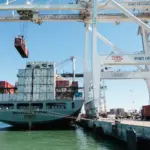




Chinese shipping company fined for violating regulations
The California Air Resources Board (ARB) has fined the China Navigation Co. Pte. Ltd. $129,500 for failing to switch its engines over from heavy diesel bunker fuel to cleaner, low-sulphur fuel when close to the California coast, as required by state law.

On December 28, 2012, an ARB inspector found that the vessel Chenan, managed by the China Navigation Co. Pte. Ltd., operated within regulated California waters (i.e. 24 miles or less from the coast) on noncompliant heavy fuel oil on 12 separate days (four voyages) between August 5 and December 28, 2012, while en route to and departing from the Port of Los Angeles.
Todd Sax, ARB enforcement division chief, said: “Ships using heavy diesel fuels are a significant contributor to California’s air quality problems, even in communities located far from our coast.”
“That’s why we check vessels nearly every day to ensure that they are compliant with our strict clean air laws. When we identify a violation, we educate the fleet owner and crew on how to comply with our requirements, and we assess penalties as a deterrent to future noncompliance,” he added.
The China Navigation Co. Pte. Ltd. took prompt action and cooperated with the investigation. In addition to paying a fine, the company agreed to comply with all fuel switchover requirements and to keep accurate records in the future.
The ARB conducts an estimated 800 to 1,000 ship inspections each year, checking for proper fuel usage, record-keeping and other compliance requirements. Part of the inspection involves sampling each vessel’s fuel, and analysing the fuel sample for compliance with ARB fuel sulphur requirements.
The Ocean Going Vessel Fuels Regulation, adopted in 2008, eliminates 15 tonnes of diesel exhaust daily from ocean-going vessels, and is considered a vital tool in helping to reduce cancer rates and premature deaths associated with living near the state’s busy ports and trade corridors.
Related Articles
 REGULATION & POLICY GREENPORT
 REGULATION & POLICY GREENPORT
 REGULATION & POLICY GREENPORT