

A ‘window of opportunity’ for Beira
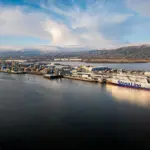
The port city of Beira holds a good spot as it sits where the Pungue River meets the Indian Ocean, but growth and climate change issues are having an impact, writes Stevie Knight.
Land to meet domestic needs and infrastructure such as the port are all under pressure from Beira’s rising economy. Alongside this, urban development has been poorly regulated and further, Mozambique’s second larges city is facing serious climatic and weather-related threats. So Beira is facing a tight knot of challenges which need action now: the planning and infrastructure has to be sorted out before it’s all gone too far.
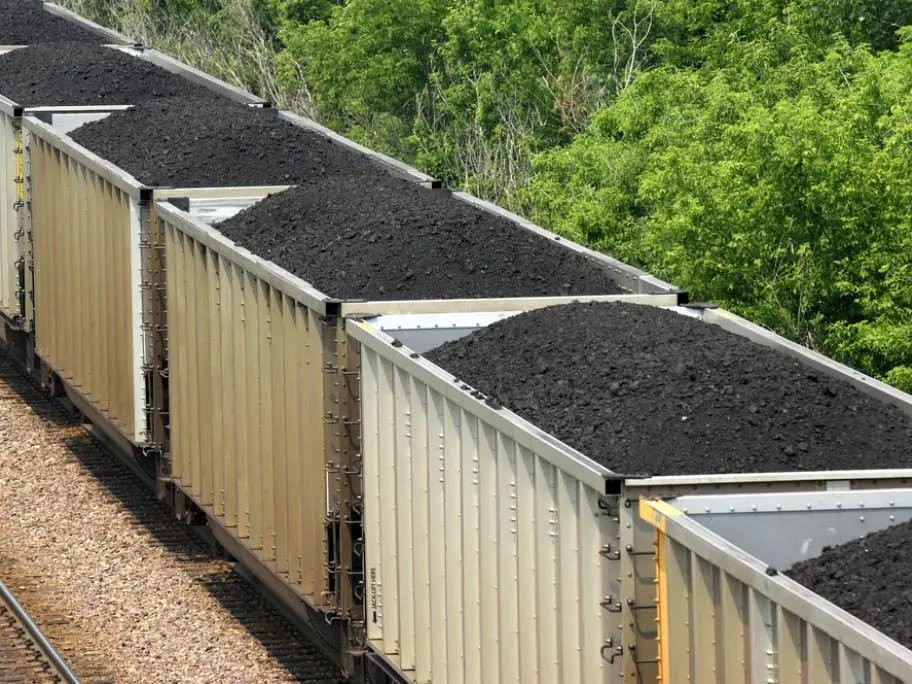
Peter Letitre, Deltares’ project leader explains the interwoven nature of the issues. He says that while Beira has always been an important hinterland connection, intensive coal mining 600km away means rising volumes through Beira’s dedicated coal terminal and preparations are underway to expand transhipment and export capacity to approximately 20 million tonnes a year.
Further, more mineral, oil and gas reserves have been found in Beira’s hinterland, and although these may not be as large as initially thought, the port also looks like gaining from a planned rise in agriculture on its doorstep; there are big plans for export-market hydroponic produce that will need a route out of the country. All this will push the envelope for the port’s 11 berths which despite being open 24 hours-a-day have had to restrict night navigation to vessels below 7m draught and LOA of 140m.
Water, economics and politics
Needless to say, the expansion of activities will have a major impact beyond the port on Beira’s infrastructure and the city itself. However, water remains a central issue in more ways than one.
Mr Letitre points out that as the city is just a few metres above sea level it is at risk from climate change: even at present intensive rainfall and sea level rises have combined to create regular flooding. At the beginning of the year, the usual six Vale and Rio Tinto coal trains per day were cancelled through the combined impact of a derailment and the washing away of around 800 metres of rails, sleepers and even small bridges. Speed restrictions were put in place, impacting heavily on exports. It also has to be added that another recent threat to the railways has come from the political agenda with Renamo, the opposition party, which has said that it will ‘paralyse’ coal corridor in an attempt to gain political leverage against the Communist ruling party and seems to have already carried out one attack. Further, Rio Tinto – at time of writing – is looking at a possible sale of its assets.
Despite all this, Beira has opportunities for growth springing out of connections with Zimbabwe and Botswana which promise much. Until now, though, there’s been one main issue: it’s not a naturally deep port and sediment means it needs continuous dredging and until recently the coal carried along the Sena railroad from Moatize to Beira had to be transferred by barge out to the waiting ships.
Reduce ship waiting
But all this is coming to an end as the port has recently invested in a dredger that will clear the so-called Macuti bend, ensuring a depth of at least 8m in the fairway and allowing ships weighing up to 60,000 tonnes to use the port. This will reduce the ship waiting times that had reached several days and bolster the coal terminal construction project.
Further, location counts for a lot, so if you compare naturally deep Macau and Durban with Beira, you are looking at a much shorter overland stretch points out Mr Letitre. Rerouting the nearby coal or agribulk through Macau means goods have to pass through an extra 14,00km of hinterland and get across Malawi, “Not such an attractive idea.”
So Beira has a ‘window of opportunity’ to get itself sorted out. Mr Letitre explains: “Law enforcement has, in the past, been very weak which makes urban planning difficult. The organisational level needs to develop here, in order to support the physical infrastructure.” So, projects such as land reclamation which have to go hand in hand with coastal protection schemes are being worked on as much as possible in the public eye, involving both general and private business stakeholders in their development.
‘Your development, your future’
He points out: “Involve both people and businesses in the selection of these projects, and there’s more chance they will be seen all the way through.” After all, he says if it’s ‘your development’ and ‘your future’ you’ll be less likely to put up with someone simply selling on a vital parcel of land marked out for infrastructure for private housing: something that has happened in the past.
“Many parties do see that this initiative is an opportunity, because development is growing rapidly,” he says, but there’s a warning. “If a port like Beira doesn’t get its planning and infrastructure sorted out the side effects will take hold: it’s not just that roads get very congested with heavy goods, it also puts a strain on other areas. For example, if you look at Maputo, you can see that rents on houses have also shot up and people are suffering from the effects of inflated pricing: for the average person these developments are definitely not positive.” The good thing is, “everyone is interested in how the port can actively help the city, rather than be a problem” says Mr Letitre.
Health in the city
There are other issues. In the future, Beira also needs to make sure that it has adequate and safe supplies of water (particularly drinking water). In addition, changes are needed to the drainage and sewage systems to prevent the flooding of the city: “Beira needs investment to improve its drainage system, during high tide for example the drainage cannot even take place as the outlet is too low,” explains Mr Letitre, and adds that obviously the inundation of lower areas can have a huge impact on health in the city.
However, projects like these in emerging economies have too often gone astray, the funds whittled away and the precious window of opportunity slammed shut – along with a growing cynicism that ‘these things never work’. So, to ensure that the plans are actually implemented, all those involved in finance will be involved in the follow-up projects in the early stages. According to Mr Letitre, the Dutch and Mozambican partners will submit the proposals to international financiers such as the World Bank and the AFDB, but also to public-private parties in Mozambique such as the municipal authority of Beira, the railways, the large mining companies and other investors.
The idea is that overseeing these developments in a way that actively keeps everyone engaged should make sure the projects stay on track.
Plans for Poznan
Marius Sokolewicz from Royal Haskoning explains that another development, also deeply connected with a river, is that of Poznan in Poland.
The country has had a problem with the impact of climate change as well: “Poland has, in the last few years, suffered from major floods, and even in Poznan the embankments were sandbagged as water threatened lower areas… while not as badly affected as many, it demonstrated that only a few decimetres more would have resulted in a serious problem for the city.”
He points out that avoiding the fact that the climate is changing is impossible. “Anticipation of events like these have now become extremely important in any kind of urban development,” he says.
The plans are looking at creating a lot of channels in the flood plain, increasing the conveyance of the river even at high water. But almost as important, it delivers a number of ecological benefits by returning nature to the area and adding recreational value.
Mr Sokolewicz explains that also included in the plan is the reopening of the ‘meander’, a winding waterway running through the centre which would allow small craft to come right into the heart of the city: linked to one or two marinas these could be an important tourist attraction.
However, the challenge is that this meander is rather low during the summer: so in order to give this element enough water, there will be a weir created downstream of the city to raise the water level by a metre – and this, with a ship lock also makes the river navigable throughout the year. At last, a water bus will also help relieve traffic congestion and assist by connecting a new domestic development with the centre itself.
Related Articles
 AFRICA GREENPORT
 AFRICA GREENPORT
 AFRICA GREENPORT