

Italian Ports: pursuing a green strategy
The Port of Naples and Assoporti (Italian Association of Port Authorities) were delighted to host the GreenPort 2009 conference in Naples. It provided an opportunity to showcase important sustainability initiatives being developed by Italy’s major ports and Assoporti. Kate Royston provides an overview of some of these projects
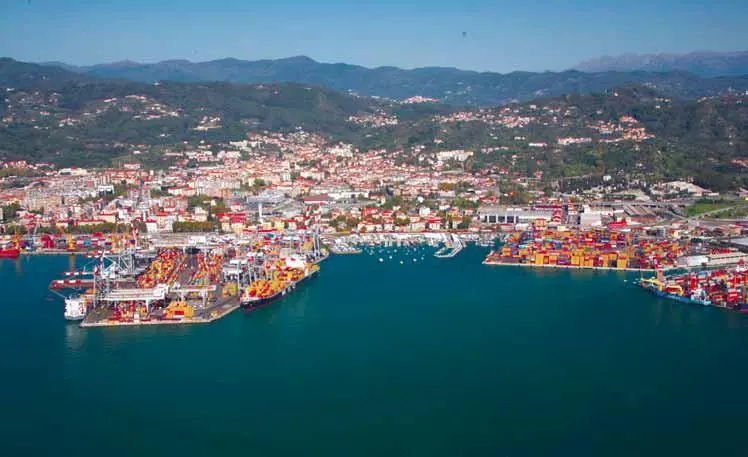
The Italian Ports sector, with 100 or so commercial and industrial ports, contributes 21bn Euros to GDP annually and directly supports around 105,000 jobs. The sector includes the 30 major seaports administered by the 23 Italian Port Authorities (PAs). Italian law defines seaport areas as public domain assets which are state owned and inalienable. The PAs were established by the 1994 Port Reform law and are public bodies with autonomous budgets and finance. By law, Italian PAs cannot perform port operations. Their tasks include responsibility for policing, programming, coordination, control and promotion of the commercial and industrial activities carried out in the port and administration of the port areas. This includes the power to grant portions of the port areas ‘in concession’ to private undertakings following the selection procedures laid out by law. Assoporti, representing the PAs, provides advice and sector support and contributes to the development of a sustainable port community. It welcomes the increasing investment of Italian ports and port operators in voluntary environmental initiatives. Energy management is seen as a significant common problem. Assoporti promotes energy efficiency, conservation and alternative sources of energy. It has drafted a project proposal: “Program for renewable sources of energy in pilot ports” with two identified project phases. Firstly the energy requirements of ports will be assessed, together with the potential for port area renewable energy. A representative sample of pilot ports will also be selected. Secondly development plans and feasibility studies will be undertaken with the pilot ports. Ideally Assoporti would like to see a third stage for implementation. The lessons learned will be shared with other ports.
The Port of Naples
The Port of Naples is a complete port within an area of 1.4m m2. It is the third largest Mediterranean cruise port with 1.25m passengers annually, supports 6m local ferry traffic passengers annually (second only to Hong Kong) and enables a total annual trade movement of around 20m tonnes. The Port is situated at the heart of the city’s waterfront requiring careful attention to its impacts. Consideration of this is part of the Port’s modernisation programme based on the concept of ‘Total security’. The intention is to manage environmental quality to the highest standards whilst also having regard to the value of local identities (see also GreenPort Journal, March/ April 2009).
In 2007 these major Italian ports handled:
• 87% (511 million tonnes (mt)) overall throughput
• 60% of imports and exports
• 10.6 million TEU’s
• 49 million passengers (of which
7.5 million were cruise passengers).
The Port’s location and connections provide many advantages for further development as an inter-modal centre. It has a prominent position within the Highways of the Sea network, significant trade within the Mediterranean and Sicily, and to local islands and land connections by road and rail also to the rest of the country and to its two neighbouring Inter-ports. The Port’s restructuring and rationalisation is based around its three key specialisms: Passenger traffic, Commercial traffic and Shipyard activities. The Passenger traffic is being consolidated in one area. Road improvements are being planned to relieve congestion. New railway track connections will improve integration with the national road and rail network. The new container terminal will ease the strain on the existing facilities. The needs of visiting yachts and local people are also being managed through the improvement of a number of marinas. New Marinas will also be built at the East side of the port. Major investment has also been made in implementing ISPS. The new security system will control both the sea and ground infrastructures. The Port Authority is also working towards ISO 14001 certification. With much of the work completed in 2008 it is anticipated that the certification process will be concluded no later than the first half of 2010.
Venice – A lagoon GreenPort
Venice, with its extensive waterways and world heritage, combined with its importance as a commercial and urban centre presents significant challenges for sustainable port operations. Nevertheless, the Venice Port Authority (VPA) is investing to develop a GreenPort. Three areas in particular are receiving attention in 2009: preserving water and sediment quality, air quality management and energy efficiency. VPA’s inland port, Porto Marghera, was reclaimed years ago from industrial waste. This has resulted in ongoing problems with water and sediment quality from erosion of contaminated soils, and waste water discharged from industrial plants. A major scheme is underway for preservation of water quality. About 36km of barriers are being constructed (of which VPA is responsible for 11.5 km) to control soil erosion and isolate the lagoon creating “macro-islands” covering 2000ha. A drainage system is also being installed. Sediment Quality is being managed through the Moranzani Agreement. This is the first major dredging agreement reached in the last 10 years in Italy and of major importance, in particular for the environmental compensation that will be provided. It involves several parties including VPA. Non-hazardous sediment (2.5m m3) from dredging of the main channel into the commercial port has been deposited in a confined disposal. The dredging of 1.65m m3 of heavily contaminated material will begin this year following the construction of a dewatering and inactivation treatment centre. The treated sediment will help create a compensatory amenity area, the Vallone Moranzani (see picture below). The Venice Blue Flag award is an important element of air quality management introduced ahead of the Italian ports implementation (1st January 2010) of 0.1% sulphur content for fuels. The award is a voluntary scheme for vessels using engines more optimally and lower sulphur fuels whilst in the lagoon and port area. Measurements indicate a 10-20% improvement in air quality has been achieved since the scheme was introduced. Energy efficiency is a key area. An energy audit will shortly be concluded and the data used to develop a VPA energy plan to reduce CO2 impact. It is hoped to install a PV (photo-voltaic) park of 8 ha roof space. A third is targeted for 2009. A 50MW biomass power plant is also under consideration, covering an area of 10- 20 ha, and powered by micro algae. This could provide sufficient energy, once at full capacity, to support all VPA’s needs and on-shore power (OPS) for cruise ships. VPA will also begin ISO14001 implementation during 2009.
The Port and Venice Lagoon supports: 2008 traffic of:
• Surface area of 2045 ha • 30 m tons
• 18 km2 of channels • 380,000 TEU’s
• 30 km wharves • 1.7m passengers
•163 operational berths • 250 maxi yachts
• 24 cargo terminals
• 70km internal road
• 205km railway network
Contship’s Green approach
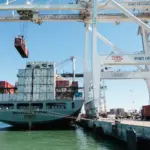
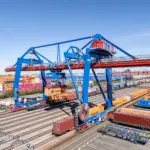
Contship Italia Group, founded in 1969, was a pioneer in containerisation and later in the development of inter-modal network development. The group’s Green Lane project, started in La Spezia in 2008, has now become a strategic approach to environmental issues supported by top management. Central is the strategic deployment of ‘green’ technologies and approaches focused on energy efficiency, reducing consumption and increasing operational productivity. The greater efficiency will allow more volume to be handled for the same, or less, environmental impact. Green Lane has its roots in 2000 with the establishment of the QSE (Quality, Safety and Environment) team. Initial investment focused on implementation of ISO 14001 compliant environmental management systems (EMS) in all business units. La Spezia Container Terminal (LSCT) has led developments, achieving ISO 14001 in 2003 and latterly in 2009 gaining OHSAS 18001 certification. This was the first Italian terminal operator with a certified Integrated Management System for QSE. Terminal Darsena Toscana (Livorno) and Ravenna Container Terminal both achieved ISO 14001 in 2009. LSCT, in the heart of the city, has gained much benefit and local improvement through reductions in noise levels, control of particulate matters (20-30% reduction) and energy conservation. Close co-operation with equipment providers has been an important aspect. Waste separation and recycling has also resulted in savings of 45,000 euros per annum (see GreenPort Journal, March/April 09 for more details). The feeling that greater benefits could be gained led to the idea at LSCT to create a physical space to deploy existing ‘green’ technologies as a practical test bed which, when proved, could be extended to all business units within the Group. The transition from design phase to implementation has coincided with the global economic crisis. As a consequence current investment restrictions have led to the postponement of some projects. However, Contship Group Italia recognises that maintaining close contacts with the major producers of green technology production, whilst not core business, will help them stay ahead of competitors. Current focus is on two areas:
• Development of a prototype electric truck for transport of containers within the terminal at La Spezia. It should be able to operate for at least 6 hours between charging, with charge time no longer than one shift to maintain high efficiency.
• Progressive replacement of the Darsena Livorno Toscana Terminal’s car fleet to electric cars. Both these initiatives will contribute to improved air quality and a reduction in noise pollution Partners and funding are sought for both projects to help reduce development time and achieve a faster return on investment. At this stage in the financial crisis, with liquidity a scarce resource, forms of financing and investment are ever more essential to stimulate research and innovation. Contship have also introduced a successful outreach programme for schools called PortoLab. This was reviewed in GPJ Oct/Nov 2008. Each year 2500 children from a network of 150 schools have the opportunity to experience working life at a container port for a day as part of a classroom programme. Supporting material sustains the learning after the visit. This includes an annual Port diary (10,000 are issued each year) and an interactive website (www.diariocontship.it).
Summary and Conclusions
Assoporti believes that sustainable industry can only be developed through a pro-active participation of all stakeholders involved, starting from port operators and undertakings, and through investment in, and maintenance of, appropriate infrastructures to support an efficient and sustainable port system. A number of examples of these developments have been illustrated here. In order to achieve further successful results Assoporti believes that there is a need to develop incentives at the National and European level for those committed to implementing even more environmentally friendly port systems.
Related Articles
 ALTERNATIVE FUELS GREENPORT
 NEWS
NEWS