


Optimal design – a mariner’s perspective
FORCE Technology’s Jens Bay examines port design challenges through a seafarer’s eyes
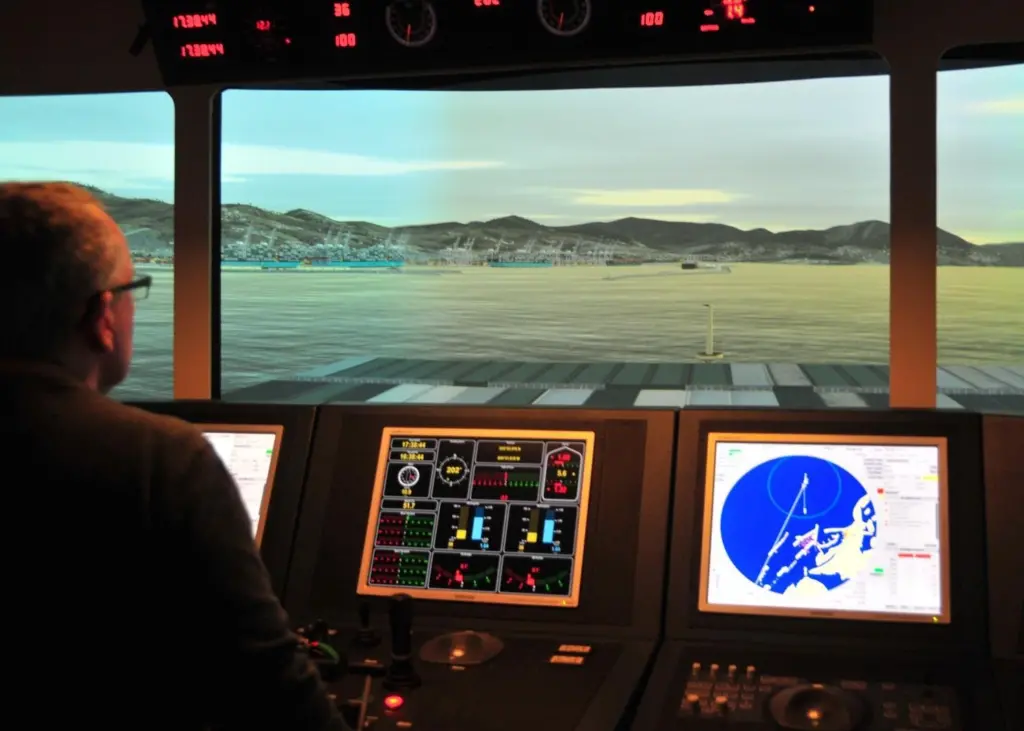
Good, safe port design is essential for a mariner’s confidence, in particular during arrival in challenging weather conditions. This is often the most critical phase of the manoeuvring operation as in most cases it involves turning the vessel before berthing.
There are three main challenges when it comes to port design: turning area, approach channel and lighting leading the ship to berth.
During the port design phase, the size of the turning area is often up for discussion. According to FORCE Technology’s experience, the minimum requirement for the diameter should be the ship length plus two times the width (D = L + 2 x B). In addition to this, there has to be room for the tug boats to operate. As a rule of thumb the diameter should be increased with two times the towline length (minimum 40 m) plus the length of the tugboat (approx. 25 m). The water depth in the perimeter of the turning area (for the tugboats) does not necessarily need to be as deep as the area for the ship. However, port authorities often choose to dredge to the same depth in the entire turning area.
The second important factor for a safe port design is the orientation of the approach channel, the breakwaters and the berths in relation to the prevailing weather direction. If possible, these should be as parallel to the weather direction as possible, so the ship drift is minimised.
Sailing through a dredged channel and through the breakwaters often requires good steering speed where 6-8 knots is not unusual. This fairly high speed requires powerful machinery to stop the ship in time and as close as possible to the centre of the turning area.
A port with a fairly strong cross current, say of 2-3 knots, is tricky for almost any ship to enter. The stronger the current, the larger the ship speed has to be in order to reduce the drift angle to an acceptable level. But then stopping the ship and controlling the steering simultaneously can be a significant challenge. This kind of port requires a good distance for stopping once the ship is inside the port. Ideally, the port designer should arrange the access area and the breakwater orientation to minimise cross current, if possible.
Which way?
The last design challenge is the ‘direction pointers’ in the port. Buoys and leading lines that illustrate the best point of approach are necessary to ensure safety. Leading lines, Port Entry Lights or other modern direction systems are a great comfort to the mariner as they are able to give a very precise indication of where the ship is placed in relation to best point or line of approach.
Trusting the accuracy of the electronic chart display as a precise position tool for port arrival is not advisable. When approaching risk objects such as breakwaters looking out of the windows is still the safest and most accurate way of determining the position of the ship.
In the future, a system similar to the Instrument Landing System used in the aviation industry could perhaps be developed for the marine business for both arrival and departure. The traditional leading light system is not much use while departing because it does not allow you to look astern from the centre position of the wheel house.
Once these three port design challenges are addressed, a port must ensure a ready supply of well-educated and well-trained pilots and tug masters. Both are essential for a safe and efficient berthing operation.
Naval architect and marine engineer Jens Bay has extensive experience in conducting simulation studies within the maritime sector. Mr Bay is a project manager at FORCE Technology, a technological consultancy company based in Denmark.
Related Articles
 PORT TALK
 PORT TALK
 PORT TALK