![PortStrategy[GreenPort]](https://www.portstrategy.com/wp-content/uploads/2026/09/PortStrategyGreenPort.svg)





Port emissions portal is Google Impact Challenge finalist
The Australian Marine Environment Protection Association’s (AUSMEPA) Port Emissions Portal has been selected as a finalist for the 2016 Google Impact Challenge in Australia.
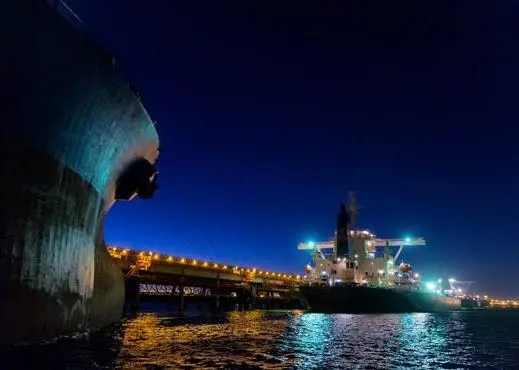
AUSMEPA’s project addresses the current lack of essential ship emissions data for the shipping industry.
It utilises satellite tracking and a big data approach, the platform will enable ports and their stakeholders to measure air quality and changing air patterns throughout the port environment.
Captain Warwick Norman, AUSMEPA chairman, said: “AUSMEPA’s clear mandate is to protect Australia’s maritime environment, and one of the biggest challenges we are facing is climate change.”
He added: “This is not just a local issue; however, action has to start at a local level. With shipping’s exclusion from the COP21 global agreement on the reduction of greenhouse gas emissions, we are taking a leading role in providing the industry with effective solutions.”
AUSMEPA are one of ten finalists and could be one of four organisations to receive a $750,000 grant to further to assist in developing the port emissions portal.
The other six additional finalists will receive $250,000. A judging panel will select three winners, and a fourth will be selected based on public voting.
The public voting is open from 4-25 October and you can cast your vote on the Google Impact Challenge website.
Alan Noble, Google Australia’s director of engineering, added: “We know good ideas combined with technology can help to solve some of the world’s biggest challenges.”
“Ten Australian non-for-profits have been selected as finalists in the latest round of the Google Impact Challenge for their outstanding ideas to use technology to make an impact on important causes.”
He concluded: “AUSMEPA are encouraging all maritime industry stakeholders around the world to support their initiative and vote for increased transparency and improved knowledge of air emissions caused by shipping activity in ports.”
Related Articles
 AUSTRALASIA GREENPORT
 AUSTRALASIA GREENPORT
 AUSTRALASIA GREENPORT