

Satisfying reefer needs
Operators react to the rapid growth and growing complexity of the reefer market.
Sector analysis: market growth spurs technical innovation
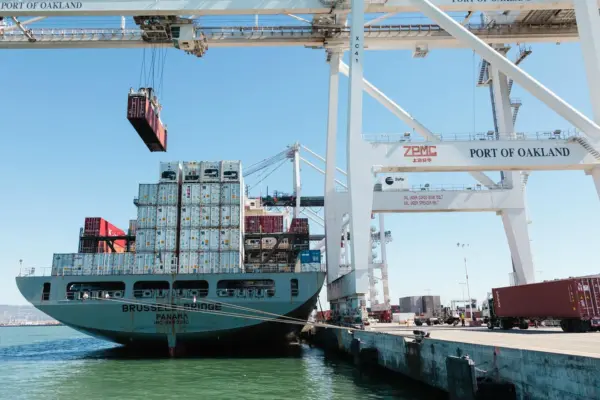
The rapid expansion of the container reefer market is placing pressure on terminal space and power capacity as well as prompting complementary technical innovation along the supply chain. The global refrigerated container market is growing strongly on the back of the rising demand for temperature-controlled goods. Identec Solutions says that the reefer market value was estimated at around US$10.8 billion in 2024 and is projected to reach US$16.2 billion by 2030, representing a compound annual growth rate (CAGR) of approximately 7%. It adds that analysts estimate that the market for refrigerated containers (in terms of value, not just quantity) will grow from around US$13.8 billion in 2024 to over US$26.5 billion in 2032. With the rise in refrigerated container volumes, advanced technology, and stricter emissions targets, terminals are increasingly boosting their power capacity, electrical infrastructure, and usage. Real-time monitoring and digital tools are now essential, as growing supply chain complexity puts a premium on reliable power, data management, and maintenance. The company-by-company accounts below show how terminals and refrigeration system providers are working to meet these requirements.
Data analysis: Monitoring, automation, infrastructure and contracts
Copeland: Copeland has launched GO Real-Time GL and GO Real-Time GL XL cargo trackers, new monitoring solutions designed to deliver global connectivity and streamlined device management for temperature- and humidity-sensitive shipments across the food and pharmaceuticals supply chain. The US-headquartered company explains that global telecommunications networks are gradually transitioning away from legacy 2G infrastructure to 4G connectivity, putting many existing tracking devices at risk of connectivity gaps. Copeland’s new cargo trackers are engineered on global long-term evolution (LTE) cellular technology, leveraging widely available 4G networks to provide more consistent and reliable data transmission across supply chains, enabling customers to maintain continuous visibility and simplifying device management. The GO Real-Time GL is optimized for shipments lasting up to 20 days and features an alkaline battery. The GO Real-Time GL XL is designed with a lithium battery for extended-duration shipments, offering up to 90 days of in-use life and expanded monitoring capabilities down to deep-freeze conditions. Both devices transmit data to Copeland’s cloud-based Oversight360 platform, which translates that data into actionable intelligence, enabling organizations to detect risk earlier, benchmark carrier and lane performance and increase visibility.
Identec Solutions: Identec Solutions has recently installed its Reefer Runner solution at a new terminal in Croatia and at an inland terminal in France. The Austria-headquartered company has completed the installation of its universal plug-and-play system at Rijeka Gateway, built as a joint venture between APM Terminals and ENNA Group (Enna Logic), connecting 170 refrigerated containers directly to the terminal’s Navis N4 Terminal Operating System. Rather than treating reefers as isolated assets, the integration embeds them into the Croatia terminal’s digital workflow, enabling real-time monitoring, automated work order generation, and coordination across operational teams. Jean-Louis Sebapo, Senior Technology Project Lead, Rijeka Gateway, underlines: “The integration with our Navis N4 TOS allows us to monitor refrigerated containers in real time, automate work orders, and ensure the integrity of temperature-sensitive cargo around the clock.” The energy monitoring module within the system continuously measures parameters such as voltage, current, and total kilowatt-hours, enabling Rijeka Gateway to monitor and analyse the energy usage of its reefer fleet. Elmar Hartmann, Co-Owner of Identec Solutions notes, “…The integration of energy monitoring within our Reefer Runner system is particularly significant—it gives terminal operators the visibility they need to manage energy consumption, reduce emissions, and make informed, sustainable decisions in real time.” Elsewhere, inland port operator Paris Terminal has joined with Identec Solutions to implement the Reefer Runner 5G monitoring system at its Gennevilliers terminal to boost the efficiency of reefer logistics. The focus is especially along the Seine River, aligning with the broader goal of promoting sustainable multimodal transport. Using 5G mobile technology, Reefer Runner 5G provides real-time visibility and automated monitoring without the need for pre-installed infrastructure.
ORBCOMM: ORBCOMM has launched CrewView, an onboard visibility solution that enables crews to monitor and manage smart refrigerated containers in real time. Designed to close the visibility gap at sea, CrewView enables early detection of container issues such as temperature deviations and power failures, helping crews take faster action to protect cargo and maintain operational continuity. “CrewView solves a critical blind spot in end-to-end container monitoring and management,” says Sameer Agrawal, CEO, ORBCOMM. “By automating monitoring tasks, detecting issues early and enabling data-driven decisions, CrewView optimises crew efficiency, helps to reduce cargo spoilage, enhances crew safety and provides visibility and transparency for customers—both onboard and onshore.” With CrewView, vessel crews receive instant SMS alarm notifications on their mobile devices from ORBCOMM-enabled smart containers, providing continuous visibility that doesn’t require satellite connectivity. Vessel-to-shore data transmission ensures onshore monitoring. Container loading and stowage information automatically displays interactive bay, row and tier maps in the ORBCOMM Maritime platform.
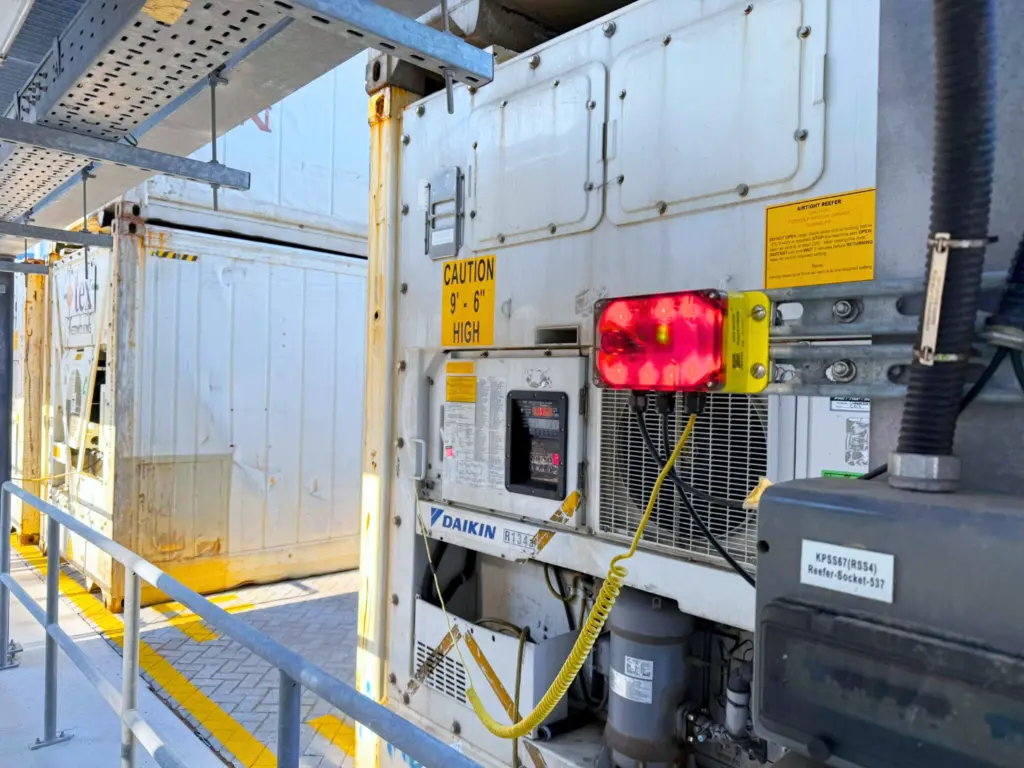
RTE: “Volatility seems to be the biggest issue in reefer logistics right now”, notes US headquartered RTE. It says that its GRASP automated reefer monitoring platform is well equipped to address this trend through robust Bluetooth BLE5 wireless monitoring in its WRAD II monitoring devices and its latest BEACON visual alert systems. “Demand for perishable goods keeps rising, but the bigger challenge for ports and terminals today is volatility. Agricultural yields, climate disruptions, and geopolitical shifts are creating sharper, less predictable reefer peaks. “Terminals we speak with are finding that manual inspections and paper-based workflows can’t keep pace with these swings. As a result, automation—particularly real-time monitoring and remote control available through RTE’s GRASP platform—has moved from ‘nice to have’ to baseline infrastructure for ports that want to stay competitive,” says Walter Vinson, VP Sales and Marketing, RTE. RTE’s BEACON allows refrigerated terminal operators to visually verify when reefers need to be plugged in or unplugged. Developed based on feedback from users of GRASP, this tool addresses the need to effectively manage plug-in and plug-out work orders. The GRASP software automatically converts TOS lists into digital work orders for yards, while simultaneously triggering the BEACON LED devices installed in each slot to signal the required action. This automated process optimises operational management and communication within the terminal.
Severfield: Neverlands-based Severfield has boosted reefer capacity storage at the container terminal of logistics service provider Lineage after it supplied and installed 30 reefer racks and 38 safety tunnels. It was responsible for the structural design, production, and full installation. Severfield notes that a distinctive feature of the Netherlands terminal is its extensive reefer capacity: a total of 1,020 reefer containers can be connected to power simultaneously. The reefer racks provide structured and efficient storage, ensuring containers remain easily accessible during operations. The reefer safety tunnels offer protected access routes, enabling terminal personnel to safely inspect, monitor, and service the containers. Structural steel specialist Severfield delivers complete steel solutions for major port and terminal operators worldwide. It explains that it combines precision engineering, high-quality fabrication and sustainable construction practices to deliver reefer rack systems built for long-term performance and reliability.
Thermo King: The US-headquartered company has joined forces with refrigerated intermodal equipment leasing company SeaCube and CMA CGM to field-test Thermo King’s E-COOLPAC electric genset. This battery-powered refrigerated container genset allows the electrification of last-mile refrigerated transport. It offers a range of battery modules, as well as extension packs to deliver power ranging from 35kWh to 105kWh and can be fitted or retrofitted to marine container chassis, where a traditional diesel genset can currently fit. The e-genset offers zero CO2 and particulate emissions during operation; renewable energy charging compatibility and compatibility with Thermo King marine refrigeration units including CFF and Magnum Plus, as well as other brands of ISO1496-2 reefer units. Claudio Zanframundo, President Thermo King EMEA Truck, Trailer, Bus and Global Marine, Rail and Air states: “E-COOLPAC is a diesel genset alternative power source for reefers when they are not connected to grid or vessel power. It allows for lower emissions and adherence to local regulations when transporting refrigerated marine containers from ports to distribution centres, or those involved in daily reefer container transport.”
Wills Bros: Dublin Port has invested €3.4 million in new refrigerated container infrastructure, boosting cold chain capacity. The port has signed an eight-year licence agreement with Doyle Shipping Group (DSG) to operate new reefer gantries positioned on four purpose-built steel frames at the DSG container terminal. The new reefer gantry installations at Dublin Port, constructed by civil engineering company Wills Bros, will provide 140 built-in power outlets and allow containers to be plugged in, maintaining temperature control. Units can be safely stacked up to five high, saving space and improving terminal efficiency. A new substation is being constructed alongside the facility to power the expanded capacity. Glen O’Connor CEO, Doyle Shipping Group says: “These new structures [reefer gantries] are engineered for high‑density stacking (up to five high), reducing land use per unit. Direct EU services into Dublin have increased significantly post‑Brexit, shifting traffic patterns and raising demand for temperature‑controlled capacity.”

Related Articles
 CONTAINER & CARGO HANDLING
 EQUIPMENT
 CONTAINER & CARGO HANDLING