
Ports under pressure
The maritime industry has probably not faced so many challenges at the same time as it is now experiencing. Typhoons, hurricanes, waterway closures, terrorist attacks on ships, port congestion, lack of sufficient water depths in rivers and canals and having to build new networks.
The combination of these factors has caused shipping schedules to be totally unreliable causing havoc in ports which cannot easily plan for timely vessel arrivals as well as having to deal with ever larger vessel calls. These inevitably lead to congestion and consequently delays in both Asia and Europe.
What is interesting is there is no end of news about the difficulties of moving cargo by sea and that the potential for subsequent economic downturns is on the increase. Yet when we look at the finances of the ports, the ship owners, supply chain managers and carriers we see a different picture.
Virtually every category of vessel type is in demand, and freight earnings have exceeded any forecast. Newbuilding orders are racing ahead, resulting in shipyards expanding capacity in the face of this industry euphoria. As an example, Japan has announced its goal to double shipbuilding capacity to 18 million gross tons by 2035 via a mix of private and public investment.
In the container sector the orderbook represents over 40% of the existing fleet, made up predomiantly of vessels over 18,000TEU capacity, which in theory could lead to a situation of severe overcapacity particularly as the demolition market is in the doldrums and with the increasing use of the Suez Canal. Cargo demand is certainly not keeping up with the projected capacity demand.
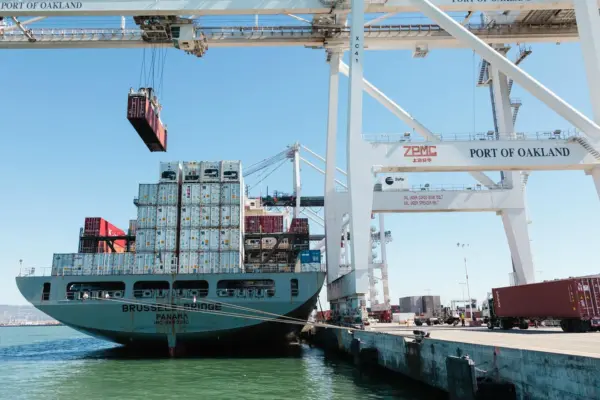
Ports are under on-going demand for quay space to load and discharge the growing nuimber of vessels, which are also getting larger requiring additional lanside capacity, higher productivity in cargo handling and more land-side storage and warehousing capacity. The latter is adding to the woes of the supply chain companies that are increasingly turning to AI.
The pressure on terminal capacity is increasingly growing as land resources become scarcer, creating roadblocks to finding ways to expand the terminals. The cost of expansion is also rising as a result as, for example, container terminal operators are increasingly working with 400m-long ships which are forecast to get longer as the industry is rumoured to be entertaing the concept of 28,000 TEU ships. They may come, but the land to deal with them may not be so readily available. In short, a difficult future faces the ports sector.
The maritime industry has probably not faced so many challenges at the same time as it is now experiencing. Typhoons, hurricanes, waterway closures, terrorist attacks on ships, port congestion, lack of sufficient water depths in rivers and canals and having to build new networks.
The combination of these factors has caused shipping schedules to be totally unreliable causing havoc in ports which cannot easily plan for timely vessel arrivals as well as having to deal with ever larger vessel calls. These inevitably lead to congestion and consequently delays in both Asia and Europe.
What is interesting is there is no end of news about the difficulties of moving cargo by sea and that the potential for subsequent economic downturns is on the increase. Yet when we look at the finances of the ports, the ship owners, supply chain managers and carriers we see a different picture.
Virtually every category of vessel type is in demand, and freight earnings have exceeded any forecast. Newbuilding orders are racing ahead, resulting in shipyards expanding capacity in the face of this industry euphoria. As an example, Japan has announced its goal to double shipbuilding capacity to 18 million gross tons by 2035 via a mix of private and public investment.
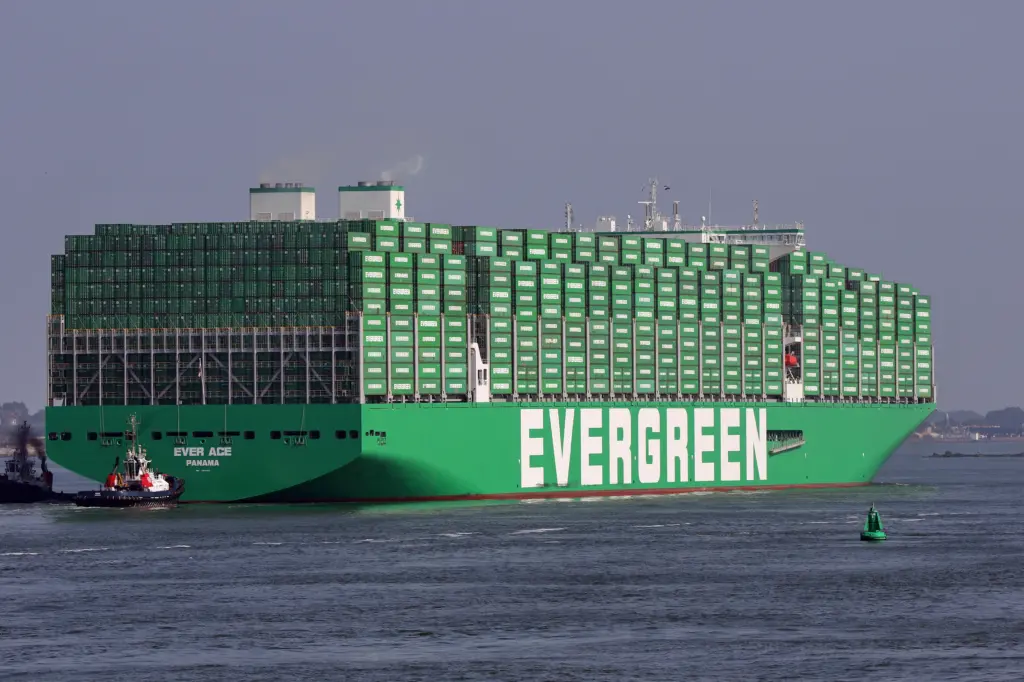
In the container sector the orderbook represents over 40% of the existing fleet, made up predomiantly of vessels over 18,000TEU capacity, which in theory could lead to a situation of severe overcapacity particularly as the demolition market is in the doldrums and with the increasing use of the Suez Canal. Cargo demand is certainly not keeping up with the projected capacity demand.
Ports are under on-going demand for quay space to load and discharge the growing nuimber of vessels, which are also getting larger requiring additional lanside capacity, higher productivity in cargo handling and more land-side storage and warehousing capacity. The latter is adding to the woes of the supply chain companies that are increasingly turning to AI.
The pressure on terminal capacity is increasingly growing as land resources become scarcer, creating roadblocks to finding ways to expand the terminals. The cost of expansion is also rising as a result as, for example, container terminal operators are increasingly working with 400m-long ships which are forecast to get longer as the industry is rumoured to be entertaing the concept of 28,000 TEU ships. They may come, but the land to deal with them may not be so readily available. In short, a difficult future faces the ports sector.

Related Articles
 ASIA
 ENERGY & TECHNOLOGY GREENPORT