


Shipping rollercoaster
A look across key sectors of the shipping market shows heightened activity delivering positive
returns but the big question is will it last? Mike Mundy reports
There are some extraordinary things happening in the shipping markets and not all bad things!
Yes, there is Donald Trump’s war with Iran and the Hormuz debacle that has followed, spelling bad news for multiple countries in the Middle East and around the world.
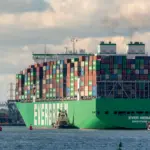
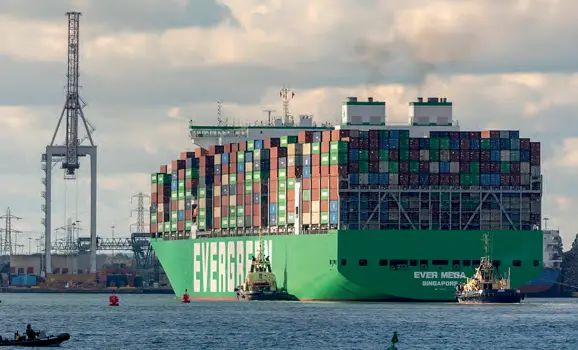
But there is also good news. Container liner profits have jumped out of the 1Q doldrums and kicked on magnificently over Q2 2026. It is estimated that combined revenues for reporting carriers reached US$43.4 billion in Q2, representing a near 16% year on year increase and achieving an operating margin of 11.2%.
Container carriers are also forecasting a good year overall with key players updating full-year guidance – for example Maersk who lifted its 2026 forecast of an underlying EBIT of US$2 billion to US$4 billion and similarly Hapag Lloyd raising its EBIT guidance to the US$1.25 – US$1.75 billion range and EBITDA to US$3.9 – US4.4 billion.
The good times are back.
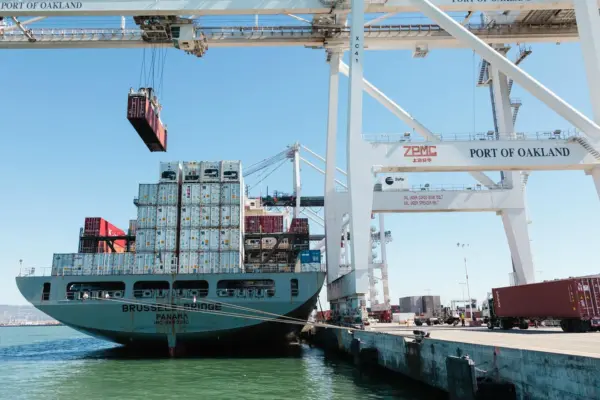
Once again, It is exceptional factors at work that are providing a major contribution to these positive circumstances. Political factors leading to ongoing route diversions (as per round the Cape of Good Hope), and directly related to this the absorption of potential excess vessel capacity are a leading example of this. So too, to a lesser extent, is peak-season front loading – actions by Western retailers to bring forward holiday and peak inventory orders. Then, of course, there are all the usual random factors – bad weather being the most notable. There is also congestion – which while it has its negatives for liner operators it can be a profit booster, not least by acting as a catalyst to freight rates.
Plus, there is strong volume growth – forecast to be 4.7% year on year – another surprise in what remains a turbulent year!
As might be expected, however, there are ongoing challenges – bunker costs, fuel choice issues, aggression while on the high seas, the congestion conundrum and sizable port investment and supply chain control issues.
There is also what some see as a ticking timebomb – the issue of a burgeoning container vessel order book, which some predict will lead to overcapacity in the sector. As at the end of October 2026, the global order book exceeded 15m TEU with this expected to climb to around the 16m TEU mark following the placement of a wave of megamax newbuilding contracts.
Considering the contracted capacity figure of 15.12m TEU alone, reported in Alphaliner’s October Monthly Monitor, this is equivalent to 43.9% of the existing trading fleet. Coupled with a return to normal operating geography – notably Asia Europe tonnage increasingly using the Suez Canal rather than going round the Cape of Good Hope – this raises the prospect of fleet growth advancing significantly ahead of cargo demand and of all the profitability and other problems that follow on from this.
LET THE GOOD TIMES ROLL
But for now the good times are in play and this scenario is in evidence outside the container sector as well – the multi purpose, dry bulk and VLCC sectors are all the subject of positive reports.
Export cargo out of China covering goods such as wind turbine components and battery energy storage systems is seen as a positive driver of an improved operating climate in the multipurpose sector. Outside of the regular services operated, there is also a pick-up in charter business with both factors combining to promote the viability of new tonnage, particularly given that the decade from 2014 to 2024 saw almost no new vessels delivered. So too, reportedly, do the reality that the fleet now does not possess sufficient eco-ships, that burn 35 – 40% less fuel than older tonnage, and that today’s operating realities see a scenario of rising tonne miles.
Unlike the in the container sector, there appears to be little prospect of over-capacity with the foreseen order book comprising just 12 to 13% of the existing fleet.
BULK CARGO DRIVERS
The dry bulk shipping sector faces an equally positive upturn with shipowners speaking at the recent Maritime CEO Forum in Monaco expressing strong optimism regarding a potential ‘generational freight rate’ rally. Underpinning this is West African mineral exports boosting tonne-mile demand as well as geopolitical disruption. Further, the view was expressed in some quarters that the market was experiencing structural rather than temporary changes.
Bauxite and iron ore are the two main products cited in conjunction with West African mineral exports. Guinea overtook Australia as the world’s No.1 bauxite exporter in 2023, according to Fitch Solutions’ BMI research firm, with 2025 volume rising 25% over 2024 volume and amounting to 182.8 million tonnes. The Guinea Government is now progressively implementing a more regulated industry sector, guarding against factors such as excessive production damaging demand and looking to add value within its national borders, but even so strong cargo flow is seen over the short to medium term.
Simandou iron ore exports just a few months back were forecast to amount to 45 million tonnes in 2027 but this figure is now revised upward to 65 million tonnes.
Another positive is India’s transition to become a net iron ore importer due to rising domestic heavy steel requirements. Minor bulks cargo movement is also generally on the rise with catalysts to this encompassing the green energy transition and demand for commodities like manganese, nickel and lithium.
The agricultural sector is additionally making a contribution to the good times with notably South American soybean exports surging – Brazil 178 million tonnes and Argentina 12.6 million tonnes exported to China.
In the liquid bulks sector, the market for VLCC tonnage is particularly worthy of note. Global VLCC daily earnings have recently reached historic peaks – averaging upwards of US$800,000 to over US$1 million per day on key routes such as the Middle East to China. This has come about due to a combination of tight vessel availability, geopolitical disruptions, and long-haul crude trade shifts. Ongoing regional disruptions (including conditions around the Strait of Hormuz and Gulf of Oman bottlenecks) and longer-haul voyages from the Atlantic Basin/US Gulf to Asia are absorbing effective supply.
Looming large behind this, however, is the largest newbuilding wave for 50-years. In excess of 100 new supertankers are scheduled to enter service per year in 2028 and 2029. The order book is reminiscent of the 1970s boom just as the 1973 oil shock sent demand plummeting. It undoubtedly begs the question will demand satisfy available capacity, particularly with a low scrappage rate still visible? Some doubts have been expressed, as Hartland Shipping Services put it in a recent report: “This could be an upcoming supply disaster or merely some much needed fleet replacement.”

Related Articles
 TERMINAL OPERATIONS
 INSIGHT & OPINION
 INSIGHT & OPINION