


A game changer?
Shipping lines are stepping-up investment in key European ports. The regulators have focused on liner and stevedore market shares. Are they behind the game and what is in the true interests of a competitive port sector? Andrew Penfold looks at these emerging issues.
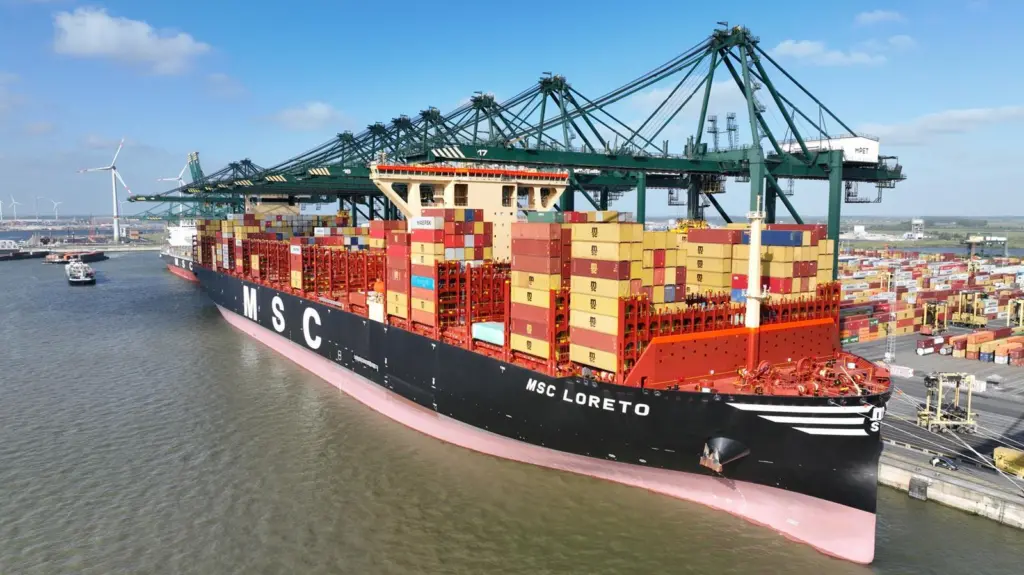
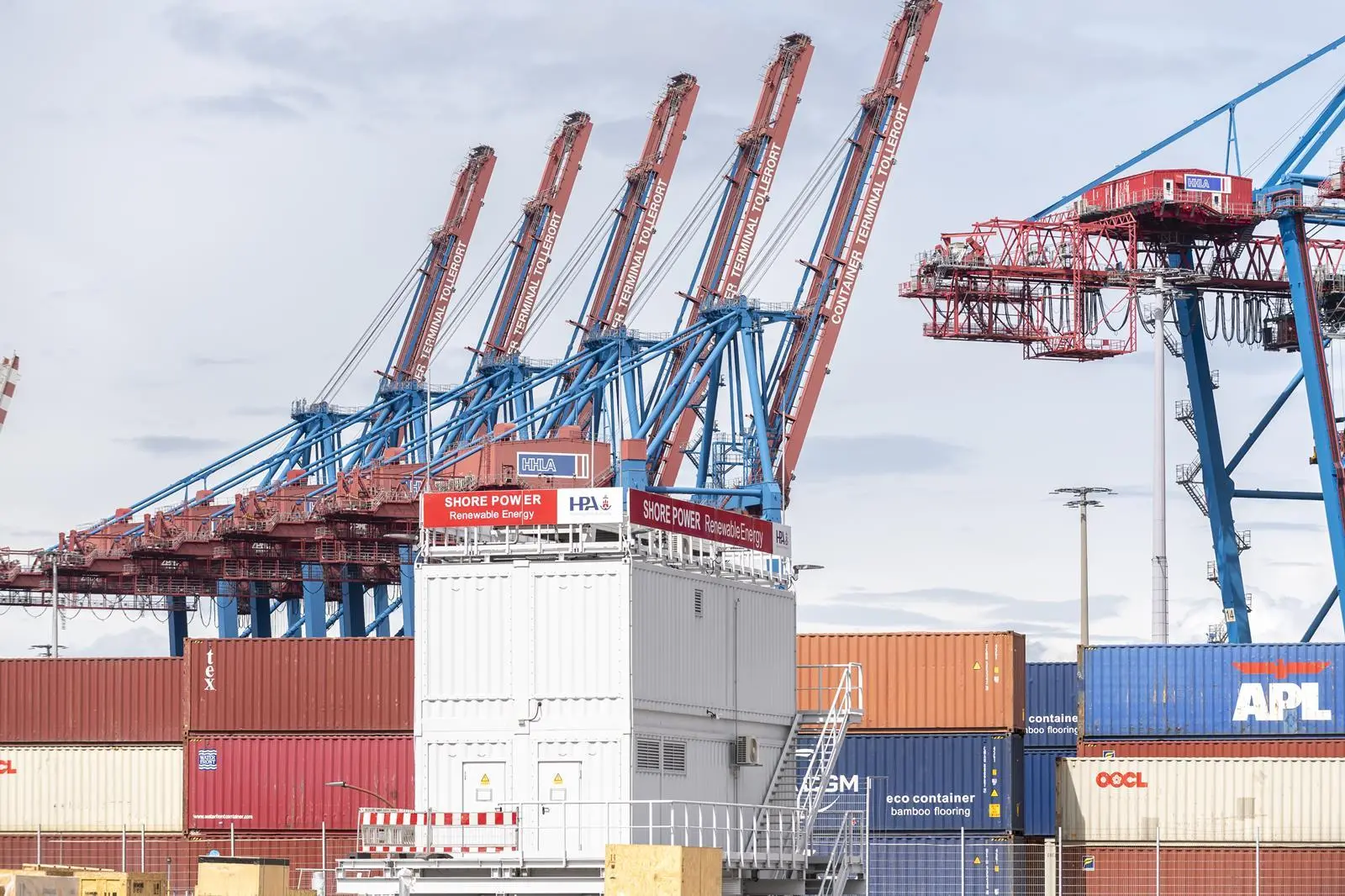
The recent move by MSC to take a substantial share – 49 per cent – in Hamburg’s major stevedore Hamburger Hafen und Logistik AG (HHLA) is highly controversial. It follows hot on the heels of Cosco’s approved move to buy a 24.9 per cent share in HHLA’s important container terminal Container Terminal Tollerort (CTT). The question must be: is this a specifically German (or Hamburg) situation or it is the harbinger of much more far-reaching change across the North Container port range as a whole? It should be noted that this acquisition will cover not just container handling in Hamburg but, also, HHLA’s other investments including those in Odesa and Trieste together with other supporting hinterland projects.
There has been a long-term trend towards increased line investment in container handling terminals, with various lines stepping-up direct investment in facilities from Le Havre to Hamburg. The apparent volume security offered by lines anchoring their business in particular ports is highly attractive for port authorities and national governments and has been actively encouraged since (at least) the acquisition of a dedicated terminal by APM Terminals (Maersk) on the Maasvlakte in Rotterdam back in the 1990s. The pace of this trend was – until recently – constrained by the limited investment availability from the lines. Until the Covid crisis the general profitability or container lines (as a whole) was stretched, and they tended to look enviously at the stability and profitability of container terminals.
Specifically in the case of Hamburg, the very idea that control of a large tranche of container handling capacity could rest outside German control was largely unthinkable.
SO, WHAT HAS CHANGED?
The answer is the sudden increase in container lines cash availability. Prior to Covid it was difficult for even the largest line to move ahead alone on terminal development, with the usual model consisting of complex Joint Ventures for new terminals – often with ‘common-user’ stevedoring companies as part of the package. This has been the pattern in Rotterdam and Antwerp. In these ports line interests have been accommodated by such strategies – Rotterdam World Gateway and MPET (Antwerp) were both invested on this basis, to name but two major projects.
Covid financial windfalls have changed the position. Looking specifically at MSC, there has always been a distinct lack of transparency about the line’s profits while other publicly listed companies have seen limited only profitability over most of the past twenty years or so. Earlier this year the veil was lifted to some extent for MSC – probably unintentionally. The holding company of the world’s largest liner company reportedly made €36.2bn ($38.4bn) in profits last year. These staggering profits (for the entire group it must be stressed) were revealed in the Italian media when the company announced the purchase of around 50 per cent of high-speed Italian train operator Italo.
The explosion in container freight rates during the pandemic saw massive windfall profits over 2021 and 2022. In 2020 – largely before the pandemic the group’s turnover was only $29bn and Ebitda was $6.8bn.
These profits and similar windfalls for other lines have allowed a rapid increase in the availability of funding for terminal investments.
IS THIS A GOOD THING?
The regulatory authorities have looked long and hard at the anti-competitive pressures that can emerge from consolidation of terminal operating capacity, with these concerns stretching back to the acquisition of ECT by Hutchison in the 1990s, and issues of liner market share (of capacity and trade volumes) have long been the subject of legislation. Indeed, the European Commission has recently announced that it will not renew the liner Consortia Block Exemption Regulation (CBER) when it expires next year. So how does unregulated line investment in terminals square with this broader thirst for regulation?
Once again, the case of MSC is highly relevant. A quick run-down of the line’s investments in major North Continent ports is relevant. MSC is heavily invested – by means of its terminal company TiL – at Le Havre (TPO/TNMSC), Antwerp (MPET with PSA), Rotterdam (Delta terminal with ECT), Bremerhaven (with Eurogate) and potentially now Hamburg. This will effectively represent a ‘full house’ of terminal investments in the range.
Collectively, these investments will not set alarm bells ringing in terms of conventional market share considerations but overall, it offers a very strong and flexible (potentially controlling?) position for MSC in the regional business. The ability to switch volumes between terminals – especially for ‘footloose’ transshipment business – can only be of concern.
A lack of separation between actual freight rates and the revenues generated by stevedoring (which is not the same as quoted THCs) can only obscure the level of competition between ports for container handling. This will be worsened with the declining availability of common-user (i.e., independent) container terminals and the JV merging of such stevedoring companies with liner interests.
It should be highlighted that these developments are not just noted for MSC and Cosco but are also reflected in the increased level of investment in this sector by CMA CGM, with other lines also known to be eyeing similar increased roles in the stevedore sector.
GOOD FOR WHOM?
A closer look at the Hamburg position provides further insight into the changing structure of the stevedoring sector. Volumes at German ports have contracted sharply since 2021, with this reflecting the changing structure of the German economy as exports to China begin to slow and domestic demand is weakened by recession and slower growth. This has been exacerbated by the collapse of Baltic transshipment volumes as a result of the Ukraine war’s sanctions on Russia. At the same time, Hamburg has been squeezed by the increasing role of Polish ports serving a large part of the former Hamburg hinterland. The increased role of the deepwater facilities at the Baltic Hub terminal (formerly DCT Gdansk) has been major driving force here.
Against this background, an increased role for MSC (and Cosco) at Hamburg – with the promise of an additional 1m TEU of business – appears highly attractive.
While, however, these deals may well be effective as defensive moves for Hamburg as its market position is squeezed, they will certainly limit the role of competition in container handling and pass the resulting costs on to the shipper and (ultimately) the consumer.
Very careful analysis of the pros and cons of such moves is clearly necessary here and it is not apparent that this has been undertaken. It is the view of some interested parties – not simply narrow union-based opinion – that the port has effectively ‘sold the pass’ to the lines in the hope of managing or reversing the declining role of the port. Moves by Hamburg interests to derail MSC’s strategy have accelerated, but at the time of writing the outcome remains unclear.
ETS and all that…
At the same time the regulators are focusing on other issues, and some would say these are of secondary importance in protecting an efficient port structure.
European Seaport Policy (for what it is worth) has spent many years trying to ensure a level playing field between competing ports. Given the role of large ports in generating economic benefits for a locality, ports have long sought national and local subsidies to enhance economic position – subsidies which have often been obscured.
But the market is changing. Although much has been done to eliminate hidden development subsidies there are no such concerns for other broader issues. Ports are now expected to add considerable extraneous activities to their portfolios. Concerns over the move to ’net zero’, the provision of low carbon bunkering, the move towards low emission handling equipment and insistence on investment in ‘green’ supporting infrastructure have all complicated the competitive position. There is currently no corresponding regulatory framework to police these issues at the European level and this has seen subsidies in these areas increase. This is now influencing market share considerations.
The case of carbon taxation (ETS) is a good example. The European Commission has moved forward with this policy (due to be implemented from early 2024) without a full consideration of the way this will be deployed or the implications for port volumes. The lines have, predictably, begun to list ETS surcharges that will be applied as a result of this programme. For example, Maersk plans to add a surcharge of US$70 per container on the Asia to North Europe trade. All this at a time when the European economy is in recession, there are major uncertainties about the structure of world trade as major shippers seek to diversify from China and a flood of Megamax container vessels – that can only be effectively deployed on these trades – is set to hit the market.
It might well be said that European policy is ‘fiddling while Rome burns’ with these peripheral issues.
WHERE DO WE GO FROM HERE?
Lines are under increasing pressure and their investment in terminals will offer a way to maintain or increase revenues from the stevedore sector by bringing the business in house. Competition in the sector will be weakened. This should be considered in some detail by the regulators who have been only too keen to flex their muscles in secondary areas of concern.
A framework is required that will acknowledge changing market conditions and seek to protect competition in the highly regarded North Continent port markets. Simply allowing shipping lines to capitalise on their current robust financial situation to step up control of the market seems a highly inefficient means of delivering these goals.
Related Articles
 EXPANSION & DEVELOPMENT
 PORT & TERMINAL NEWS
 PORT & TERMINAL NEWS