





To reduce the carbon emissions in Indian ports, the Ministry of Shipping, Government of India initiated ‘Project Green Ports’, factoring in the environmental perspective for sustained growth, writes S M Arun, Corporate Relations Manager, V.O. Chidambaranar Port Trust.
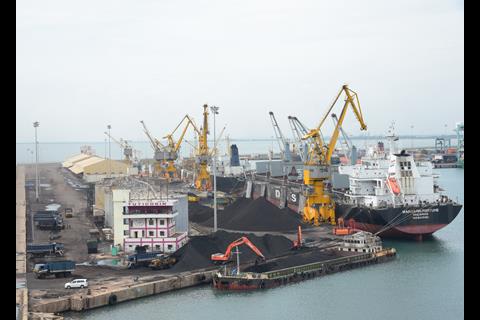
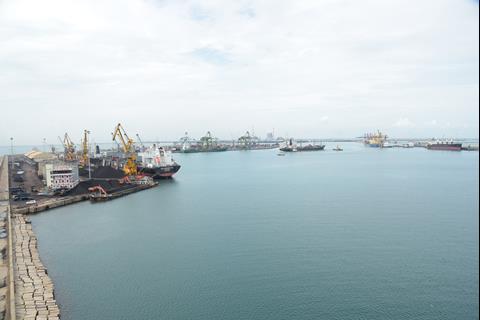
Fully committed to reducing its carbon footprint, V.O. Chidambaranar Port in Tuticorin became the first Indian port to provide a shore power facility at two berths (VOC-II and VOC-III), which will subsequently be extended to all other berths in a timely manner.
A pivotal port
Tuticorin is one of the prominent industrial cities in South India with a number of thermal power plants, fertiliser manufacturing units (SPIC) and copper smelter plants (Vedanta), among others.
V.O. Chidambaranar Port handled over 2,000 vessels in 2015 to 16 and plays a pivotal role in the growth of industries in the southern state of Tamil Nadu. Being one of the fastest growing ports in India, it's fully aware of its environment responsibility.
The shore power facility inaugurated at V.O. Chidambaranar Port in September 2016 is a sure step taken by the port to reduce carbon emissions and other greenhouse gases.
This state-of-the-art facility tackles emissions in harbour areas, a prime candidate for enabling significant reductions, this action is expected to place the port as the number one green port in India.
Cutting emissions
Shore power is considered as an important way forward to cut emissions and save costs for shippers. It is also a quicker and cheaper short term solution to allow shippers to achieve emissions targets, particularly those related to emission control areas.
The shore power project is extremely important for V.O. Chidambaranar Port, which places sustainable development at the forefront of its business strategy. The port has already installed solar power units and has also increased the green offering in the harbour area under its ‘Project Green Ports’.
Shore-power or “cold-ironing” enables ships at dock or in dry dock, to use shore-side electricity (normally from a local power grid through a substation at the port) to power electronic systems, including fuel systems and loading and unloading activities, and to discontinue the use of its auxiliary engines. This switchover of electricity source eliminates air emissions associated with the use of auxiliary engines and shifts the air emission burden to power generation facilities in the local grid.
Plugging in
As of December 2015, shore power has been installed in more than ten ports globally, mostly in North America and Europe in the past decade, according to The International Council on Clean Transportation (ICCT). V.O. Chidambaranar Port has now joined this elite club of ports that provide shore power and as mentioned above, it's the first Indian port to offer this facility.
With the emissions from ships at berth being the bigges tpollutantat the port, V.O. Chidambaranar Port has pioneered the introduction of shore power.
This state-of-the-art solution, offered through ABB India, expands the scope of the green agenda beyond renewable power to technology. It will enable ships docking at the port to plug for power instead of running on polluting diesel generators and using expensive power.
The Indian grid delivers power at a frequency of 50 Hz. However, large container ships use power at 60 Hz to reduce size and weight of electrical equipment (20% less heavy than equipment for 50Hz).
This has meant that existing infrastructure at the port has had to be upgraded with ABB’s state-of-the-art Shore to Ship supply system.
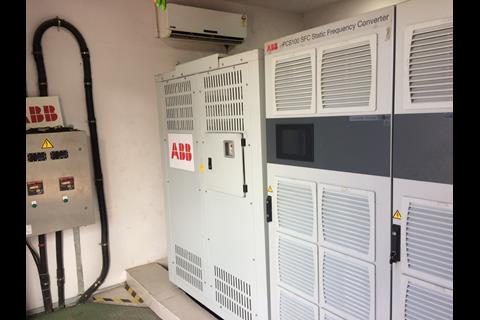
The scope of supply included the PCS100 based Static Frequency Converter (SFC) with associated electricals. The PCS100 SFC end to end solution is engineered for the demanding port applications with a modular construction, overload capability and power flow control in either direction.
Now that the shore power facility has been commissioned at VOC-II and VOC-III berths in V.O. Chidambaranar Port, the ships that were so far dependent on on-board diesel generators for power can now switch to the new technology.
The connection and disconnection of the ship takes as little as 15 minutes and administration of power supply and consumption is handled directlyby the port operator. Moreover, this technology also helps reduce low-frequency noise and vibrations and allows the crew to maintain diesel engines while the ship is berthed.
Benefitting the community
The shore power facility for vessels at berth is a step towards eliminating carbon emissions at V.O. Chidambaranar Port and will immensely benefit the community.
It is expected to reduce about six tonnes of carbon emission in a day and 1,500 tonnes of carbon emissions in a year, which is 5% of the total CO2 emissions at the port.
The shore power facility will also benefit the port users as they should be able to save about Rs.74,000 per day on fuel.
V.O. Chidambaranar Port has not just become a pioneer by introducing shore power to the Indian port sector, it has also reiterated its commitment to extend the facility to all other berths in a timely manner.

