



Asias year of thrift
South East Asian ports are tightening the purse-strings as the recession bites out east. Mike King reports
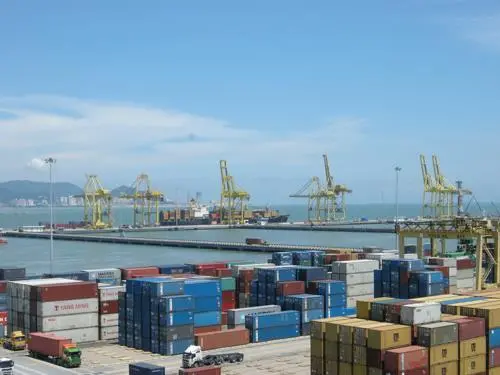
The collapse of export volumes at the end of last year was a prelude to a hard 2009 for South East Asia. Port managers, plugged into global trends more than most, have reacted quickly to the new trading realities.
As the global economy deteriorated by the week in the second half of last year, many governments and business leaders in South East Asia clung to the notion that somehow they could sidestep economic contagion.
But the harsh end to 2008 and an equally dismal start to this year have seen economic forecasts across the region nosedive as demand for minerals, textiles, commodities and processed goods from key western markets has contracted.
Singapore’s economy is poised to shrink this year while, after a series of downgraded forecasts, former stellar Asian performers such as Cambodia, Indonesia, Malaysia, Philippines, Thailand and Vietnam are now expecting only minimal economic growth in 2009.
Given SE Asia’s integrated industrial production base and linkage to global supply chains, the United Nations predicts that it might be one of the area’s hit worst by the global financial crisis and forecasts economic growth of 1.2% for the region, the lowest among the developing Asia Pacific sub-regions.
With western economies playing such a huge role for Asian suppliers of consumer products, those ports involved in trans-continental container trades were affected first, and most severely, by economic ‘repression’.
“Current problems reflect global trade woes, so all trade routes are affected,” says a spokesman for Port of Singapore Authority (PSA), which runs SE Asia’s largest port.
In 2008, PSA handled some 29m teu, up 7% year-on-year, but in January volumes were down almost 20% compared with a year earlier. The spokesman says the port is now talking to customers, staff and unions about how to best manage “revenues and costs”.
At the neighbouring Malaysian Port of Tanjung Pelepas (PTP), which rivals PSA for transhipment business and handled some 5.6m teu last year, managers admit the present global economic meltdown is having a major impact on all ports in the region. “As a major transhipment port, PTP is very much dependent on international trade,” says a spokesman. “We envisage 2009 to be a very challenging year for the ports and maritime industry.”
PTP is currently operating with surplus capacity and, with the market shrinking and lines looking to cut cost, plans to be “creative” to win additional volumes. “During difficult times when shipping lines are looking at reducing operational costs, the cost savings offered by PTP through the efficient port services available could prove to be a real value proposition to shipping lines,” he says. “It is important for us to weather the crisis in an effective manner so that we can emerge as a stronger, more resilient port when the economy picks up.”
Last year ‘local’, non-transhipment traffic at the port was up 43% from the 218,000 teu recorded in 2007. Managers also remain confident of winning additional transhipment traffic from rivals such as Singapore. “The strength of PTP as compared to its neighbouring ports is the availability of vast greenfield land for development,” says the spokesman. “Depending on the rate and time of recovery of the global economy, PTP will continue its development plans to bring the port to the next level.”
In the meantime, expansion will continue at PTP. The port is currently developing Berths 11 and 12 at a cost of some RM750m ($209.4m) to provide a further 720 m of wharf space to the south of Berth 10, taking total pier length at the port to nearly 4.4 km later this year when the new capacity comes on stream. “The berths are each designed to carry four of the world’s largest, and latest, dual hoist quay side cranes,” says the spokesman. “The container yard behind these berths will follow soon after the berths are complete, covering over 32 hectares and providing space for additional 40,000 twenty foot containers.
“The other yard equipment required to support the completion of berths 11 and 12 includes adding an additional 25 rubber-tyred gantry cranes and 60 prime movers and trailers.
“We also have plans for the construction of berths 13 & 14 but this will commence at a later date when the economic conditions are more favourable.”
At the Malaysian port of Penang, where container throughput was steady last year at 929,639 teu, investments are also moving forward despite forecasts that traffic this year will fall by 5.9%.
A 600 m berth extension is now under construction and is due to open next year. Six post-panamax ship-to-shore cranes will be purchased to provide handling and a 25 hectare storage area is being developed for yard operations.
“These expansion programmes were planned and committed before the present economic fallout,” says a spokesman. “However, this commitment in spite of the economic uncertainties, will be fully utilised to enhance the service and productivity levels at the port.”
In a bid to shore up its position with clients, the port is currently negotiating exclusive agreements with preferred customers on berth rights and equipment deployment, special concessions for storage charges for high volumes and long term storage for ad-hoc calls. Logistics solutions with “attractive rates” for hinterland distribution are also being calculated.
“The port is also implementing improvements in operations productivity by addressing management systems, business processes and ensuring appropriate attitude and behavioural characteristics at all levels with a view to increase productivity levels by up to 25% of current capabilities,” he says. “And we are formulating Terminal Service Level Agreements with performance standards acceptable to mainline operators to enhance customer loyalty.”
Singapore’s port of Jurong expects container throughput to fall by 20%-30% this year, wiping out the 16.9% gain made last year when volumes totalled 832,000 teu. Managers plan to upgrade “operational efficiency and core competencies” and focus on general and bulk cargo business as they weather the financial storm.
Since 2006, Jurong has invested in developing new and upgrading its existing conventional facilities to cater to the growth in cargo volumes from the relocation of business from Pasir Panjang Wharves. This has seen a 12-lane main gate at Jurong Port Road opened complete with a pass and permits office. Inside the port a series of ro-ro, lightering, small craft and bulker terminals have also been built in recent years, supported by substantial warehousing.
Of all the port’s to respond to
Port Strategy’s
SE Asia survey, Johor was the only one to claim it would avoid the worst ravages of economic slowdown. “Johor Port’s range of services, and therefore its customer base, is quite diversified and fairly resistant to economic downturns,” says a statement. “Indeed, some of the various commodities being traded at the port are less susceptible to the current market conditions.”
But even the most optimistic in SE Asia still expect a hard year. A rider from Jurong adds: “However, the current fallout is severe, and Johor Port is focusing on exploiting niche opportunities in sectors that may have looked less attractive before.”
Related Articles
 CONTAINER & CARGO HANDLING
 TERMINAL OPERATIONS
 EQUIPMENT