



AUCKLAND PULLS PLUG ON AUTOMATION
The Ports of Auckland is scrapping plans to introduce automation at its Fergusson Container Terminal. The project was first aired in 2016 and originally had a date of late 2019/early 2020 for operations to commence.
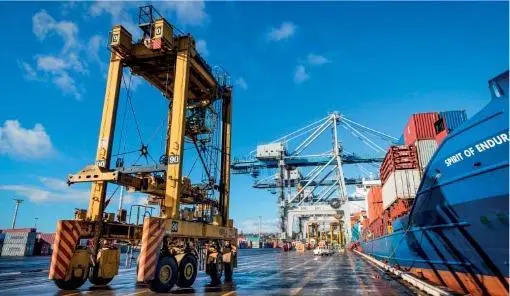
Now, with completion more than two years overdue, the port has decided to pull the plug on the initiative. The original aim of the project was to future-proof the port with this including automation of some aspects of the landside straddle operation to further boost capacity.
Jan Dawson, Chair, Ports of Auckland Board, outlined the rationale for the decision. “We have made this decision after careful consideration of the current status of the project, advice from independent experts, and the work required to achieve full terminal automation.
“Our review indicated that despite the best efforts of our team and our supplier, the project is experiencing continuing delays to full terminal roll out, the system is not performing to expectations, and we do not have confidence in the projected timeline or cost to completion.
“With these uncertainties and the need to transform the Port’s performance, the Board has determined the best course of action is to cease automation of the container terminal.”
To put the decision into perspective, Roger Gray, Chief Executive, Ports of Auckland, confirmed some of the cost implications. “We will, however, have to write-off approximately NZD$65 million (US$42 million) in investments which will no longer be used, mainly the automation software and guidance system,” he explained, but did add that the decision does not mean the end of investment at the port.
“Further, the end of automation does not mean the loss of all the investment and work that went into the project overall. The new infrastructure built as part of the project – for example the new wharf and cranes – provides extra capacity which is essential for future growth.
The COVID-19 and Omicron variant have impacted the port’s container throughput. The last full-year figure (the end of June 2021) was 818,238TEU, down on the previous 12-month period figure of 880,781TEU. The second half of 2021 saw 364,140TEU handled, up slightly on the 358,899TEU for the same period 12 months earlier.
Related Articles
 DIGITAL
 PRODUCTS & SERVICES
 PRODUCTS & SERVICES