



Australia, the world’s second largest LNG exporter, is expanding its LNG market with the first LNG bunkering terminal at Fremantle Ports in partnership with EVOL LNG, writes Lauren Riga.
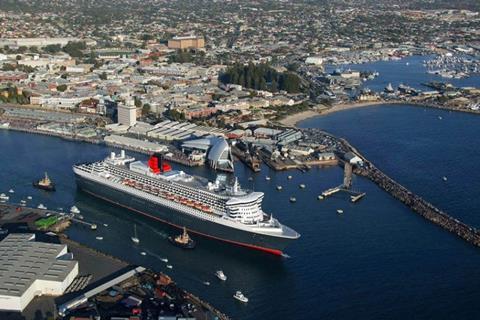
Western Australia’s Fremantle Ports is the first port in Australia to establish a liquefied natural gas (LNG) bunkering facility.
The LNG will be coming from EVOL LNG’s Kwinana LNG plant. According to EVOL, the LNG is supplied at a price that is competitive with low-sulphur marine diesel and will be able to refuel ships at up to 45 tonnes per hour of LNG, which is comparable to refuelling with traditional bunker fuels. Furthermore, truck-to-ship LNG bunkering can be achieved without the need for new fixed infrastructure to be built. EVOL indicated interest in expanding bunkering services to other ports in Australia.
The past decade has demonstrated a steadily rising trend in the number of LNG-fuelled ships in operation worldwide and the maritime LNG market demand will continue to rise as more ships continue switch to LNG as an alternative fuel due to lower emissions and competitive prices.
Australia is already securing contracts for maritime LNG. In April this year, Australian oil and gas company Woodside signed a five-year charter contract with Norwegian company Siem Offshore Australia Pty Ltd. to deliver Australia’s first LNG-powered marine support vessel in 2017.
Ports around the world are adapting to this trend and have already started an LNG bunkering network. Australia’s Fremantle Port is part of this growing global LNG bunkering network, which includes major ports in Europe, North America, Qatar, Singapore, Japan and Korea, as well as more than 40 other ports from around the world.
Top global LNG exporter
LNG has been an increasingly important export for Australia over the last decade and the country is well situated to develop LNG as marine fuel. When you couple Australia’s investments in LNG production along with a rising global demand, Australia may become the world’s leading exporter of LNG by 2019.
The Fremantle Terminal is the beginning of Australia’s LNG market expansion into the maritime industry for LNG fuelled ships. Aiming to add six new LNG export terminals by 2020, Australia could triple its liquefaction capacity to over 13 Bcf/day. The Energy Information Administration (EIA) predicts that by next year, Australia will have increased its liquefaction capacity to 85.4 million tonnes a year.
In 2015, Australia became the world’s second largest LNG exporter in Asia, exporting 30.4 million tonnes of LNG with a value of $16.53 billion, according to the Australian Petroleum Production & Exploration Association (APPEA). Australia’s LNG exports are expected to more than triple in value to $57.1 billion by 2018-19.
APPEA’s facts indicate that in 2003-04, Australia exported $2.2 billion worth of LNG (representing 1.5% of its total goods and services exports). By 2013-14, Australia’s LNG exports represented 4.9% of Australia’s total goods and services exports, and were valued at $16.3 billion. LNG had become Australia’s third largest goods and services export in 2013-14 and APPEA expects it to rise above coal and iron.
Japan has been the largest export destination for Australia’s LNG over the last decade, accounting for 92.4% of Australia’s LNG exports by value in 2013. Other major markets include China, the Republic of Korea and Taiwan. Several other Asian nations with declining gas production and growing gas consumption, most notably India, could become buyers of Australian LNG before the end of the decade, according to APPEA. Australia’s LNG markets will continue to diversify with their supply of LNG as a marine fuel and LNG export terminals expected to come online.
Every industry is seeking cleaner and more efficient consumption and production patterns as the world transitions to a green economy. Australia, with its infrastructure commitments and market share, continues to position itself as a global leader in LNG exports with the demand for a lower-cost and lower-emission fuel.

