![PortStrategy[GreenPort]](https://www.portstrategy.com/wp-content/uploads/2026/09/PortStrategyGreenPort.svg)


China’s ports face overcapacity crisis
According to experts, overcapacity in China’s ports will be more severe than that in steel and cement in the near future, Xinhua reports.
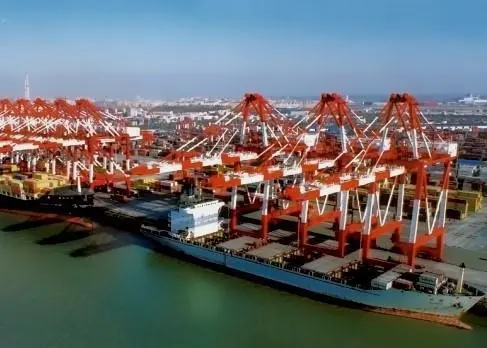
Subsequently, Wang Shouyang, director of the Center for Forecasting Science at Chinese Academy of Sciences, has told central and local governments to pay attention to the consequences of redundant port construction.
In a press briefing releasing the Center’s annual forecast on the world’s top 20 container ports, Global Top20 Ports, Mr Shouyang revealed that negative growth is expected in Hong Kong, Kaohsiung and Dalian.
Ten out of the world’s top 20 container ports will be in China, seven of which are in the top 10.
Growth rate of container throughout, however, is in decline, added the report. This is partly due to overcapacity, which Mr Shouyang said China’s port industry must deal with in the 2016-2020 period.
In an interview with Xinhua, Dalian Maritime University’s professor Kuan Haibo said 2016 could be a turning point for China’s ports as they slump from profits to losses.
“Too many city governments counted on new ports to boost local GDP data. That’s a bad idea.” Mr Haibo also urged local policymakers to keep their hands off ports and let the market do its job.
In his opinion, overcapacity and poor service are the two major bottlenecks in China’s port industry. “The slowdown in Dalian is typical of the industrial situation in the northeastern rust belt,” he said.
Global rating agency Moody, meanwhile, predicted last year that Chinese ports would continue to face pressure in throughput due to economic rebalancing and ongoing capacity additions.
Xie Gang of the Center for Forecasting Sciences told Xinhua that ports should take the Belt and Road Initiative as an opportunity. “Policymakers should avoid further redundancies and overcapacity,” he said.
Related Articles
 CONTAINER & CARGO HANDLING
 TERMINAL OPERATIONS
 EQUIPMENT