

CIRIA Project provides new solutions for ALWC
A new report from CIRIA, and a revised European Standard for protecting harbour installations, offer new tools in the fight against Accelerated Low Water Corrosion (ALWC) as David Foxwell discovers.
PS has obtained a copy of the Executive Summary of the newly completed Construction Industry Research Association (CIRIA) report, CIRIA Research Project RP693, which was prepared for CIRIA by Mott MacDonald, in partnership with BAC Corrosion Control Ltd, Nuttall John Martin, and The Corrosion and Protection Centre at The University of Manchester.
ALWC is a particularly aggressive and localised form of low water corrosion which can occur in tidal and brackish waters on steel maritime structures. As the CIRIA document highlights, corrosion rates in some regions affected by ALWC can be 1mm/side/year or more, and design corrosion allowances will, therefore, be exceeded quickly. ALWC could thereby lead to a loss of 33-66% of asset value.
“This process will rapidly compromise the integrity of affected structures and will lead to significant costs for repair or replacement, in addition to having serious implications for the safe operation of the structure, ” notes CIRIA.
With this in mind, the report provides a comprehensive guide to the phenomenon of ALWC and its management, condition appraisal, repair, protection and monitoring, and is aimed at infrastructure owners, operators and their advisors, specialist engineers and asset and maintenance managers in ports, harbours and other marine locations.
As the report highlights, the extent and spread of the ALWC problem is a source of ongoing debate. Some claim that the problem is exaggerated with only relatively few locations being affected, whilst others claim that it is already widespread and even if a structure is not currently being affected, it is only a matter of time (or diligence in looking for it) before all experience it, unless appropriate protection measures are taken. Diligence in inspection and maintenance should, therefore, be a priority.
A recent survey, initiated by CIRIA as part of the study, indicated that of the 70 questionnaires returned, 57% stated that ALWC was present while 23% reported no significant corrosion, leading the industry organisation to argue the case for what it called “a comprehensive and widespread survey of steel maritime structures by experienced personnel familiar with ALWC, ” in order to obtain a definitive answer as to the scale of the problem within the UK.
As the report also highlights, currently the only reliable method of detecting ALWC is by visual inspection together with residual wall thickness measurements. “The strategy for management of ALWC will depend on whether a structure is new-build (where the aim will be to take measures to minimise the risk of ALWC occurring) or an existing structure in the early, intermediate or advanced stage of attack, ” says the report, noting that design, inspection, structural analysis, repair, protection and on-going monitoring of maritime structures must now be done taking ALWC into account.
Corrosion protection measures for ALWC are based on conventional corrosion control methods, such as Cathodic Protection (CP), but as the report explains, criteria for optimal protection are not as well understood as for ‘normal’ marine corrosion.
“A STITCH IN TIME SAVES NINE” According to CIRIA, in the absence of an accurate predictive model, it is prudent to assume that ALWC will occur at all locations. The adage “a stitch in time saves nine” applies and the sooner corrosion control measures are installed the lower the overall cost will be.
Optimally a corrosion control system will be designed into a newbuild structure, in which case the additional capital cost will typically be a few percent of the overall project costs. The cost of a combined corrosion protection system (a CP and coating), generally recommended for new-build structures, typically accounts for some 210% of overall construction costs, whilst installing corrosion control to an existing structure will typically cost 3-10 times as much. As CIRIA also notes, repair of a badly corroded structure will eventually become more expensive than replacement with a new structure.
“As with all significant assets, a whole life costing and asset management approach should be adopted in order to minimise the total cost of ownership of the asset. Taking into account the probability of ALWC, the provision of corrosion control should significantly reduce the overall cost, whether installed at the outset or as a retrofit, ” says the report.
“If ignored, ALWC can result in extensive, unbudgeted and costly repair and maintenance works at an unexpectedly early stage in the life of a structure. ALWC in an advanced stage could also potentially lead to the collapse of a structure, ” says the report.
CIRIA makes the following recommendations to ports and harbours seeking to protect themselves against ALWC:
For new-build structures:
Include cathodic protection in any design Apply a heavy duty, protective coating system to at least the exposed part of the structure Record all design data including specific minimum thickness requirement at the critical low water zone Institute a monitoring programme to confirm the efficacy of the protection used.
For existing structures:
Where necessary, seek independent, professional advice Inspect all structures as soon as possible and establish the presence of any metal wastage or holing If ALWC is the cause, identify the generalised levels of steel loss.
For the attack found, re-analyse the factor of safety against overstress, instability or collapse Establish a priority work programme, and keep and update regularly a condition database Propose a programme of remedial measures and calculate potential loss of asset value at collapse or for reduced loading use Report to budget-holders/management making clear their Health and Safety responsibility Carry out priority repairs and make emergency repairs a priority. Do not let holes occur since they complicate the repair work and waste money.
PS iicorr secures ALWC work at Scottish harbours
Corrosion control specialist iicorr in Aberdeen has secured contracts worth around £400,000 to carry out corrosion control work at a number of Scottish ports including those at Orkney, Wick, Barra and Lochinver.
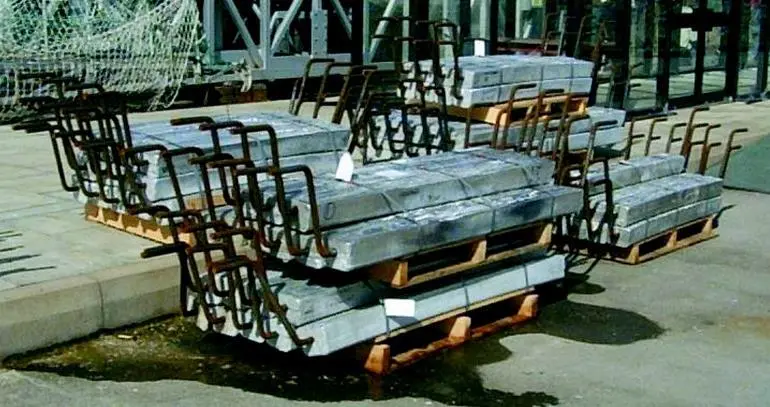
iicorr’s cathodic protection system ensures the design life of quays for 20 years, protecting steel structures, and says the cost of replacing just one of the quays it is protecting would be £3.3m.
The company was originally contracted by Currie Brothers Ltd on behalf of Orkney Islands Council to provide a turnkey solution to the corrosion problems encountered on the new section of Longhope Pier, Isle of Hoy, Orkney. Although relatively new, the pier was already experiencing signs of ALWC, and in order to eradicate it a Cathodic Protection (CP) system was designed for the pier. The system was installed over a period of seven days, causing no disruption to marine traffic.
Related Articles
 CONTAINER & CARGO HANDLING
 TERMINAL OPERATIONS
 CONTAINER & CARGO HANDLING