




A New Zealand port authority has ordered an electric port tug as part of its goal to become zero-emission by 2040.
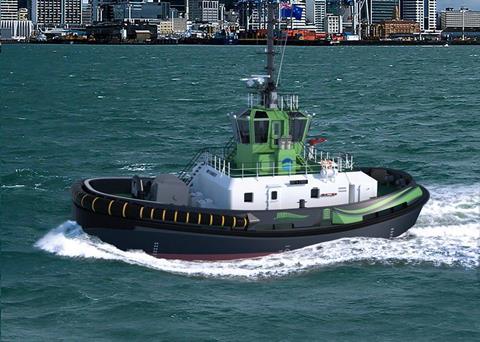
Ports of Auckland has signed a contract with Damen Shipyards to buy the Damen RSD-E Tug 2513, the world’s first fully-electric ship-handling tug in the world. It is designed to be fuel-efficient and IMO Tier III ready, plus has a 70t bollard pull.
“In 2016 we set ourselves the goal of being zero emission by 2040,” says Tony Gibson, CEO of Ports of Auckland. “We set this goal because we recognise that urgent action is needed on climate change, and we wanted to be part of the solution. However, setting that goal created a tough challenge. We have a lot of heavy equipment, like tugs, and in 2016 there were no zero emission options.”
Allan D’Souza, POAL’s general manager for marine, engineering and general wharf operations, said that POAL found there were no electric tugs on the market in 2016, but subsequently couldn’t find a manufacturer to build a battery powered tug before beginning the project with Damen.
The batteries are arranged in parallel meaning if one fails the others can continue and the tug has two 1000kW generator sets, providing enough power for the tug to operate at 40 tonnes bollard pull in the event of an electrical system failure or if the vessel needs to operate beyond its battery capacity.
Mr Gibson stated: “It was important to us that a new electric tug should be able to carry out normal port operations, just like our existing diesel tugs. Our new e-tug will be able to do three to four shipping moves on a full charge, or around three to four hours work (one shipping move takes an hour on average). A fast charge will take about two hours. This is just what we need.”
He pointed out that while the cost of the tug, which has a lifespan of approximately 25 years and is due to be delivered in 2021, was roughly double that of a diesel tug, the cost of operating an electric tug is less than a third of the cost of running a diesel tug.
“So while we pay more up front, over the life of the tug we’ll save around $12 million in operating costs, making our electric tug cheaper in the long term,” he explained.

