


A positive message of reduced emissions and continued environmental leadership was the key focus when Port of Los Angeles chief executive, Gene Seroka, addressed the Harbour Commission Meeting with the results of the TraPac Terminal Environmental Mitigation Measures Audit.
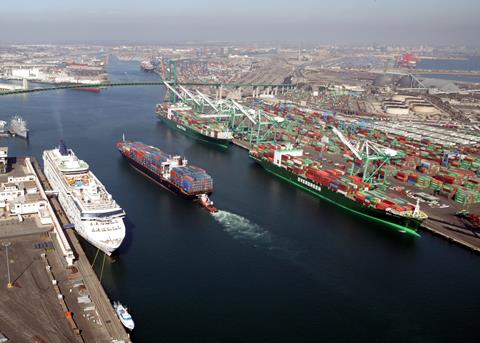
Following criticism of the Port of LA regarding shortcomings of the China Shipping Terminal, Mr Seroka commissioned the audit of TraPac, also subject to contractual mitigation measures.
Reporting the results of the audit on 4th February, Mr Seroka stressed the terminal’s accomplishments in meeting emissions targets.
Advising that emissions levels for volatile organic compounds, CO, NOx, SOx, CO2 and particulate matter (PM10) were all much below predicted levels, Mr Seroka revealed “we were substantially below the emissions inventory levels that were contemplated and promised to the community as the result of the study in the 2007 Environmental Impact Report”.
Of the 52 contracted mitigation measures, 49 have been met. One is partially addressed – that of traffic mitigation measures which required the widening of an intersection and the building of a new right hand lane.
There are concerns around air quality, mainly as a result of missed targets in alternative marine power. Of a target of 80% of ships docked using AMP, only 53% did so in 2015. This was as a result of the ongoing construction work to modernise the terminal and the number of AMP-compatible ships using the terminal.
Mr Seroka said: “The TraPac leadership believes this was a one-time occurrence and will move forward in 2016 to fully comply with the AMP requirements.”
The third missed target concerns cargo-handling equipment, with only 105 of a predicted 135 pieces of equipment being Tier 4 or better. Delivery of more Tier 4 equipment to address this shortfall is scheduled.
Of the missed targets, Mr Seroka said: “I believe we have a direct line of sight on improving these mitigation measures in the very near future”.
Also in the address were key targets around emissions levels for the Port of LA. Against a backdrop of a 7% increase in container volume, diesel particulate matter is down 85%, NOx down 52%, SOx down 97% and greenhouse gases down 18%.
“We have met, or nearly met, all of the measurements in the clean air action plan that were designated for delivery by 2023,” said Mr Seroka.
He went on to advise that June this year will see the delivery of the third iteration of the San Pedro Bay Ports Clean Air Action Plan.
Mr Seroka advised that despite the recent achievements, there is no room for complacency. He said: “We are looked at as leaders in environmental stewardship. There is no port complex in the world that has brought together the expertise, the finances and the work to deliver the emissions reductions that the San Pedro Bay Complex has delivered”.
“The result of this audit signifies a number of learning areas. One is the need for transparency and under my administration we have demonstrated that and will continue to raise the bar,” he added.
To achieve this transparency he committed to publishing data around meeting these mitigation measures by the beginning of the second quarter.
Closing the address, Mr Seroka said: “I do not profess to have all the answers. In the end the emissions inventories levels are very encouraging but I attest to you that there is much more that needs to be done.”

