


GreenPort talks to Meghan Weinman, vice president of sustainability at SSA Marine on sustainability and the terminal operator’s plans for the future
SSA Marine is among the world’s leading independent, privately held marine terminal operators. Through its parent company, Carrix, it has activities at more than 250 locations in the US, Canada, Mexico, Central America, South America and Asia.
As you would expect from such a far reachin operator, SSA Marine’s global sustainability strategy is focused on “enhancing environmental performance in the marine terminal industry and incorporating environmental sustainability best practices into our operations in every region that we operate”, according to Ms Weinman.
She added that Carrix is committed to reducing greenhouse gas emissions by 15% from 2021 levels by the end of 2024.
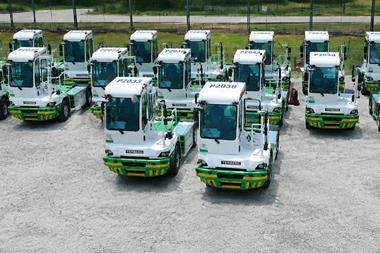
Ms Weinman details that through 2023 SSA Marine had deployed 200+ units of near-zero and zero emissions equipment across its global operations, including several battery electric yard trucks and related charging infrastructure at Pier C at the Port of Long Beach.
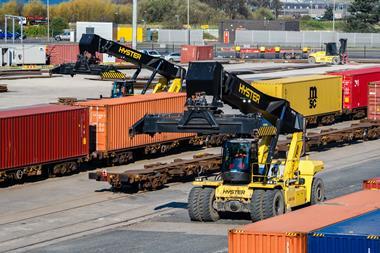
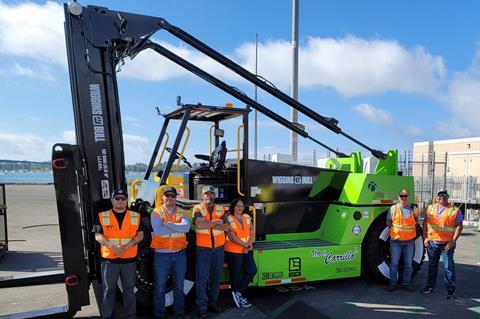
Additionally, in March 2024 it introduced a 55,000-pound, battery electric forklift at the Tenth Avenue Marine Terminal at the Port of San Diego.
This large-capacity vehicle is one of the largest zero-emissions heavy-duty forklifts in operation in the United States and is the first of six pieces of zero-emissions cargo handling equipment that will be introduced at this location over the next 12 to 18 months.
Electrification
For SSA Marine, one of its key focuses is on electrification - that is converting quayside equipment including diesel RTG cranes to electric.
“Converting diesel-fueled rubber-tired gantry cranes to either hybrid or grid-tied electric options has the potential to reduce our reliance on diesel fuel, enhance operational efficiency and lower maintenance costs,” Ms Weinman says.
In late 2023 SA Marine deployed nine hybrid rubber-tired gantry cranes to West Coast container terminals and the fuel savings with hybrid battery/diesel RTG versus diesel RTG turned out to be approximately eight gallons of diesel saved per hour.
Additionally, in 2022 SSA Marine completed a multi-year project to convert nine diesel-electric 1,000 hp rubber-tired gantry cranes to 100% grid-tied electric, which is estimated to reduce consumption of diesel fuel by 225,000 gallons annually.
Some of its operations in Mexico and Panama have also deployed grid-tied electric RTGs.
In addition, Ms Weinman says that SSA Marine is committed to the use of renewable diesel at its California terminals.
Today SSA Terminals and SSA Pacific in California utilise an R80/B20 renewable diesel blend, consisting of 80% renewable diesel and 20% biodiesel. In 2023, it used more than 2.3 million gallons of renewable diesel, eliminating 14,283 metric tonnes of CO2 from its operations.
Future plans
There’s plenty of projects on the horizon for SSA Marine.
Its been working closely with its port and carrier partners to support the use of shore power by ships, drastically reducing diesel emissions while at berth. It currently has 20 shore power capable berths available at six facilities on the US West Coast and continues to work with additional port authority partners to support their plans to add additional shore power capacity at the terminals it operates.
“We’re also exploring hydrogen as a fuel source for heavy lifting equipment, which could further reduce emissions and boost efficiency,” says Ms Weinman.
“Whatever the situation, we’re always looking at new ways to demonstrate and evaluate solutions that benefit our partners, communities and the environment.”
Ms Weinman says that perhaps the biggest takeaway from the lessons learned from its work to enhance environmental performance at its marine terminals is that no one organisation can do it alone – initiatives of any scale require partnership and close working relationships with all parties.
On a closely related point, she says that infrastructure is a critical element when deploying battery electric or hydrogen equipment and strong collaboration and partnership with utilities, ports, state and federal agencies to update the infrastructure to support this transition is critical.
Lastly, grant funding remains of critical importance.
”Many of our projects have been funded in part by federal, state, or local incentive programs and this funding is essential for advancing the development and testing of new sustainable technologies in marine terminal environments,” she says.
Good advice for anyone looking to embark on a similar journey.
SSA Marine and Port of San Diego focus on zero-emissions cargo handling
SSA Marine has introduced the first of six zero-emissions cargo handling vehicles at the Port of San Diego’s Tenth Avenue Marine Terminal. It’s part of a broader initiative to reduce the port’s carbon footprint by phasing out diesel and gas-powered equipment.
The newly deployed 55,000-pound Wiggins Yard eBull electric forklift, named “The Carrillo,” is capable of lifting up to 25 metric tonnes and is among the largest zero-emissions forklifts in the US.
This significant addition honours SSA Marine’s Regional Vice President Joe Carrillo, who pioneered the introduction of large-capacity electric forklifts in the country.
SSA Marine is transitioning to low and zero-emissions technology across its facilities. The electric forklift at San Diego is part of a fleet that also operates at the Ports of West Sacramento and Stockton.
“SSA Marine is proud to partner with the Port of San Diego to showcase the benefits of zero-emissions equipment in a working marine terminal,” said Bill Fitz, senior vice president of SSA Marine. He credited the port’s proactive approach to electric infrastructure for the project’s success.
The Port of San Diego, in collaboration with SSA Marine, has also installed the necessary electric infrastructure to support future deployments of zero-emissions equipment.
Frank Urtasun, chairman of the Port of San Diego Board of Commissioners, praised the partnership, highlighting its role in promoting sustainable maritime operations.
The purchase of the equipment was partially funded by California’s Clean Off-Road Equipment (CORE) voucher program, reflecting the state’s commitment to supporting cleaner, more efficient port operations.
Further afield
In 2022, SSA Marine converted its entire fleet of rubber-tyred gantry (RTG) cranes from diesel to electric at its container terminal in Manzanillo, Mexico.
This ambitious project underscores the company’s commitment to investing in zero-emissions equipment and advancing decarbonization in the maritime industry.
The scale of this initiative required phased investments over several years. After the initial conversion of 40 RTG cranes in 2020, SSA Marine continued to electrify its fleet, converting 12 more e-RTGs in 2022, bringing the total to 52 electric cranes.
Environmentally, the shift to electric cranes prevented the emission of over 16,300 tons of CO2 in the same year, marking a significant step toward more sustainable operations for SSA Marine.
This year, SSA Marine’s terminal in Manzanillo further demonstrated its dedication to operational excellence and decarbonisation by acquiring seven new hybrid e-RTGs with enhanced capacity and lift capabilities.
SSA Marine’s continued investment in electrification underscores its commitment to sustainable port operations helping to position Manzanillo as a leader in environmental stewardship and operational efficiency.