




Scottish ports support major windfarm delivery
Glasgow and Ayr ports have supported the delivery of 344 turbine components for Scotland’s 87.6MW Windy Standard III development
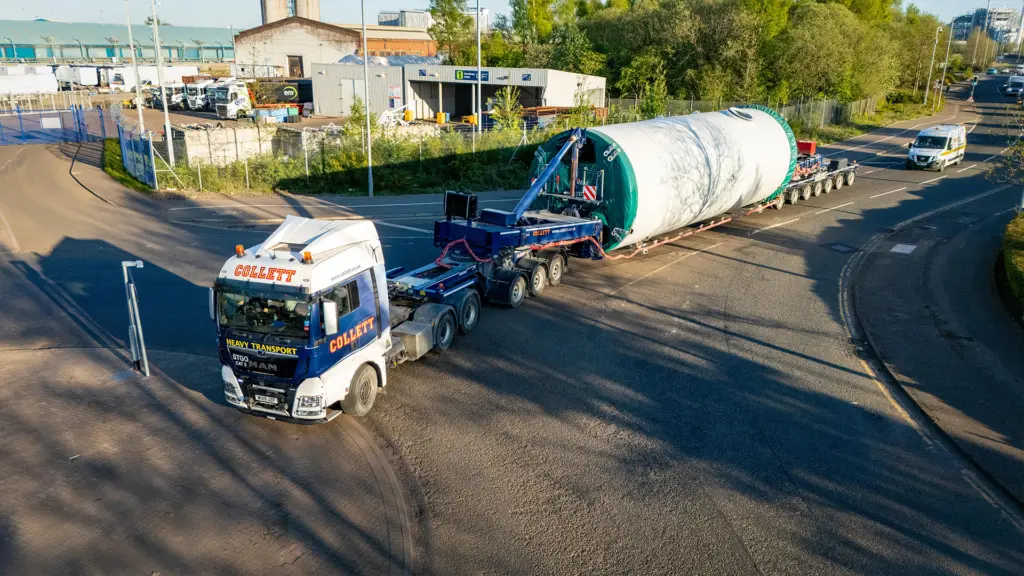
Two Scottish ports have played a key role in the delivery of 344 wind turbine components to the Windy Standard III Wind Farm Extension in Dumfries and Galloway, supporting the construction of a 20-turbine, 87.6MW renewable energy development.
Heavy haulage firm, Collett, managed vessel discharges, component handling and reloading at King George V Dock in Glasgow and the Port of Ayr, with the two locations providing essential logistics gateways for the project. Tower sections were transported 68 miles from Glasgow, while blades and other turbine components travelled 23 miles from Ayr.
David Watson, general project manager at turbine manufacturer Enercon, said: “Collett’s involvement from initial route survey and SPA’s through port logistics, offsite works and AIL deliveries has been greatly appreciated.
“While there were external challenges in delivering the AIL components to Windy Standard 3 site the team at Collett, and in particular Lee Robinson, have been a great support in ensuring these challenges have been overcome and components have reached site as soon as possible.”
The transport programme covered 344 components, including blades, tower sections and ancillary equipment carried in 62 containers. The development comprises eight Enercon E-115 turbines and 12 E-138 turbines, with the longest blades measuring 68 metres and the heaviest tower section weighing 81 tonnes.
Deliveries were completed in two phases serving the Waterhead Hill and Meaul Hill clusters, with Collett coordinating movements alongside Police Scotland and local authorities. Two escorted transport runs operated each night across three weeknights.
Roadworks and access restrictions presented additional challenges, requiring detailed route surveys, swept-path analysis and infrastructure adjustments, including lighting column removals and street furniture modifications.
The completed wind farm will provide 87.6MW of installed capacity. Its E-138 turbines also represent Great Britain’s first installation of an E-nacelle configuration on a 111-metre tower.
The project demonstrates the importance of port infrastructure and coordinated maritime logistics in supporting large-scale renewable energy developments.
Related Articles
 ENERGY & TECHNOLOGY
 ENERGY & TECHNOLOGY
 ENERGY & TECHNOLOGY