

In this article, GreenPort talks to Klaipėda State Seaport Authority which will launch Lithuania’s first-ever hydrogen and electricity-powered ship in a bold step towards sustainability.
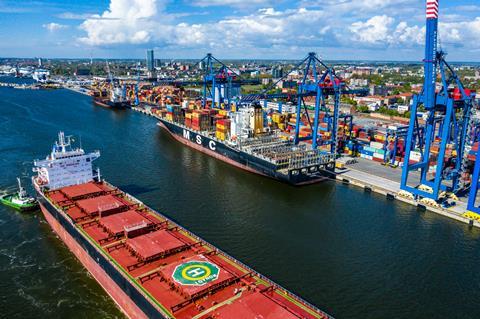
This pioneering hydrogen port vessel is a major milestone in the port’s ambitious sustainability strategy.
Importantly, it will leave no environmental footprint, having been designed specifically to offer an innovative solution for ship waste collection.
Once fully operational, the ship will serve a crucial function, collecting stormwater, sewage, sludge and garbage from incoming vessels, ensuring efficient and responsible waste management within the port.
Algis Latakas, director general of the Klaipėda State Seaport Authority, tells GreenPort: “We have not only launched a tanker but also a new approach to port operations - cleaner, smarter and more environmentally friendly.”
“This hydrogen and electricity-powered ship is more than an innovative technological solution; it’s a significant step toward strengthening Lithuania’s image as a modern maritime nation.”
The €12 million project reflects Klaipėda Port Authority’s shift toward direct management of waste collection services following its transition into a joint-stock company.
This move grants the port greater commercial flexibility and quality control over its environmental initiatives.
State-of-the-art
The new vessel build is a joint effort between Western Baltija Shipbuilding, part of the Western Shipyard Group and Baltic Workboats.
Measuring 42 metres in length and ten metres in width, the ship boasts an advanced power system comprising two electric motors driven by 2,000 kWh batteries and an innovative hydrogen fuel cell system.
This state-of-the-art technology enables the vessel to operate for up to 36 hours without requiring additional charging, ensuring around-the-clock service capabilities.
Construction of the vessel began in June 2024 with a symbolic keel-laying ceremony at Western Baltija Shipbuilding.
Since then, the hull has been fabricated and painted and critical infrastructure - such as piping, valves, coolers, shaft lines and insulation, have been installed.
The next steps will include equipping the ship with engine room apparatus, electrical wiring, the hydrogen fuel system and putting the final touches on the wheelhouse interior.
The vessel should begin operations by the end of 2025.
Crucial role
The vessel’s core function revolves around ship waste collection.
Under current regulations, ships arriving and departing Klaipėda are mandated to hand over waste, a responsibility entrusted to the seaport authority.
With this new hydrogen-powered tanker, the authority aims to modernise and enhance waste management services, demonstrating a commitment to environmental stewardship.
Arnoldas Šileika, CEO of the Western Shipyard Group, emphasised the broader implications of the project.
“We are proud that Klaipėda’s portfolio of green ships has expanded with this unique Lithuanian project. It showcases the successful development of a green shipping ecosystem through close cooperation between our port and the maritime engineering industry.”
“By creating high added value, we contribute to sustainability goals and strengthen public confidence in innovative solutions that reduce emissions and ensure a clean environment.”
Environmental stewardship
The new hydrogen port vessel also aligns with ongoing green hydrogen production projects within the port.
Plans are underway to develop clean fuel infrastructure supporting not only maritime operations, but also rail and road transport.
Klaipėda Port’s environmental strategy approach extends beyond waste collection of course.
On a wider scale, the port is investing in air quality monitoring, emission reduction programs and sustainable energy projects.
It has begun electrification operations of its first quays. Next year, the port will have roll on – roll off ferries moored in the port, supplied with electricity directly from the shore.
The port has also expanded its capitalisation in on the offshore renewables market.
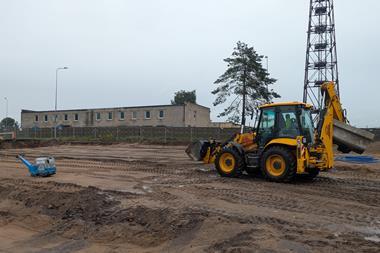
It has begun the reconstruction of quays on Smeltė peninsula, which will ensure smooth assembly, handling and transportation of wind turbines.
By adopting alternative fuels and cutting-edge technology, the port says is looking to set a powerful example for maritime sustainability, marking a new era of cleaner, smarter and more efficient port operations.