![PortStrategy[GreenPort]](https://www.portstrategy.com/wp-content/uploads/2026/09/PortStrategyGreenPort.svg)





Box Release Revolution
Following diverse problems associated with container release a new standard is under development with associated new technology being rolled out
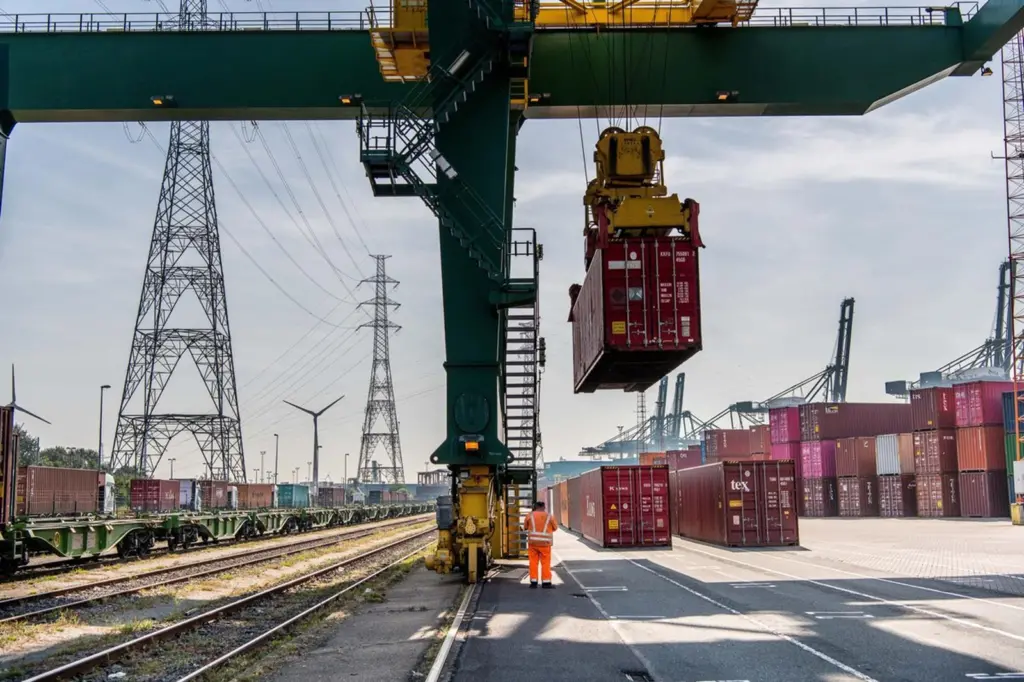
SECTOR ANALYSIS: CONTAINER RELEASE REVOLUTION UNDERWAY
A new digital exemption procedure that is being rolled out for container release at ports in Northern Europe significantly boosts security by reducing the risk of misuse, data leaks and smuggling.
While the technology providers are different, the strategy across ports and countries is the same – it replaces the pin-based exemption that was previously used and deemed to be vulnerable to fraud. Instead, only digitally verified individuals can take delivery of containers. From Rotterdam and the Netherlands, to Belgium, and now to Germany in October 2025, the scheme is still in the process of being rolled out.
The new process goes beyond ports: it is now part of amended regulations that have involved port authorities, state governments and industry representatives. It is expected to pave the way for uniform standards.
It has been welcomed by shipping lines including Hapag-Lloyd, which said: “…The container authentication and release process in German ports will now be centrally managed by the organisation German Ports, ensuring faster, safer, and more transparent handling.”
Holger Hübner, Authorised Signatory and Head of Port Solutions, dbh Logistics IT AG, which is behind the Bremerhaven and Wilhelmshaven roll-out, highlights the benefits: “…Freight forwarders, shipping lines, terminal operators, and other stakeholders have responded very positively. While some initial challenges remain, the industry’s close cooperation and the phased rollout are ensuring a smooth and stable transition. The Secure Release Order demonstrates how digitalisation can build trust, boost efficiency, and increase transparency in international trade. It sets a new standard of security and reliability – not only for our ports but for the entire supply chain. We see this success as a call to action to promote shared digital standards across Europe, creating a connected, secure, and competitive trade environment.”
DATA ANALYSIS: SECURE BOX RELEASE, BLOCKCHAIN, DIGITALISATION, SMART SEALS
Dakosy/dbh: On 1 October 2025, the new digital exemption procedure for import containers was introduced in the German ports of Bremerhaven, Wilhelmshaven and Hamburg with the Secure Release Order (SRO). This will be followed by a nationwide roll-out at all other terminals. In Hamburg and Bremen, the corresponding laws will come into force this year, while Lower Saxony is expected to join in 2027. As operators of the Port Community Systems (PCS) in Bremerhaven/Wilhelmshaven (dbh) and Hamburg (DAKOSY), the two IT service providers designed and implemented the project together with partners from the port industry. The aim of the joint project is to introduce a standardised, secure and end-to-end digital process for the exemption of import containers. Companies can connect their systems and integrate the new processes via open interfaces or existing access to the PCS platforms. Alternatively, the intuitive web platform German Ports is available as a browser-based solution to ensure the integration of all affected companies.
Genetec: Port of Barcelona has implemented Genetec Security Centre this year, having faced new security and operational challenges due to its growth as one of the Mediterranean’s major logistics hubs. The Port Authority launched a modernisation initiative to address this, and selected Canada-headquartered enterprise physical security software developer Genetec’s Genetec Security Center for its open, unified platform that integrates security technologies into a single interface. Following a successful pilot using virtual servers, the port migrated its CCTV infrastructure – growing from 180 cameras to over 530, with plans to surpass 800 in the coming years. Alongside this expansion, the port integrated advanced technologies including access control, intercom systems, video analytics, forensic tools, fire detection, and real-time occupancy analysis. The Port’s operators can now manage all security systems through a single tool, streamlining workflows and reducing response times to incidents.
NxT Port: NxT Port’s Certified Pick up (CPu) has played a key role in the secure container release at Port of Antwerp-Bruges’ container traffic since it was implemented in January 2024. Over one million containers have been collected via CPu. It is a neutral platform that centralises container information. It thus connects the various parties involved in the import process and is mandatory for all supply chain partners involved in the release process of a container. To pick up a container from a terminal in Port of Antwerp-Bruges, a unique PIN code was previously needed. The port highlights that usually, quite some time would pass between the moment the shipping company created the code and the moment the driver entered the code to pick up the container. During this period, the code was visible to various parties. The Port of Antwerp-Bruges highlighted the benefits: “Concrete evidence of the impact is the reduction in claims to customs regarding container pick-up. Thanks to improved chain information, high-risk containers can be identified faster. Cooperation with customs, which also further deploys (mobile) scanning technology, makes smuggling drugs through the port significantly more difficult.” The port platform of Zeebrugge will follow at a later stage. Belgium’s NxT Port built the link in the digital port infrastructure of the Port of Antwerp-Bruges.
ORBCOMM: Evergreen Line has adopted the US-headquartered company’s smart container technology for its dry container fleet, therefore boosting cargo intelligence and security. ORBCOMM said that the rollout provides advanced event alerts, including door openings, temperature deviations, shock detection, and comprehensive location reporting. These capabilities work together to provide several benefits including increasing container security. “Smart intermodal containers are no longer experimental—they are becoming the new standard,” said Sameer Agrawal, Chief Executive Officer, ORBCOMM. “Deployments are moving beyond visibility to cargo protection and container security. This evolution reflects growing industry demand for real-time data, enhanced cargo protection and operational transparency across the global supply chain.” New deployments will take advantage of ORBCOMM’s second-generation smart dry container technology, which adds new sensors for security and cargo integrity. ORBCOMM provides a suite of satellite-based IoT solutions that enables visibility and control over maritime assets.
Portbase: Portbase’s Secure Chain has been rolled out in Port of Rotterdam this year to boost the safe release of containers. Relevant parties digitally pass on the right to securely collect a container in the port to each other. Only a haulier, barge operator or rail operator that has been authorised via the Secure Chain is able to collect a container at the terminal. So far, more than 1.1 million containers have already been released via Secure Chain, which is a joint initiative between government and industry. Portbase developed the technical infrastructure, using its existing Port Community System (PCS). To accommodate the Secure Chain, it has added an extra authorisation layer on top of several existing digital services to make it possible for different links to securely pass on the authorisation to collect a container. Highlighting the effectiveness of the secure chain, Jan Janse, Head of Seaport Police Rotterdam, says: “We’ve experienced hundreds of incidents involving PIN code fraud in the port in the past. But with the introduction of the Secure Chain for container cargo from South America, the issue was eliminated overnight.” In August it was announced that Matrans Rotterdam Terminal is the latest terminal to join the Secure Chain. With deepsea shipping lines nearing completion with the Secure Chain, discussions are currently underway in Rotterdam port about connecting the shortsea sector.
T-Mining: T-Mining’s Secure Container Release (SCR) solution ensures the safety of the container release process for MSC, Hapag Lloyd and CMA-CGM and is being rolled out further. It replaces the traditional PIN codes with blockchain-enabled tokens. In December last year Hapag-Lloyd announced that it had expanded T-Mining’s Secure Container Release to Ports (SCR) in Poland and the United Kingdom. Releases originating from the shipping line are safely transmitted to the First Release Party, who can then securely transfer the release to subsequent parties in the logistics chain. Since 2021, Hapag-Lloyd has used SCR in the ports of Antwerp and Rotterdam, securing over one million containers. Belgium’s T-Mining is now expanding its footprint to inland terminals. The Port of Limburg in Genk is the first inland terminal in the Benelux to introduce SCR. Benjamin Hermans, CEO, Port of Limburg said: “We are committed to deploying advanced technologies to protect our terminal from criminal activities, particularly drug trafficking. Our partnership with T-Mining and itsme® is a key part of this effort, ensuring that only authorised individuals can access the container release process.” itsme® is an online application that serves as a digital ID.
Tive Inc.: The Tive Security Seal has been launched to “set a new benchmark” in cargo protection. US-headquartered supply chain visibility technology provider Tive Inc. has partnered with security seals developer TydenBrooks to deliver the intelligent, digital tamper detection device. Designed to strengthen shipment security measures, the Tive Security Seal locks containers while adding a layer of smart digital protection. Fully integrated with Tive’s Solo 5G trackers and cloud platform, the Security Seal helps ensure that cargo stays secure by providing real-time tamper alerts when security is compromised by cable cutting, forced entry, or device damage. It feeds analytics directly to the Tive cloud platform, offering customers a real-time view into the security and location of their global shipments. The companies highlight the major benefit: the Security Seal enables users to act before the situation spirals into a bigger problem.
Related Articles
 CONTAINER & CARGO HANDLING
 CONTAINER & CARGO HANDLING
 EQUIPMENT