Has the drive for sustainability been knocked off course by COVID-19? Or might the pandemic actually focus minds on the green road ahead? Felicity Landon reports.
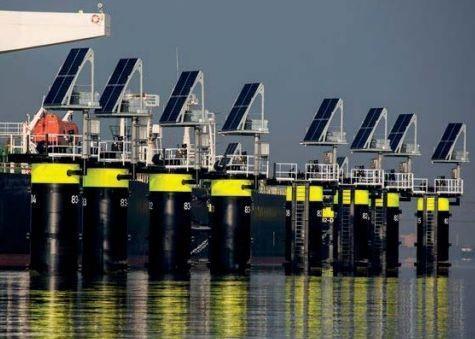
There is, it seems, reason to be cheerful. A recent survey has shown that despite COVID-19, the world’s ports are largely moving ahead with planned environmental sustainability projects with no more than minor delays.
The survey was carried out for the Port Economic Impact Barometer, produced monthly by the International Association of Ports and Harbors’ World Ports Sustainability Program to provide analysis of the impact of COVID-19 on ports.
PAINTING A POSITIVE PICTURE
When it comes to the commitment of ports to advance the plans that they had made before March 2020, the survey paints a positive picture. Of the surveyed ports, 45 per cent said there had been no delays and that planned investments in environmental sustainability projects were being executed as had been foreseen.
Another 32 per cent confirmed that there had been delays in these investments because of the pandemic but at present these delays were only minor. Major delays were reported by just 15 per cent of ports.
“Even though conditions are challenging, and as a result the percentage of the ports reporting that investments have incurred major delays is not insignificant (15 per cent), only a few ports (two per cent) have decided to shelve or cancel existing investment plans,” said the report’s authors, Theo Notteboom and Thanos Pallis.
Alongside this position, four per cent of ports had decided to accelerate and execute their sustainability project investments faster than initially scheduled, and two per cent had decided to proceed with additional investments, they said. “Evidently, the industry is standing devoted to advancing its sustainability even in conditions of crisis.”
PREPARING FOR THE POST-COVID WORLD
This year’s Danish Maritime Days included a session focusing on the maritime climate agenda post COVID-19. And here too the importance of maintaining momentum with environmental protection projects was a strong message.
Jenny Braat, managing director of Danish Maritime pointed out, the green transition of global shipping, “will require significant investments in new technology as well as infrastructure.”
Kitack Lim, Secretary General, International Maritime Organisation (IMO) opening the session, said: “The past eight months have shown us how incredibly connected we are and how dependent we are on those networks – and that the maritime sector is at the heart of connecting the global supply chain throughout the world.”
Despite the challenges, ports and shipping kept trade going, he acknowledged. And now the focus must be on finding solutions and preparing for the post-COVID world. Lim said he was certain that shipping will be at the heart of the economic recovery and emphasised the need for “sustainable shipping for sustainable trade”.
He elaborated further on what lies ahead: “There can be little doubt that the single biggest challenge we are still facing is the battle against global warming and climate change. I believe decarbonisation can and will play a big role in the post COVID-19 recovery process. We cannot shy away from the energy transition in shipping which must happen to meet the ambitions in the IMO GHG strategy and to ultimately phase out GHG emissions from shipping.”
The push for zero carbon fuels present a classic chicken-and-egg problem, said Christopher Rex, Head of Innovation and Research at Danish Ship Finance. “Zero carbon fuels are not only an issue for the shipping industry – it is an issue for the global energy infrastructure,” he said.
“Zero carbon fuels are more expensive than their carbon alternatives and the industry is already struggling to deliver a return on invested capital that justifies fleet renewal.”
However, shipowners’ future access to cargo, capital and ports could be at risk if they are considered not to be doing enough to reduce their CO2 footprints, warned Rex.
CHALLENGES BUT OPPORTUNITES EXIST
Ports, of course, have their own challenges in all of this, in terms of providing the necessary refuelling or plug-in facilities – but they can also have some leverage. Green tariffs are one example.
The Port of London Authority was the first port in the UK to offer a discount for vessels with lower emissions – starting in 2017 with a five per cent discount for vessels with an ESI score of 30 or above.
The discount was doubled to 10 per cent in 2019, and at the start of this year (2020), the green tariff became a two-tier system, with a 20 per cent discount for vessels with an ESI score of 50 and above, and 10 per cent for those above 30.
Now it is turning its attention to inland vessels. In November, the PLA launched the Thames Green Scheme, to recognise and benchmark inland vessel operators for their environmental performance.
The scheme will grant operators bronze, silver or gold accreditation and could be used in the future as the basis for a scale of tariffs, to encourage low-emission, sustainable shipping. The scheme was launched at a ‘Greening Inland Shipping’ webinar which itself followed up on a conference of the same name in 2019.
The PLA has also carried out a ‘road-mapping’ exercise to identify what infrastructure will be needed to support new fuel and energy sources and it is working with wharf and terminal operators to put together green supply chains.
Yes, a lot of businesses are facing severe financial stress, said Robin Mortimer, CEO, but the PLA decided to push ahead with its initiatives for sustainability because “there is a massive urgency and we can’t delay".
“Some of the investment decisions required to reach targets have to be made pretty much now,” he said. “But the second reason is that we have to see the recovery from this current economic downturn as a period of opportunity to do things differently and look for opportunities for growth in sustainable technology and more sustainable ways of doing things.
"It is obvious here on the Thames that we can be in the vanguard – in some areas we might be early adopters, in others fast followers – but we are not acting alone and we are learning from elsewhere in the world.”
At the Danish Maritime event, Bo Cerup-Simonsen, CEO of the new Maersk McKinney Møller Center for Zero Carbon Shipping, gave an equally upbeat message: “There is a lot of capital in this world. It is a matter of where that capital goes. I think our industry has an opportunity to make great improvements.
"I know it is tough to say it because there are a lot of companies that are extremely stressed at the moment, but we have an opportunity to make clear how we are going to make this transition to sustainable energies, to create the confidence that these can be taken on board ships and that we can make a good business out of that.”
Of course COVID-19 has an impact on companies abilities to invest, he said: “But the opportunities are there, we strongly believe that. We shouldn’t allow the COVID-19 situation to allow us to step back and say, “we have to wait and see when we can afford this again” – that is not an option.”
Other green initiatives
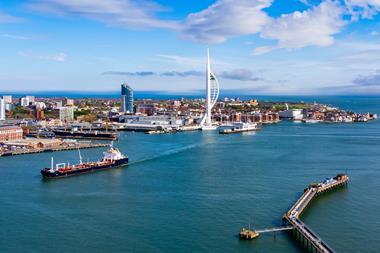
European funding is helping Portsmouth International Port to install bespoke air quality monitors as part of its ambition to be one of the UK’s first zero-emission ports. The ‘smart boxes’ measure nitric oxide, nitrogen dioxide, sulphur dioxide and carbon dioxide as well as particulate matter at PM2.5 and PM10.
Shipping information and local weather data is integrated into the system to create a picture of the environmental effect of port operations. The information will enable air pollution to be reduced at peak times.
The project, due to be completed in 2021, is funded by Interreg 2 SEAS funds, from the Ports Energy and Carbon Savings project – and is being undertaken in partnership with the Port of Ostend, where similar sensors are being fitted.
IAPH signs up to GreenVoyage2050
IAPH has joined the GreenVoyage2050 Project, the IMO-Norway global partnership initiative that is aiming to transform the shipping industry towards a lower carbon future.
GreenVoyage2050 supports developing countries, including small island developing states (SIDS) and least developed countries (LDC), to meet their commitments to climate change and energy efficiency goals for international shipping, as set out in the IMO’s GHG strategy.
IAPH says its technical committees of port members will work with GreenVoyage2050 partners through to the end of next year (2021) on topics such as sustainable ports and onshore power supply; these workshops will then be rolled out at specific ports in 12 countries.