
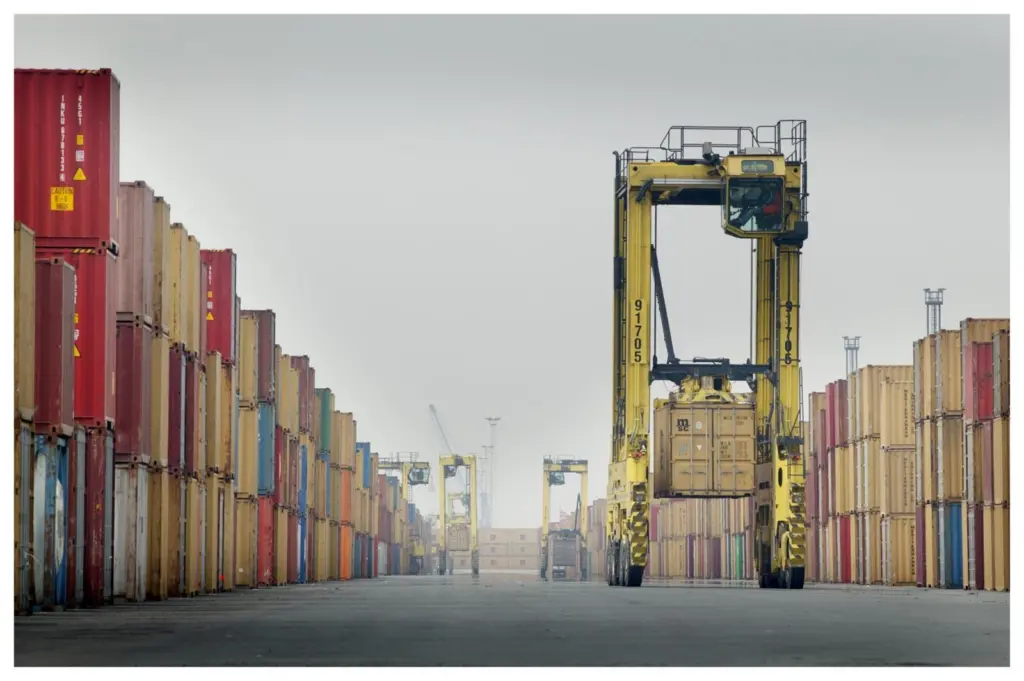
Ports can gain huge operational, security and administrative efficiencies from their use of wireless communications – but the port environment provides some unique challenges when deploying wireless technology. Where else does wi-fi have to contend with a constantly moving maze of metal walls, in the form of shifting stacks of containers?
At the same time, port operators could be forgiven for feeling swamped in techno-talk from a sector that is constantly advancing. Bombarded with options, solutions, upgrades, might it actually be easier to stick with what’s already in place?
“Competition in the port industry is high and that drives port operators to be constantly on the lookout for process improvements, which can be achieved in many ways,” says Pascal Hibon, senior aftermarket manager at Psion Teklogix. “Technology is just one means of delivering operational efficiency. I believe it is important for port operators to constantly monitor their needs and measure those up against their current systems and technologies in place.
“It is far more important to have systems in situ that respond to their needs rather than implementing new technologies as they emerge, just for the sake of it. I also believe it is our role to assist our customers to make these decisions, as it can be difficult and expensive to try and keep pace with constantly evolving technologies.”
One of the greatest challenges for wireless network is providing and guaranteeing stable and reliable wireless coverage across the whole site, because the environment is extremely hostile to radio waves, says Mr Hibon. “Sites are full of metal boxes, plant and a whole host of other industrial buildings and constructions. Port yards are also alive: containers, straddle carriers, reach trucks and cranes are constantly moving and subject to dramatic fluctuations in weather conditions, temperatures and so on.”
There is the additional complication that the 802.11 b/g radio band is getting saturated in many ports, he adds. “While there is no one solution to these challenges, technology can provide answers.”
Psion Teklogix offers a wide range of radio technologies, including 3G, 802.11 b/g, 802.11 a, and Narrowband, and is known for extremely rugged and adaptable products, says Mr Hibon.
Careful planning is crucial in any port project, as deployments can interfere with normal operations, he emphasises. In a typical port project, Psion goes through consulting, demo, site survey (RF coverage, physical mounting, cabling), and then installation, system set-up and training.
Implementing new or updated technologies can bring improved and wider support for various customers’ applications – a good example being wireless security cameras, he adds. “Of course, the degree of improvements will depend on the current installed technology at the customer’s facility. While new and improved technologies regularly become available, customers need not always upgrade, and the decision depends on their needs.
“Ports typically operate 24 hours a day and they cannot afford to shut down the yard while upgrading technologies. That is a factor to take into consideration while planning for an upgrade or update of the systems.”
There are three key requirements when ports consider their communications systems, says Ashish Sharma, vice president of marketing at Alvarion.
“First, it must be very secure and foolproof. Second, it must be available at all times. Reliability is essential – if there is a major crisis, you don’t want communications to go down. And third, you have to have the reach and capability, so you are not left with major coverage holes.”
Opting for wireless broadband eliminates the challenges involved in laying cable connections in concrete and in the sea, and also offering broadband access to vessels in harbours and marinas, he says. Wireless can also be used in tandem with DSL.
Alvarion was one of the original founders and developers of Wi-Max and has more than 200 commercial Wi-Max deployments worldwide.
The advantage of Wi-Max technology is great coverage, says Mr Sharma: “You can put a couple of base stations on higher buildings or poles and cover a very large area. You can also leverage wi-fi on Wi-Max because they are both based on IP technology. You can keep wi-fi running and overlay with a Wi-Max network; and the price points for both technologies are very low.”
Alvarion’s BreezeNET system was specified for a multisite, centrally managed HD CCTV system for video surveillance and project benchmarking at the Port Botany expansion.
Sydney Ports Authority needed to deploy a system that would expand as the project progressed. With cameras positioned at heights of over 25 metres in the marine environment, the wireless infrastructure is exposed to extremely harsh climactic conditions; in addition, the port expansion area is just 200 metres from a Sydney Airport runway, and the whole port vicinity subject to very heavy RF congestion.
The wireless infrastructure had to be extremely directional and narrow, says Alvarion. Coupled with this was the need to overcome obvious obstacles such as moving containers.
A key point is that Alvarion can provided solutions on licensed and unlicensed frequency points, giving ports the option to build their own network with very streamlined security, says Mr Sharma.