
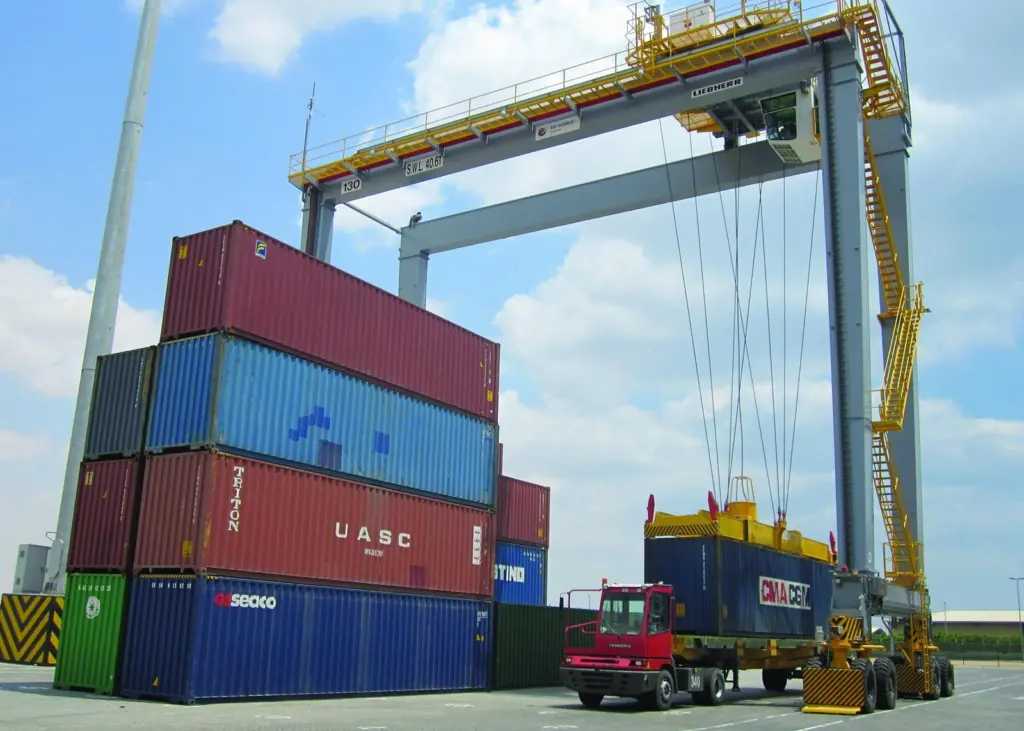
Well, not exactly. But there are rumblings of alternative sourcing methods.
“We are continuously working on the optimisation of our offer, which includes being ‘open’ to new solutions and/or components. Whether integration of such solutions and/or components makes sense will be determined on a case-by-case basis,” says Cargotec’s Marko Rasinen.
“However, buying generic components and integrating those into our machines is somewhat different to producing a ‘no-name’ machine. The main focus across our product range is total cost of ownership, which means Cargotec is unwilling to compromise on the quality and performance of individual components, whether branded or non-branded,” he says.
Gerry Bunyan remains less than convinced that the wholescale use of non-branded components would pay dividends.
“The reputation of our products is well known in industry circles. This is based on our continued policy of only dealing with sub-suppliers whose components meet the strict quality and reliability standards required by Liebherr. Generally our customers prefer to deal with us on this basis,” he says.
But Terex believes that crane manufacturers definitely shouldn’t dismiss Asian produced components out of hand.
“Asia is developing,” says Mr Maurizio Altieri, general manager of TPE Xiamen, Noell China. “Many Asian manufacturers can provide good quality components at attractive prices. To reduce the cost for our customers, we would like to use more components ‘made in Asia’ in our RTGs.”
However, he is at absolute pain to point out that these more ‘generic’ components must be of excellent quality. Price alone should not be the major factor when opting to use them.
“We are convinced that choosing average quality, cheap components is a false economy,” he adds.
Most often, the decision to go with expensive components is customer driven, with all Terex RTGs effectively being customised. The situation is similar at Cargotec, with Mr Rasinen noting that it will only sell machines that incorporate quality components, with customers invariably specifying from which OEM these should be sourced.
“The reason for this could be that their own service organisations have particular know-how and experience with certain brands and therefore aim to limit the size of the spare parts inventory that they hold,” he says.
The experience at Liebherr is little different, with Mr Bunyan pointing out that customers generally have a preference for components from certain suppliers based on their track record.
“But I would also emphasise that quality components used by Liebherr are competitively priced, too,” he says.
ZPMC was also approached to appear in this article, but failed to respond to numerous requests.