Earthquakes, hurricanes and tsunamis — ports around the world have been taught harsh lessons by natural disasters in recent years. But what can ports do to better prepare themselves to handle future disaster challenges?
One of the greatest challenges, both in immediate recovery and in positioning the port for the future, is being faced by New Zealand’s Lyttelton Port of Christchurch (LPC), which was severely damaged by earthquakes in 2010 and 2011.
As it happened, LPC had only recently undertaken considerable simulation work to understand what would happen in such an event and marketing manager Simon Munt says its infrastructure reacted very much as expected.
“We were looking at certain new structures and so it was about being able to understand what we have and what we needed to plan for moving forward.
“From a technical perspective, we did have sensors in place – the ability to understand ground movements and to simulate what would happen in that event – and it did react very much how the engineers thought it would.”
While LPC had plans in place to deal with earthquakes and tsunamis, the scale of the disaster simply exceeded their scope.
“September 2010 was obviously a big surprise, but by the time we got to February and then June again – which were the three big events – in some ways our emergency plans had refined themselves given the fact we had been through it all in such a short space of time.”
Planning ahead
There are a number of things that ports such as Lyttelton can do to increase preparedness for the future. One is to refine insurance cover.
LPC is currently negotiating with its insurance providers over its claim and Mr Munt says the experience “will change potentially how we look at insurance going forward”.
“We are working through a process now and we are learning things that will play a part in our insurance strategy.”
There are also specific measures that can be considered in the rebuild to make ports more robust. One difference is the general application in New Zealand of a higher-specification of earthquake strengthening in the building code. The former policy required earthquake-prone buildings to be strengthened to 33% of the code requirements for a new building, whereas the new policy aims for buildings to be strengthened to 67% of code.
Although, given that the majority of LPC’s structures are now either seriously impaired or are written off, the design of its new structures will be 100% to the new code requirements.
Operationally, lessons have also been learned, says Mr Munt. “For example not parking all of the cranes together on a wharf. If you can’t move your cranes from that piece of wharf then you have stranded them all there.”
Preparation, preparation
While Lyttelton is dealing with earthquake preparedness, US independent consultant Gerry Gividen – with years of experience in New Orleans terminal operations – is focused on hurricane preparation and recovery.
The norm in New Orleans has been that when the hurricane season started, procedures were put in place to update internal and external contact information and check supplies so that when the time came there were few communication problems.
“We set a cut off time that we would let the people go home and completed our work before that time,” says Mr Gividen.
Mr Gividen suggests there are key steps ports can take to prepare for hurricane threats. “Establish your procedures well before the season begins and use check lists to assure everything gets done just as pilots do before a plane takes off. Communicate the process with employees, their families, customers and the transportation public so they may make plans to work effectively with your plans.
“Track the weather and take action step by step as per your pre-plan as the hurricane approaches. On the final day of preparation assign a manager to track the progress and quality of the work on an hourly basis as the terminal is being prepared; assure needed resources are available and priorities assigned; confirm when the work is done and confirm when departments are no longer needed; and assure accurate timely communication is provided to customers and the transportation public.
“After the hurricane has gone, managers must come in as quickly as possible to determine what resources are needed to recover as quickly as possible and communications must be made to customers and the transportation public so they may make their plans.”
Water threat
Japan’s experience with both earthquakes and tsunamis has led to specific research into how ports can take adaptation measures to better protect themselves.
The Japanese Port and Airport Research Institute (PARI) in 2011 recommended that ports invest in seawalls to help reduce the impact of a ‘level 2’ tsunami.
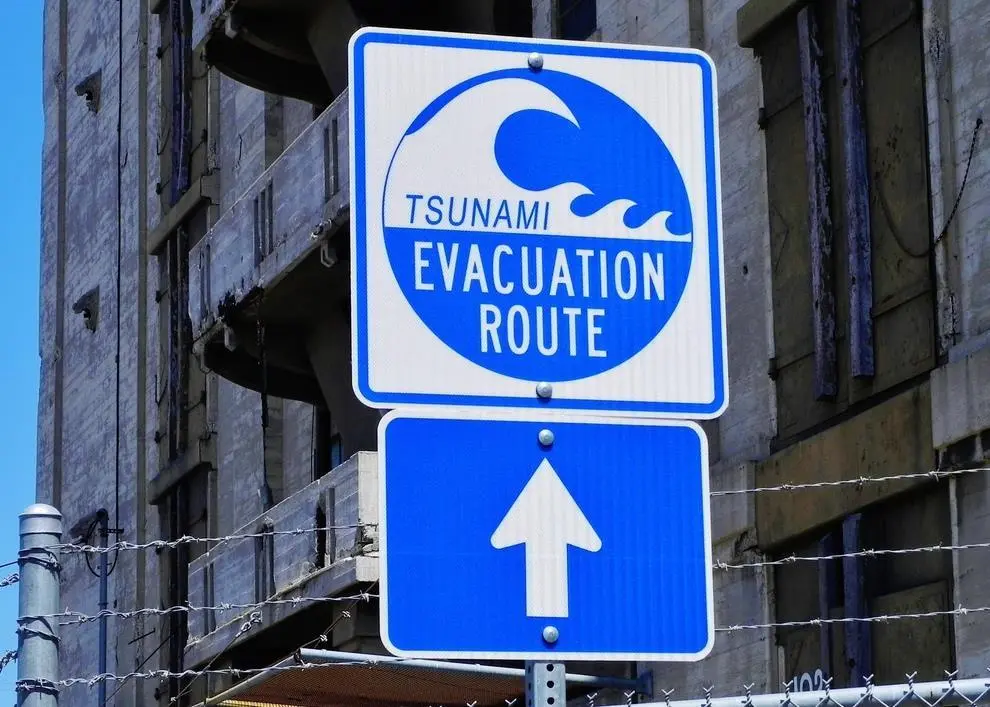
Other suggested measures included preparing a ‘hazard map’ to pinpoint areas of weakness and develop evacuation plans based on data received from GPS-mounted wave buoys. Reliable warning systems and evacuation routes also need to be planned in advance.
If weather situations such as hurricanes present an immediate climatic challenge, what about long-term climate change impacts?
Cossel Chang and Borbala Trifunovics, of Ove Arup and Partners in London, say industry awareness of climate change threats has become far more common over the last few years.
“In the UK all major ports have drawn up emergency response plans which include response to severe weather emergencies and flooding. Most large international ports have similar plans and leading ports and port operators have begun to look at climate change resilience and resilience against other natural disasters holistically throughout design, operations and maintenance practices,” they say.
Building resilience into existing port infrastructure is difficult as ports often do not have the spatial or structural flexibility to implement desired changes and construction is usually costly.
Messrs Chang and Trifunovics therefore suggest climate change adaptation works are best tackled by a managed proactive approach with intervention when necessary.
Comms outage
The most vulnerable components in respect of inundation are usually communications, ICT and electricity, on which most other functions of the port area rely. Back up measures must be in place which are usually related to the day-to-day management of the port and emergency procedures together with resilient networks. Increased storminess can lead to catastrophic collapse of cranes due to excessive wind speeds and to flooding.
“However, recovery can be quite rapid even in the most extreme case, as long as the quay wall is intact, allowing mobile harbour cranes to operate. The most devastating failures relate to the loss of the quay wall which frequently also blocks the berth pocket. The most likely cause of this is an earthquake and the experience in Haiti shows the effect of the loss of port facilities on aid distribution and reconstruction.
“Although as designers we like to see robustness built into structures by raising breakwater crests or cope levels, or designing drainage system to cope with high overtopping, we know that this is extremely disruptive when applied retrospectively and it is often better to provide temporary demountable flood structures or longer term strategies to relocate operations from flood prone areas.
“In newbuild structures it is important to understand the relationship between design life, return period and risk of exceedence. A cost benefit analysis might well show the benefit of increasing freeboard to new-build structures for very long service life, whereas this wouldn’t be economical as an upgrade.”
Storm analysis
Messrs Chang and Trifunovics say a sensitivity analysis approach to increased storminess and a robust approach to seismic design parameters (using PIANC guidelines for example) is appropriate for all newbuild ports and their hinterland connections.
Capital cost is not the only item in the equation. Where wharves are already operating close to capacity, ports cannot afford loss of berth while remedial works are undertaken and losing competitiveness.
On the other hand in the ‘do-nothing’ scenario, flood damage would result in increased insurance premiums which if passed on to shippers could also make the port less competitive. Therefore, purely looking at construction costs will not give a holistic answer.