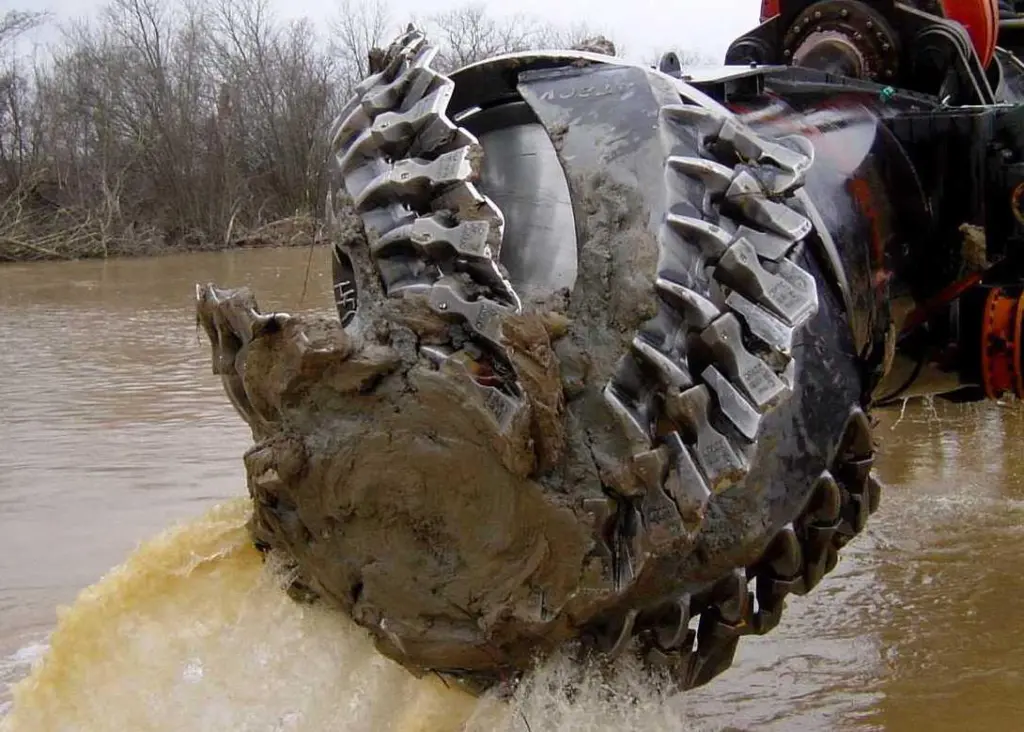
Major dredging works to keep up with the big ships may be a ‘given’ for the ports which already have the volumes, but what about the rest?
Ben Hackett of Hackett Associates explains that despite other variations, there’s a pretty harsh dividing line for ports around the 16m draft point as this is what it takes to accommodate the new generation of big box ships.
However, while depth will probably follow volumes, it won’t necessarily work in the other direction. “If a port sees itself as a main services facility today, it’s probably committed to dredging if this means keeping its market share… but if a port doesn’t have the volumes right now, it’s got to ask itself some hard questions before playing with its depth.”
So, will the second tier ports just content themselves with ‘their bit’ of the market? Unfortunately the status quo has a habit of changing and Alistair Mackie of HFW explains that the big debate at the moment is what the industry will do with the box ship tonnage that becomes obsolete: “Some say many older ships will simply get scrapped, others think the North-South trades and feeder routes will get the fallout.”
But even if the cascade doesn’t become an avalanche, there’s still an enormous upward pressure on ship sizes. He says: “I’d say if box terminals leave it at 10m this really means staying at the bottom end and excluding quite a lot of tonnage. To make it a competitive, forward facing operation I think you are really looking at least three or four metres on top of this.” This is, he says, leaving aside deep sea hubs which would probably be looking at another six to eight metres.
Mounting costs
Fuel is a deciding factor, Mr Mackie explains. A rule of thumb for older ships is that a doubling of vessel size results in a 30% to 40% decrease in bunker costs per box slot for a full vessel, and there’s additional items like crewing, so running a 10,000 teu ship is going to be cheaper than running a couple of older 4,000 teu vessels, even if it’s not quite filled up. Further, Mr Mackie adds: “Lines have a tendency to demand capacity for the whole fleet, and though much of it might be largely below 10,000 teu, if there’s a couple at 14,000 teu they will want those to be able to call.”
So ports might find their favourite lines want just a little more from them especially if a couple of ships go off charter and new, bigger ones come in.
It’s an issue that is broader than boxes. Howard Holt of Seeports explains that smaller ports resting on a niche market won’t have much choice. But, and this is a big but, it’s not as if there’s immediate payback; he says: “They can put up their charges, and that’s about it.”
Mr Holt points out that small to medium sized ports are often pulled in a couple of directions at once – on one side they want to differentiate themselves, but secondly this can too easily mean they are mostly catering for a pretty specialised market and if their customer’s ship size goes up, the port’s bottom has to go down. Of course, the costly nature of this kind of work in turn means these ports are fairly vulnerable to market changes and it can leave them uncomfortably exposed.
One basket
The Port of Ramsgate in the UK is a case in point. No sooner had it completed a limited dredge for a ferry operation than the company went to the wall. However, explains Mr Holt, “Ramsgate is now in the interesting position of having some space to spare, and looking at dusting off a plan to deepen and develop an alongside berth.” However, he adds that the port doesn’t want to get into the same position as before with one key player that can go away or go under. “Ramsgate is looking at civil dredging works, but this time it’s to broaden its market potential and give itself some resilience rather than being subject to demand from one customer,” he explains.
However, as Mr Hackett explains, the issue remains for those ports dealing predominantly with boxes “is that the lines have got the leverage – big operators have got the ability to demand not just good, but also tighter terms”.
The point about ‘tighter’ isn’t lost on anyone familiar with the dark side of contracts. Alistair Mackie points out that lines can be nimble, and it’s not just transhipment ports either that suffer: “It doesn’t take very much to get lines to move. They might have had a great sweetheart deal, but lines can so easily have their head turned by the terminal next door and be looking for an ‘out’, which often comes down to, ‘I know we have an agreement on volumes, but you can’t handle my ships, so I’m afraid the deal’s off’…”.
Further, he reiterates that there’s no rock solid or immediate return for the dredging outlay: “Unfortunately it’s not as if a port can expect a line to sign up for a 10 year contract on the back of a deepening to 15m depth.”
Act fast
Dredging consultant to HR Wallingford, Nick Bray, says: “Even if the issue has historically been a simple rocky outcrop in the way, then a port might have put off making the commitment to dredge because the costs seem to outweigh the actual scale of the work; there’s a large rump of mobilisation charges that can actually be bigger than the price of the work itself – unless of course you can snare a passing dredger.” Of course this means acting pretty fast, not something that most ports can do easily when it comes to large projects.
So, if a port hasn’t bitten the bullet yet, what reasons can there be to start looking at dredging now? The simple answer is changing cargo flows which are moving the order of not so much the top end racers, but the pack of ports following behind.
For the UK this has revolved around a large influx of wind energy cargo, and interestingly, a few of them in the west have got together to bring in a dredger to minimise the costs.
However, Mr Bray points out: “It’s not just the dredging: most quays can’t take being deepened by much without causing serious problems so a lot more building work often comes with the dredge.” Equally difficult, a port has to think about the changes the work brings. “If a port gets rid of a ‘doorstep’ that’s been blocking up the channel, for example, or decides to deepen its entrance channel, it might find that it has lumbered itself with an ongoing maintenance dredge as the silt comes flooding into the nice low bed that’s been made for it.”
It often isn’t much easier in places where the port is state owned – take the issues that India’s Nhava Sheva has had in getting funding. Further, while the Brazilian government pays for some of its port-related capital works such as deepening the fairway or main channels, it doesn’t always take on responsibility for the turning basin or berths, which is for many the main issue: so it still leaves the ports raising a large slice of finance.