
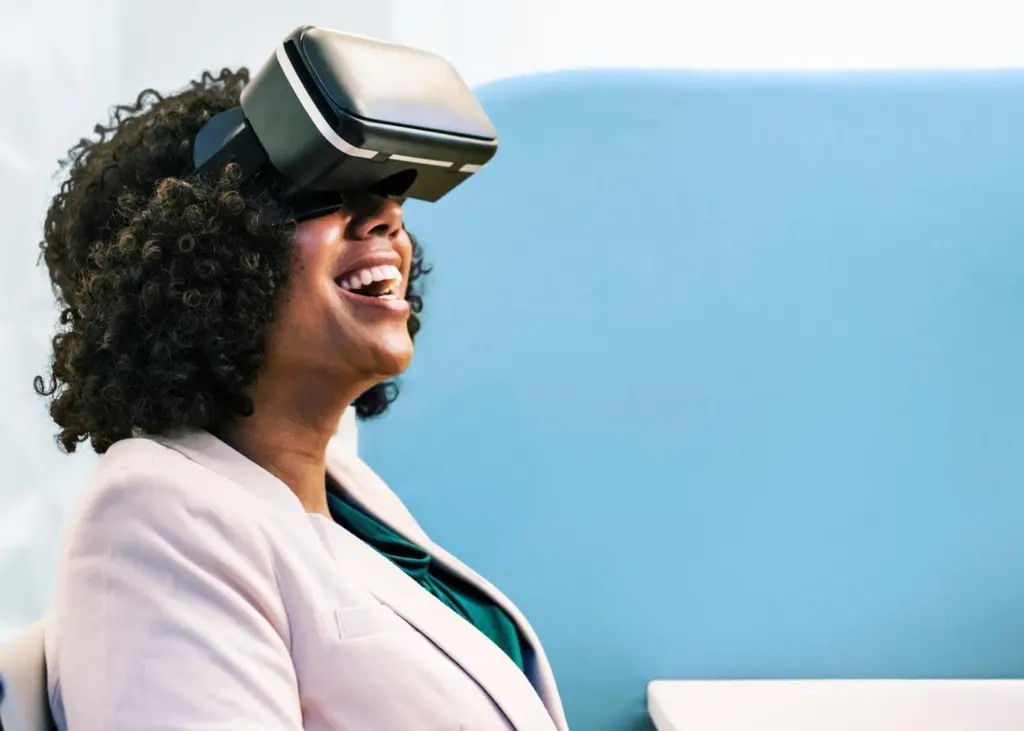
Speaking at TOC Asia, Mr Ball said that the technology “provides exceptional realism and amazing depth perception” and that “very inherent advantages” remain for VR simulators — for example, complete field-of-view and depth perception.
“Virtual reality simulators have been tried many times before, but now the technology has finally got us to the point of quality simulation,” he said.
According Mr Ball, VR technology is moving towards a cable-free form, better peripheral vision, better mixed reality solutions, better resolution, improved hand tracking, lighter weight, and better weight distribution.
However, he added that VR presents challenges concerning scene depth, resolution, hygiene, mixed reality calibration and disorientation. Cables remain tethered with VR, and the headset’s weight causes neck strain, he also said.
Although some of these issues are disappearing, some are not, leaving VR “not ideal” for ship-to-shore cranes, rail mounted gantry cranes and rubber-tyred gantry cranes.
Mr Ball also offered his thoughts about other forms of simulation technology.
He viewed augmented reality as “a game changer” that will alter the manner in which crane operators are trained, and added that remote control technology “is certainly coming”.
“However, we’re probably many years away from every single port in the world being automated 100%,” he commented. GlobalSim already offers a remote-control simulator.