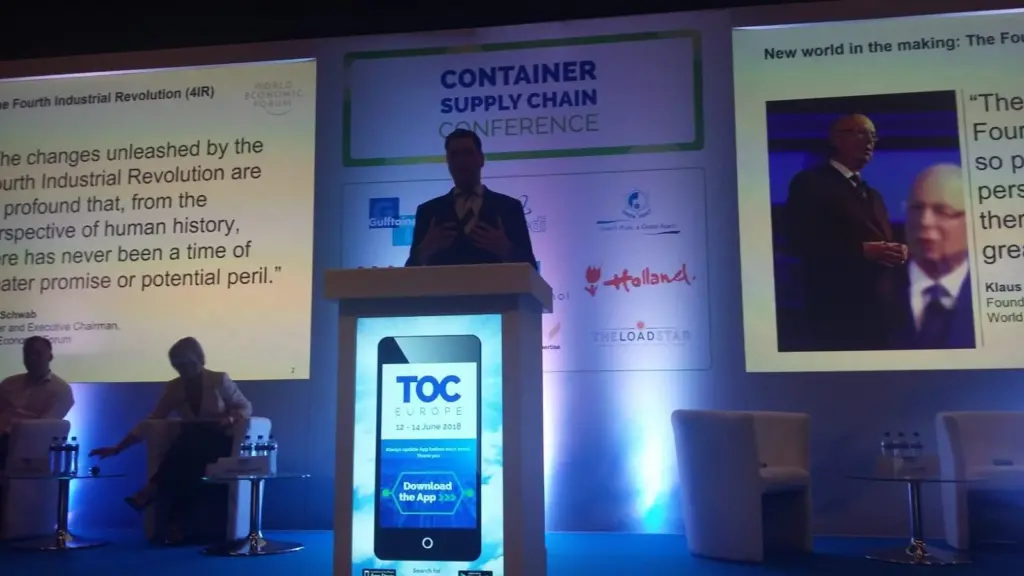
Giving a presentation during the keynote panel of the Container Supply Chain Conference at the Rotterdam event, Wolfgang Lehmacher revealed the WEF’s eight disruptive powers – which also included materials, visibility and transparency, clean power, new modes and connected brains.
“The question is not ‘Am I going to be disrupted?'” Mr Lehmacher said in his address.
“The [questions are] ‘When?’, ‘In what way?’, ‘What is the impact?’, ‘What can I do about it?’, and ‘How can I benefit from it?'”
Mr Lehmacher’s presentation also revealed that “pathways towards intelligent supply chains” were about “eliminating pain points”.
Four key categories were identified: paperless, automated, connected and intelligent.
Connected to the ‘paperless’ area were the costs that manual labour creates and a lack of data, while human error/fraud and safety risk, labour costs and delays came under the ‘automated’ branch.
Meanwhile, a lack of visibility and costs and errors because of reprocessing were linked to the ‘connected’ field, and limited leverage of Fourth Industrial Revolution (4IR) technologies fell under the ‘intelligent’ category.
“It’s up to us what we make out of 4IR,” Mr Lehmacher commented during his presentation.