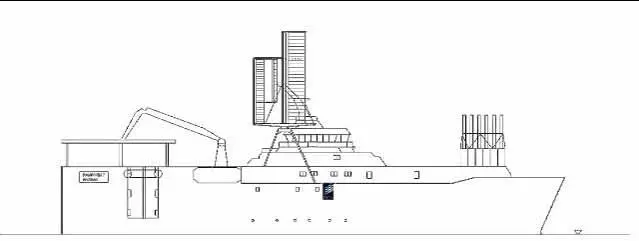
British company Shadotec plc is working closely with Wilhelmsen Marine Consultants (WMC) and Petroleum Geo-Services AS (PGS) (both companies based in Oslo, Norway) on a joint research project investigating the potential of Shadotec wingsail propulsion for commercial ships, using the energy of the free clean ocean winds. The consortium, backed by substantial funding from the Norwegian National Research Council, has commissioned CFD norway, based in Trondheim, Norway, to estimate the potential savings in fuel consumption (and pollution from exhaust gas emissions) achievable by employing Shadotec wingsail thrust units to assist in the propulsion of ocean going vessels. The Norwegian Marine Technology Research (Marintek), based in Trondheim, Norway, will contribute to evaluate manoeuvrability and sea keeping. The initial project aim has been to investigate the feasibility and potential of fitting two fully automatic computer controlled Shadotec wingsail thrust units on a very high technology Ramform seismic exploration vessel owned by PGS, 102 metres long, fitted with the massive 30,000 bhp engine power needed to pull many kilometres of hydrophonic streamers. The first initial investigation by CFD norway has now been completed, and CFD norway’s analysis estimates that a PGS vessel fitted with two Shadotec wingsails, towing a typical array of hydrophonic cable assemblies at its standard speed of 5 knots, in a typical North sea wind, could save more than 5% of its fuel consumption, while reducing pollution emissions by the same amount. These savings could amount to hundreds of thousands of dollars per ship over the course of a year, while the recent agreement by the members of the International Maritime Organisation to progressively reduce the sulphur content of Heavy Fuel Oil over the next few years can only increase bunkers costs even further. When the cables are wound in and the ship relocates to its next field of exploration CFD norway have confirmed that the fuel and pollution savings might be up to double the savings projected when towing at 5 knots. Shadotec plc is a British company based in Kent, UK. Its Chairman, John Walker, was the designer of the computer controlled wingsail fitted to the 6,500 dwt dry cargo vessel mv Ashington which, while almost exactly the same length as the Ramform, needed only around 2,000 bhp to steam, fully loaded, at her 12 knot service speed. Captain Roger Francis, onetime master of the Ashington, is Marine Consultant to Shadotec plc. His reports confi rmed that Ashington’s fuel savings averaged around 8%, and under favourable circumstances up to 15%-20% had been logged. John Walker says:- “This is a most exciting project. Shadotec now has significantly more advanced technology, and two of these great new generation wingsails fitted to a conventional ship like the Ashington could probably reduce her bunkers bill (and pollution emissions) by perhaps 30%-40%. Initial tests on our new technology suggest that we can offer up to 25% more thrust per unit area than before, with significantly less air drag. This means that more of our thrust will go to pushing the ship. Also, after the very successful circumnavigation of the globe by Zefyr “Angel B”, we are confident that the small craft and leisure market, which we believe has about the same commercial potential as the ship market, will now take off.” PGS is a technology focused oil field service company principally involved in providing geophysical services worldwide. It has committed a substantial cash contribution into the present research project. The project was initiated and is headed by Wilhelmsen Marine Consultants (WMC), which is the newbuilding department of the Norwegian maritime industrial group Wilh. Wilhelmsen (WW). “We see this project as a promising and important part of the WW group’s long term strategy for energy and emission reductions,” says Per A. Brinchmann, managing director of WMC. “Utilizing the wind is a natural step toward cleaner shipping. Together with our competent partners we are now developing viable solutions for the future.” Tim Mak, senior CFD specialist, says:- “We at CFD norway are excited to offer our expertise in aerodynamics, computational fl uid dynamics and ship design to help develop viable ways of saving fuel and reducing harmful emissions. We believe there is great potential for harvesting the natural power of the wind in the quest to make shipping cleaner, given the increasingly worrying evidence of climate change.”
Windsail: energy saving solution?
Norwegian research team confirm substantial fuel and pollution reduction potential for ocean going ships fitted with Shadotec plc British wingsails