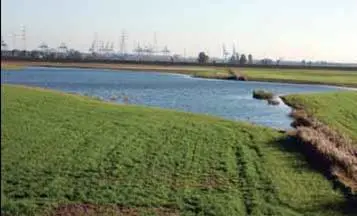
As the Chief Advisor of Environmental Policy of the Port of Antwerp, Toon Tessier explains that the port is in a good position to develop its activities in a sustainable way – as it has enough land, which was historically reserved for future port expansion, to find a balance between “green” and industrial areas. “The land for future port development will be divided in three parts,” he explains, “of which one will be used for building new terminals, while the other two will be used for nature development projects and for farming areas. The areas for realising the nature development scheme will take the biggest share.” While the Port is now recognised as leading the way when it comes to “green port” development, its expertise has been built up over many years of experience, learnt through the construction of the first Deurganck container dock. This massive project raised enormous controversy regarding environmental issues – especially with regard to the loss of various types of habitats for bird species, for which compensation measures were required under the terms of the EU’s Birds & Habitat Directive. Subsequently, the Flemish Parliament approved a compensation plan. All the projects in this plan have now been carried out, except for construction of an inlet-and-outlet structure that will connect the already excavated Creek with the River Scheldt and which will be integrated in the larger nature development scheme still under consideration. Meanwhile, the Port Authority is working on developing and maintaining the nature compensation areas, in close collaboration with the Management Committee that has been erected by the Flemish Region and in which all stakeholders from the Left Bank area of the River Scheldt are participating. “Our aim is to create a sustainable port development strategy,” continues Tessier, “and that means also, that besides creating large nature development areas surrounding the port area, we also want to establish a network of ecological infrastructure within the port area. During the next few years we will develop and extend our environmental policy of the port to other issues, with a view to finding a realistic balance with the stakeholders in the surrounding port area.” One example of this policy can be seen in the De Kuifeend and De Grote Kreek wildlife area, situated in the Antwerpen- Noord shunting-yard in the middle of the port of Antwerp. The area is on the East-Atlantic flyway linking breeding grounds in the north and overwintering areas in the south for hundreds of thousands of birds of all kinds. To limit the noise and disturbance from the surrounding industry, landscape dykes were constructed around both areas, using earth excavated on the site. Several large water-retaining pounds were also created. Another project which, says Tessier, is a ‘win-win’ situation for both the Port Authority and the port stakeholders, is the fish spawning ground. Because of the vicinity of the River Scheldt, different species of fish are found in large numbers of Antwerp’s docks. So they created a fish spawning area connected to the docks on the right bank in the port. “This is the first such a fish spawning area within the port’s individual green infrastructure,” Tessier reports. “Both the local environmental organisations, which we were consulting regarding this project and the port authority, are happy.” If this project proves to be successful, the Port is planning to develop more such fish spawning areas in the port.” “We have succeeded in finding a balance in searching for ways to compensate for the loss of nature caused by the construction of the Deurganck dock,” Tessier concludes. “Now the port is ready for further development. Some of existing nature areas, like Verrebroekse Plassen, which were originally created as temporary compensation giving the Port a possibility to complete the development of the Verrebroek dock in the future, will be relocated. Now we are leading active discussions with local nature protection agencies to find the best way to do so. It is always better to introduce the stakeholders to the port plans and find the room and possibility to discuss these issues.”