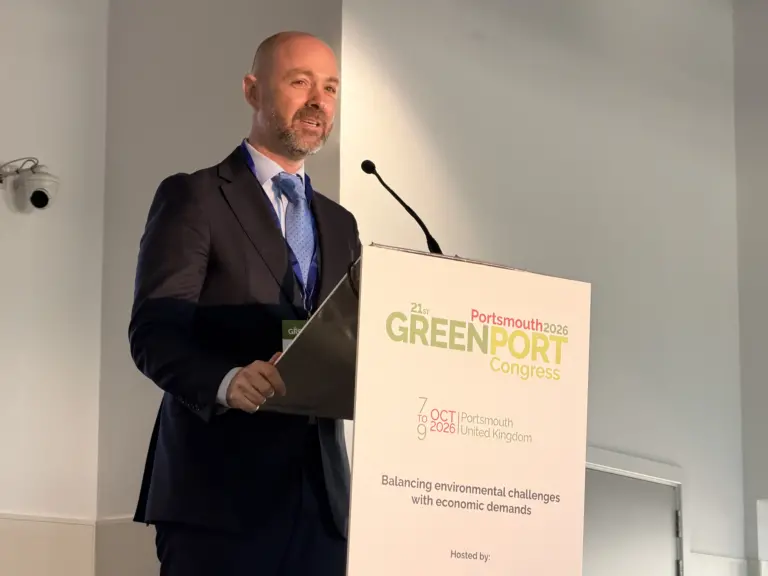
Speaking exclusively to Port Strategy at TOC Europe, Stephan Piworus said having a department or person dedicated to this task is important, while statistics help provide a clearer idea of what to focus on and what can be achieved.
He said: “The first thing is to have some reliable figures, numbers, that’s always the start. In some terminals they didn’t even know about the energy consumption when first looking at energy saving. You have maybe a gut feeling which is completely wrong and then you see what the costs and drivers are and realise it’s a bit different.”
Huge developments
“I see huge developments compared to 10-12 years ago,” said Mr Piworus, stating that a lot of terminals realise it is beneficial to do something to protect the environment because it also saves costs. However, there is always more that can be done, he added.
Attracting more talent into the industry will help with technology development and greening ports but there is a lot of competition with other industries and “quite often you have negative views.”
People may have a perception that shipping is not doing very well and job security isn’t good, he said. “So, it’s about having a more positive message. It’s not only about the salaries.”
Maritime is still an attractive industry with good technology development said Mr Piworus, but the main problem is that it is still old fashioned. “I think we have a lot of homework here to do,” he stressed.