Today, planning and acting sustainably is an integral part in most of the ports’corporate strategies. Some ports started earlier, some later, but by signing the World Port Climate Declaration (WPCD) in 2008, 55 ports from all over the world have taken over an important role in combating climate change and improving air quality.
LNG focus
Bremenports has been focusing on the use of liquefied natural gas (LNG) as a marine fuel because it gives significantly lower emissions. The World Ports Climate Initiative (WPCI) working group “LNG Fuelled Vessels” had developed guidelines on safe procedures for LNG bunkering operations, providing ports around the world with implementation guidelines to pursue the technology. The most important outcome has been the creation and harmonisation of checklists to be used for the different types of LNG bunkering.
Since then LNG has become an applicable solution to comply with existing and future legal requirements for the shipping industry (IMO MARPOL Annex IV; ECA). Beyond that, it follows the principles laid down by most of ship owners and charterers own sustainable business strategies. Further, there is a growing demand of logistics companies which seek “green” supply chains to offer their customers.
The sustainability strategy of bremenports is no exception. It first developed its sustainability strategy called ‘greenports’ seven years ago, but this was not the starting point. More than a decade earlierduring the planning and creating of comprehensive ecological compensation measures for the container terminal expansion, an environmental project management was established in the organisational structure.
Issues relating to biodiversity, air and water pollution and climate change were elevated to be central aspects of public awareness. At bremenports a port related environmental management team was developed as a consequence. In 2011, the Ports of Bremen received ESPO-standard Port Environmental Review System (PERS) certification, the first in Germany to do so.
Since sustainability means economic, environmental and social awareness, the greenports strategy was enhanced to an integrated management approach. It became necessary to implement performance indicators to describe and monitor the development of the continuous improvement process. Using the standards of the Global Reporting Initiative, bremenports has been publishing sustainability reports annually since 2013..
LNG for dredging fleet renewal
The company bremenports (GmbH & Co. KG) manages, on behalf of the Free Hanseatic City of Bremen, the port infrastructure in the twin-ports Bremen and Bremerhaven. The range of responsibilities includes: development, planning, construction and maintaining of infrastructure and leasing port properties and quay facilities to terminal operators or logistic companies.
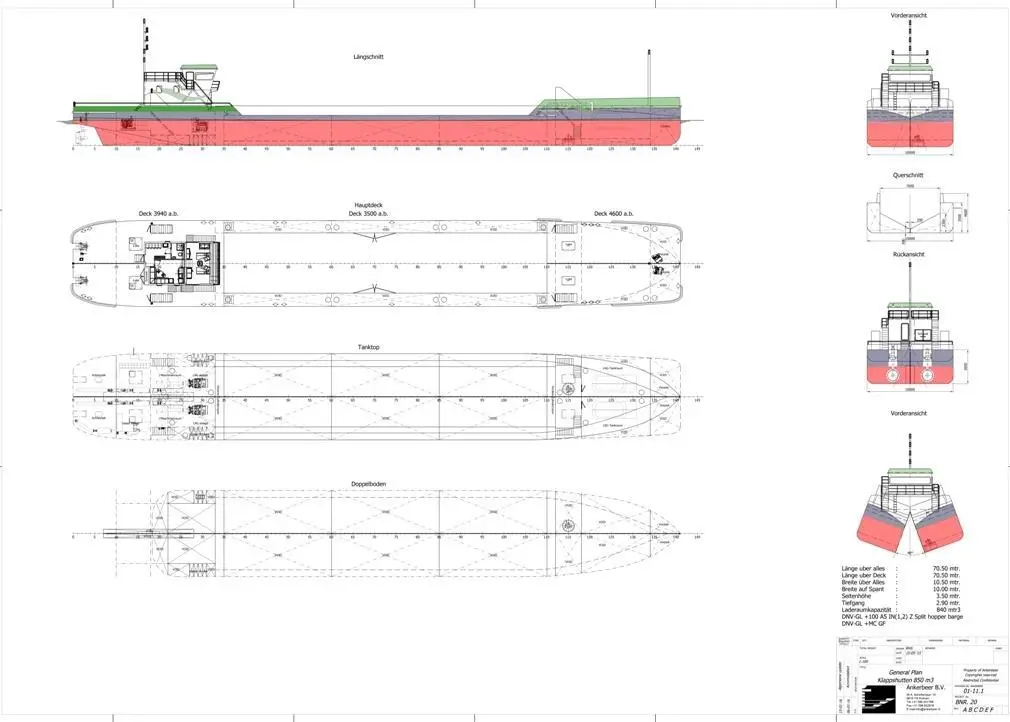
To provide and maintain necessary water depth, bremenports runs a fleet of dredging vessels, survey and service boats. The equipment used for dredging consists currently of a bucket-ladder-dredger for filling a total of six barges with a capacity of 840 cbm each and a barge unloading dredger to empty the barges and flush the dredging material in the dewatering fields of the dredging material landfill in Bremen-Seehausen.
This facility has to be used for contaminated sediments. The treated material can be further used for example, in dyke construction. Fortunately, the share of uncontaminated sediments which is allowed to relocate in the river Weser estuary, constantly increases.
The additional use of water injection gears since the mid-1990s has helped to reduce the volume of sediments needing to be removed in the Port of Bremen almost entirely and by one third in Bremerhaven in the tidal influenced entrances to the locks.
Within the on-going renewal programme of the dredging fleet, in 2012, it was evaluated which propulsion systems,or rather alternative fuels, would be worth considering.
All vessels are used in both ports – Bremerhaven and Bremen – in close vicinity of populated areas. Therefore, a reduction of sulphur and nitrogen oxides, as well as particulate matter, is urgently needed.
An LNG-driven system was found feasible for installation on a split hopper barge newbuild, due to its special design and operation mode.
At that time no technical or operational standards existed for LNG-fuelled inland waterway vessels. Thus a special permit had to be requested for each new building.
The admission authority in charge is the Germen Central Commission of Ship Inquiry (ZSUK). But in this case the ZSUK referred to the Central Commission for the Navigation of the Rhine (CCNR) of the European Commission, as the CCNR had already registered some LNG-fuelled inland waterway vessels before.
In regular meetings member states raised comments, claims and questions. Most of the questions and claims focused on the specific operation mode of the split barge as this type of vessel has to be opened throughout its entire length. Fuel tanks, gas supply units and engines, as well as the operational handling, had to be planned and constructed in consideration of the maximum opening angle of 20°.
Due to the angle occurring during the opening process necessary for discharging the sediments at the dumping area in Weser estuary, the maximum filling level of the storage tanks is reduced to 80%, otherwise the liquid would flood the filling sensors.
The innovative hybrid propulsion system consists of two pure gas (main) generators and one diesel (auxiliary) generator and a battery unit. TheLNG storage tank of 6,5 cbm are installed in the forward. gas generator and the diesel generator are located on the starboard side. The second gas generator and the battery unit are located in the port side engine room. The LNG will be regasified just behind the tanks and distributed as gas to the engines in the aft.
Each powertrain operates independently and supply the power for the two rudder propellers and pump jet. In case of any failure leading to a shutdown of one powertrain, the other ship’s side fully takes over the power supply.
As this has been a pilot project with an innovative and environmental friendly LNG propulsion system, it has been co-financed by the European Union’s TEN-T programme.
Paving the way for LNG
This individual application is part of the overarching objective of promoting and supporting LNG as alternative marine fuel. Since ports do not undertake the role of bunker fuel suppliers, bremenports reached out actively for fuel companies which were willing to invest in LNG supply infrastructure in both port locations.
Both projects at both locations have been granted EU-funding, but unfortunately due to muted prospects one was stopped by the investor. The lack of demand and shipowners holding off investing in LNG-driven newbuilds, was a viable reason for the ports of Bremerhaven/Bremen to realise the split hopper barge project.
Another reason is that the LNG supply chain,which had to be built up especially for the barge, can now be used with minimum effort by other customers.
Since the beginningof the project in 2012, bremenports, the Harbour Master’s Office, the Ministry for Economic Affairs, Labour and Ports and the Ministry for Environment, Construction and Transportation of Bremen, have been working in close cooperation to promote LNG and overcome a number of difficulties to make LNG available.
The LNG-ferries Ostfriesland and Helgoland were thefirst vessels to be bunkered by truck in Bremerhaven.
Now the split barge will be bunkered at the ports on a monthly basis.
Environmental stewardship
The project fits in well with the ports environmental strategy going forward.
They have committed themselves to reduce greenhouse gas emissions from ocean-going shipping, port operations and development, plus hinterland transport.
They are both signed up to the World Ports Climate Initiative (WPCI) and the Environmental Ship Index (ESI).
The ESI identifies seagoing ships that perform better in reducing air emissions than required by the current emission standards of the IMO. The ESI evaluates the amount of nitrogen oxide (NOX), sulphur oxide (SOX) that is released by a ship and includes a reporting scheme on the greenhouse gas emission of the ship. The objective is for ships with particularly low emission values to pay lower port dues than vessels which have a stronger impact on the environment.
Bremen and Bremerhaven ports were involved in the development of the index and have been granting discounts from 2012. Since January this year the incentive programme was extended with additional huge discounts for LNG and methanol driven vessels.