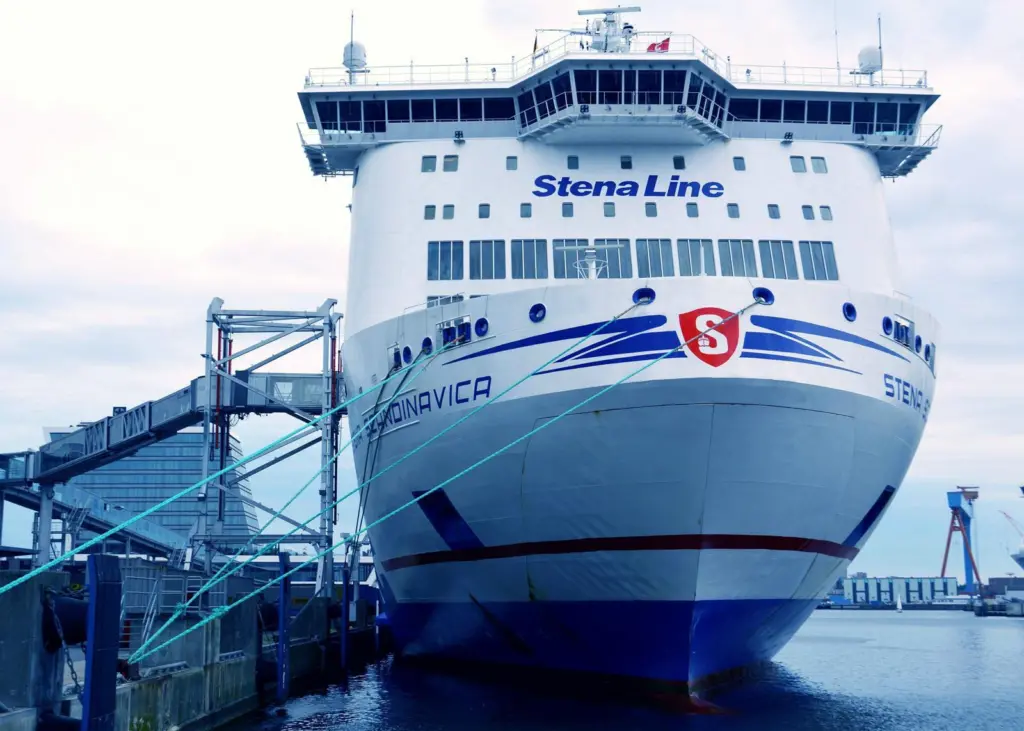
The facility at Kiel will reduce the CO2 emissions from the two vessels Stena Scandinavica and Stena Germanica by 2,700 tonnes per year.
“Shore power supply is important for us for two reasons: First, we want to have an immediate positive impact on the air quality in the ports we use,” said Niclas Mårtensson, CEO Stena Line and member of the Swedish Government Electrification Commission.
“Secondly, we expect an even higher share of electrification in ports in the future – at cars, trucks, port vehicles and not least ships.”
Kiel first
The inauguration of the new facility marks the official start of the on-shore power supply for Stena Line in Kiel.
The facility was co-funded by the state government of Schleswig-Holstein (8,9 m Euro) and the EU (1,26 m Euro).
In addition, Germany´s federal government recently agreed on a political package to decrease the user prices for on-shore electricity significantly.
In addition to Kiel, Stena Line has the possibility to connect to shore power supply at its two terminals in Göteborg, as well as in Karlskrona, Norvik, Trelleborg and Hoek van Holland.
This could potentially save the operator thus 13,000 tonnes of CO2 per year in its network. Of the 36 vessels in the Stena Line fleet, 14 are now equipped with High Voltage Shore Connection systems (HVSC).
In 2030 the operator expects to launch a 100 % battery powered and fossil free vessel.