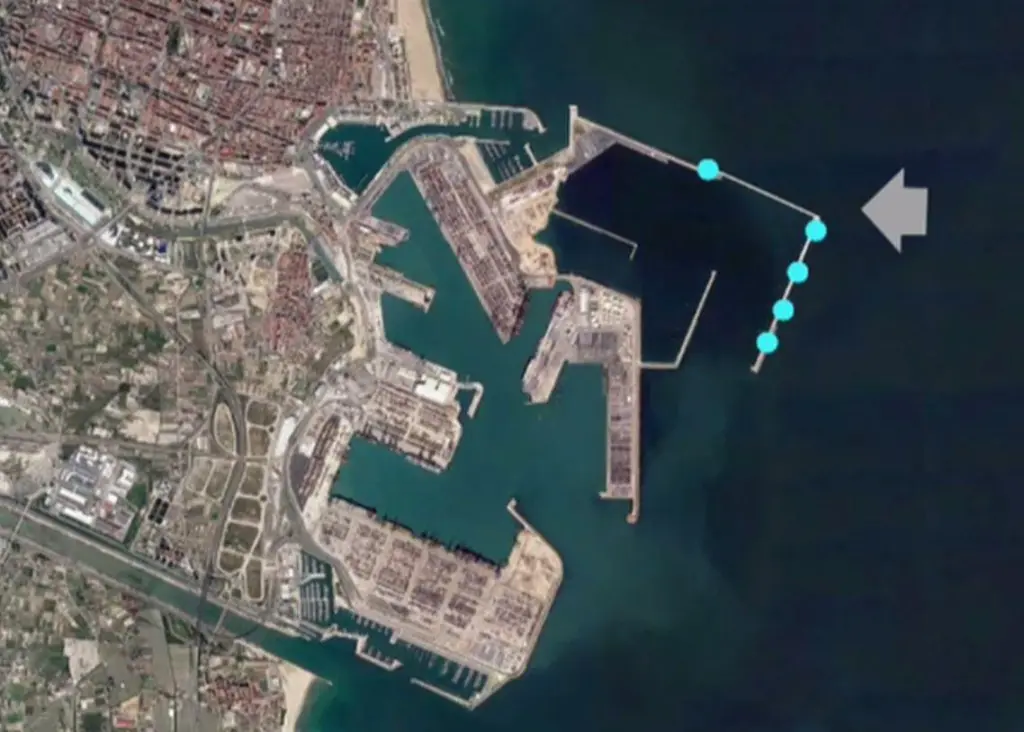
Spain’s Port Authority of Valencia (PAV) has issued a call for tenders to develop a wind turbine installation project that can generate electrical energy in the Port of Valencia.
“With the preparation of the preliminary project for the installation of wind turbines, with a base budget of 65,219 euros including VAT, the PAV is activating this initiative to provide the area of the northern extension of the Port of Valencia with wind turbines that will be integrated into the electricity self-supply network that the port is developing with clean energies,” said PAV.
The PAV already has information on the available wind resource from previous measurement campaigns carried out with a LIDAR device, in which the speed and direction of the wind at different heights was determined using light pulses with the aim of recording the data to analyse and evaluate the viability of installing wind turbines in the port.
2030 goal
With the objective of zero emissions by 2030, the PAV is focusing on decarbonisation and climate change. It has started projects for the installation of photovoltaic plants in the ports of Valencia and Gandia and the construction of the electrical substation in the Valencian precinct, which will allow the docked ships to connect to the electrical network.
It is also replacing the PAV vehicle fleet with hybrid and electric vehicles, and assessing energy efficiency with projects such as changing the lighting in the ports of València and Sagunto and increasing the efficiency of the ‘climate plant’ in the port of València.
The port authority is also making a major commitment to the construction and improvement of rail connections, with an investment of €240m in the coming years.
Collaborative projects
Collaborative projects include a cleaner fuels initiative with Baleària and the H2PORTS project through which three hydrogen pilots are being developed: a supply station in the Port of Valencia, a tractor unit for ro-ro operations and a reach stacker for container handling.
PAV is also part of the GREEN C Ports project, the aim of which is to reduce the environmental impact of port operations in cities and to control emissions in the main European ports.
Within the framework of this initiative, the PAV has installed new environmental control cabins that will analyse in real time the quality of the air, noise and meteorological conditions in the port facilities.