Colombo Port, according to the Sri Lanka Ports Authority, will see its current its 7.1m teu capacity double to 14.3m teu by 2023, rising to 35m teu by 2040.
The country’s two other ports, Hambatota and Trincomalee will focus on hydrocarbons and transhipment, respectively.
Triconmalee on Sri Lanka’s east coast is one of the largest natural harbours in the world and has 20 metre depth at the inner anchorage and thirty metres at the outer anchorage.
It’s home to 1.9bn people, 25% of the world’s population, who it will ultimately serve via transhipment. More immediately, it is active in bulk transhipment, especially locally produced phosphates.
Hambantota, on the island’s south coast, will see its first private sector investment with LAUGFS, an LPG import, storage and re-export firm, establishing a terminal.
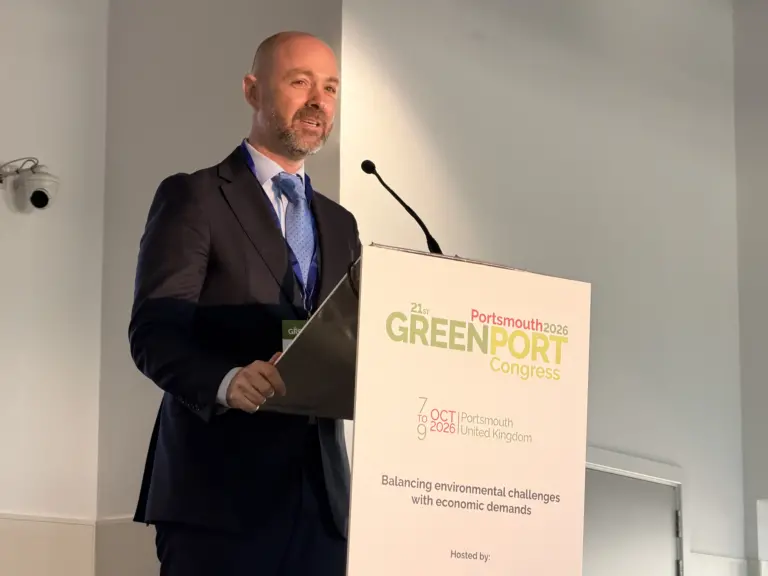
“Through this terminal we will be expecting $1.3bn in exporting energy,” chairman WKH Wegapitiya told the conference.
Other ports in South Asia are also developing with Bangladesh developing both Chittagong and Sonadia and with Pakistan’s Gwadar now taking cargoes.