Concluding an MoU has become ‘almost a fashion’ for port-to-port business cooperation, according to the International Association of Ports & Harbors.
IAPH under secretary Hiro Nagai says: “Our association’s vision is ‘the global ports’ forum for industry collaboration and excellence’, and we try to practise what we preach at our meetings and conferences.
“Traditionally there have been lots of sister port affiliations concluded between ports for a long-term exchange of people and information. They lack, however, more specific port business aspects. On a national level, there must be some framework or scheme for more tangible port cooperation – for example, the British Ports Association.”
Naturally, ports in a grouping such as the BPA can lobby politicians more effectively and provide industry-wide responses to proposed legislation, for example, but many ports take the cooperation concept much further.
“Panama Canal Authority (ACP) has concluded numerous MoUs with American ports on the Gulf of Mexico and on the East Coast, to boost maritime trade through the canal,” says Mr Nagai. The canal issue poses a threat to ports on the US West Coast, as transpacific cargoes are diverted through the canal, he points out.
“A similar problem has existed between the US and Canada in terms of transpacific cargo bound for North America being much diverted via Prince Rupert,” he adds. “US West Coast ports claim that Canadian ports are getting federal help and they are lobbying the US Congress to play a more active role in this matter; politics are involved here and there.”
Joined up
However, among ACP’s MoUs is one signed with Antwerp Port Authority, to facilitate international trade and generate new business ‘by promoting trade routes between the Port of Antwerp and the West Coast of South America, via the Panama Canal’. Such new business will help to boost economic growth by increasing job opportunities and revenues at Antwerp and increasing revenues at the canal, according to the MoU.
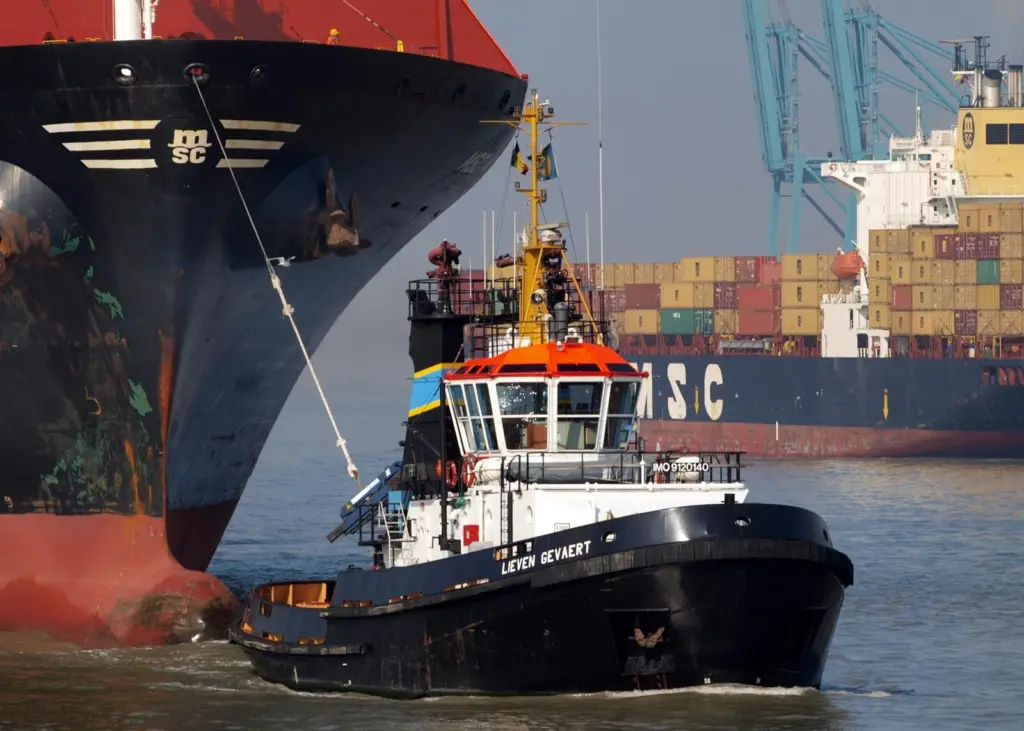
ACP and Antwerp agreed to exchange information on ship handling characteristics and the use of tugs, for example, and also to carry out cross-training for pilots and tug captains, including training on large vessels and ship simulation exercises. The agreement also includes the possibility of joint marketing activities and market studies, the sharing of data and technical knowhow, and coordination on modernisation and expansion projects.
In Germany, the nine ports represented by the Seaports of Niedersachsen have a much closer, day-to-day partnership. Until 2004, the ports of Brake, Cuxhaven, Emden, Leer, Nordenham, Oldenburg, Papenburg, Stade and Wilhelmshaven were each operating entirely separately, including doing their own marketing.
“They would all go to the federal government in Hanover asking for funding to help them visit fairs and exhibitions, etc.,” says Andreas Bullwinkel, managing director of Seaports of Niedersachsen. However, when the government asked for feedback, the results from many of these events were poor, he says.
“The government decided it would not continue to work in this way, and made it clear that money would be available, but it expected the ports to organise themselves and found an association, with a strong brand name.”
One umbrella
Seaports of Niedersachsen is a public/private partnership, described by Mr Bullwinkel as an ‘umbrella and brand’ for the nine ports.
At an exhibition, Seaports of Niedersachsen will collect information, contacts and requests and then feed these back to all nine ports. It will also organise exhibition entry and hotel reservations for port representatives wishing to join the stand – “they only have to appear and concentrate on their business”, he says. The organisation itself has a staff of just three, supplying information through to the ports via nine appointed ‘port managers’.
“We provide an easy focal point into this port group – via these port managers, we distribute rate requests, etc.,” says Mr Bullwinkel. “We are guaranteeing that the customer who approaches us will receive more than one reply – more than one choice. It is sometimes difficult for overseas customers or politicians to know who they should talk to with a certain question; they can refer to us and we can recommend who they talk to.”
The flow works in both directions, with the port managers passing back information on operational activities and demands, and how the Seaports organisation can assist marketing wise.
Commercially, the ports remain independent. And the system should reassure potential customers that they will get an extremely competitive service, says Mr Bullwinkel. “The client knows we are representing the group. Each port knows the inquiry is going to others – and they calculate with a very sharp pen the rates they are giving to him, knowing others are doing the same. He will have more than one offer, and can then work out his decision on price, location, etc.”
Mixed bag
The nine ports are, says Mr Bullwinkel, a ‘colourful bunch’ – five state-owned, three municipally owned and one privately owned.
Naturally there were issues of trust in the early days. “The ports were quite curious about each other and partly aggressive; then they realised that the other person from the other port also knows his business and is experienced and – most shocking news – is nice too!”
Today, the ports frequently work in partnership, helping each other with equipment and information and even doing business together. When Papenburg was unable to handle a regular shipment of bricks for four weeks while a new lock was being constructed, it turned to colleagues in Emden.
“It was a case of ‘can I trust you, will you return the business to us afterwards if we use your terminal for four weeks’ – and they agreed. Emden had four weeks’ extra business and then it returned to Papenburg. It was a brilliant example of how the partnership works.”
The ports are now confident that they don’t have to be at an exhibition, as long as Seaports of Niedersachsen is there. “We gather information and we are waving our flags. We are also saving some money and developing other cooperations – for example, we work very closely with Bremen Ports, attending international fairs in Russia, South America and China under a German Ports brand. Hamburg and Brunsbüttel also joined us at some fairs. That was only possible due to the fact that the nine ports of Lower Saxony have one brand name – it would be impossible for Bremen or Hamburg to talk to all nine.”
The organisation gives the nine ports one strong voice when speaking to both federal and national government and lobbies in three key areas – media, politics and economy.
“We are representing 50m tonnes of cargo and 18,000 people employed in these ports. The individual figures would be really small and nobody would really listen to them – but as a group, they are listening to us.”