In a post-global financial crisis world which made many port investors sober about adding new terminal capacity, the challenge now for international operators is to identify where to invest for the future.
One operator told Port Strategy that while the global economy has recovered somewhat and excess terminal capacity reduced, there remain certain locations where over-supply is prevalent. Conversely, there are locations which need investment immediately so that sufficient terminal capacity is in place to handle predicted world growth.
It is a question of positioning in the right place now to reap future benefits. So who is doing what among the major players?
DP World’s main current investment and development plans reflect the company’s strategy of investing in markets where it sees growth potential.
“With an average concession life of around 40 years, we invest for the long-term. Around three quarters of our business is from the developing world and a similar proportion is cargo destined for, or originating from, the markets we serve – so as they grow, we grow,” says Simon Hall, regional manager corporate communications for DP World, Europe and Russia.
Global focus
DP World is adding significant capacity to the UAE’s Jebel Ali Port over the coming two years, building a new terminal in Brazil and expanding capacity in China. At the same time it is pushing ahead with London Gateway in the UK and with Rotterdam World Gateway on the new Maasvlakte 2 development in The Netherlands.
These provide DP World with the flexibility to increase capacity to around 103m teu by 2020, in line with market demand.
APM Terminals too is investing in new facilities to handle the largest containerships currently on order, and beyond. One example is the APM Terminals 4.5m teu annual capacity facility under construction at Rotterdam’s Maasvlakte II, scheduled to open in 2014.
The $1bn terminal planned for the recently-won terminal concession in Moin, Costa Rica, focuses on the growing importance of Latin America and the arrival of post-panamax vessels to the Atlantic via the widened Panama Canal locks in 2014.
Hutchison Port Holdings also has a mix of strategic investments ranging from new development areas to a strengthening of existing facilities.
HPH has an agreement for the development and operation of the container terminal at Ajman Port in the United Arab Emirates for a concession period of ten years. Ajman is 25 kilometres from Dubai and 10 kilometres from Sharjah, making it a strategic port to capture cargo coming from and destined for South East Asia, South America and Australasia.
Also in the “new development” category is Berth 11, the Port of Brisbane’s newest container terminal, which is scheduled to be operational in the fourth quarter of this year with berth 12 to follow in 2014.
Expanding growth
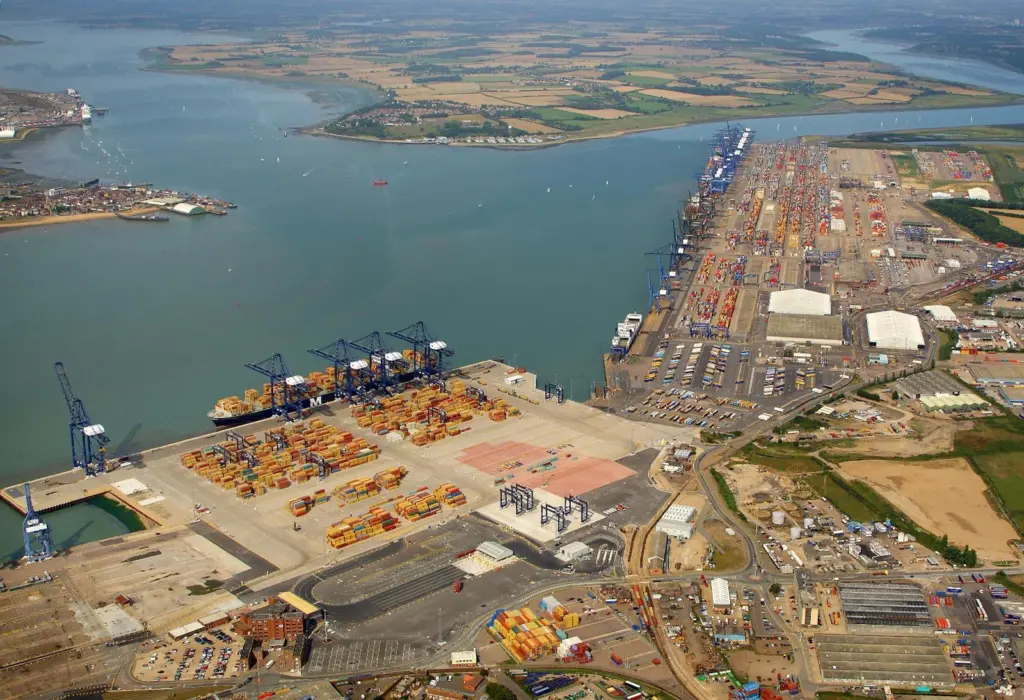
On the other side of the ledger is HPH’s commitment to expansion of its largest established operations. A good example is the opening of new deepwater terminals at Felixstowe.
Late last year, the port unveiled new berths 8 and 9, the first stage of a £1bn-plus inward investment programme in Hutchison’s UK ports. David Gledhill, chief executive of HPUK commented: “As container ships get larger it is crucial ports like Felixstowe stay ahead of the game and ensure the UK is ready for the introduction of the next generation of container ships. Failure to provide facilities for the new container ships would mean the world’s most efficient ships could not dock in the UK.”
Manila-based International Container Terminal Services is also active in the market. For 2012, it has budgeted $550m as capital expenditure, $345m of which is for greenfield projects in Argentina, Mexico and Colombia. The balance is for civil works, systems improvement and purchase of major cargo-handling equipment in Manila, Croatia, Brazil and Ecuador.
ICTSI sees proven international experience in terminal operation and development as being a key factor for most governments whose ports are up for privatisation.
Technology trend
In terms of terminal development trends, ICTSI says information technology development is critical — “The speed of information is as fast as the required speed in facilitating trade,” says a spokesperson.
This is particularly evident in the global trend towards automating some parts of the terminal operation. According to one source there are three reasons for this: “Cost of labour is going up around the world making the investment in automation worthwhile. Automation lessens the need to deal with labour unions (assuming the unions allow the automation in the first place), a big plus.
“Automation technology is also now more mature and reliable, although still a hefty investment upfront. I don’t think many terminal operators will retrofit their existing terminals with automation but they will seriously look at automation for their new investments, especially those of a certain scale,” says the source.
DP World is one operator that shares the focus on efficiencies. Says Mr Hall: “We believe that focus on efficiency of the supply chain is also driving new terminal development, with innovation and customer-centric solutions for the maritime and logistics supply chains becoming key areas of development. This is where the use of state-of-the-art technology becomes central to this process as it enables the smooth integration of flows of material and information along the process chain, while innovative IT systems, complete with identification and local functionalities, drive operations.”
Learning curve
And what if any lessons can be learned by the smaller terminal groups, from the development plans of the main international terminal operators?
ICTSI says resources should be allocated and continuously re-invested to improve and upgrade organisation and manpower, information technology, support structures and cargo-handling equipment to ensure world-class operating standards in terminal operations.
Adds DP World’s Mr Hall: “Terminal operators, big or small, need to focus on their customers’ changing needs, and in fact, pre-empt them, and invest and operate accordingly.
“In today’s swiftly-changing market conditions, terminal operators and the supply chain in general, they need to plan and invest for the long term to achieve sustainable growth despite cyclical changing economic and market conditions.”