China’s voracity for iron ore seems insatiable given the size of its 79m tonne stockpile. By the end of the first half of this year China had imported 27% more iron ore than during the same period last year. Import statistics for May 2009 alone show a whopping 37% rise on the same month the previous year, with imports totalling 53.4m tonnes – a record level despite earlier volatility in the capesize dry bulk market.
Indeed, according to the shipbrokers contacted by Port Strategy, China’s wanton desire for more ore, despite a slowdown in domestic demand and a decrease in shipments from Brazil, has helped lift capesize day rates which had dropped by about $190,000 in the space of twelve months. In January this year, $10,000 was the going rate but, at the time of writing capesize freight rates had improved and were hovering around the $80,000 mark.
Yet these more favourable shipping conditions are impacting on port congestion in the region, particularly those ports in China’s Northern provinces, where small- to medium-sized steel mills are abundant. At the start of July, some 90 iron ore carriers, 84 of which were capesize, accounting for almost 10% of the global capesize fleet, were congesting port entrances there, waiting for suitable discharge berths. On average, vessels are waiting eleven days for a berth, though, depending on the port, it could be anywhere between ten and twenty-three days.
Globally, 18% of the capesize fleet is at anchor, congesting channels and entrances to key ports and harbours, but waiting times differ from region to region. In Brazil, whose iron ore exports have fallen by 19% on the same period in 2008, waiting time is down to an average of three days. At its peak, in May 2008, twelve days were not uncommon. Congestion at Australian iron ore ports, traditionally the main exporter of iron ore to China, is also a problem – mainly due to inclement weather – and waiting time there can be as much as five days.
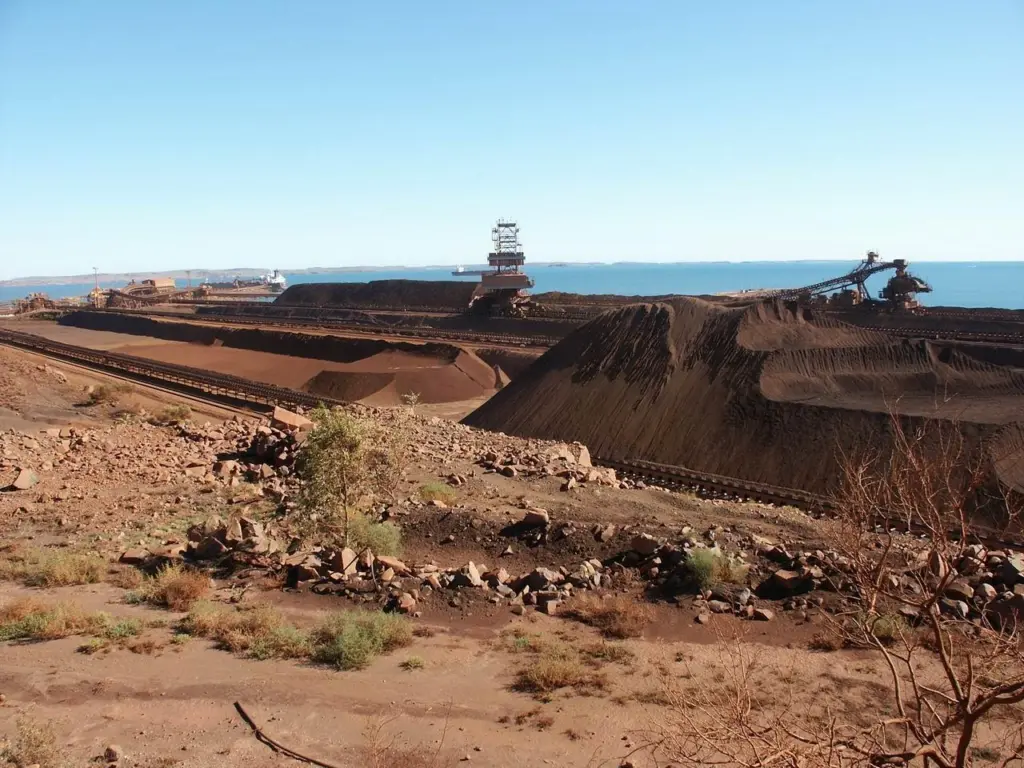
Indeed, easing congestion is one of the reasons behind the proposed expansion of the Pilbara iron ore ports in Northwest Australia. It is thought that if the region’s iron ore exports grow as predicted, they could exceed the capacities of existing ports at Dampier, Port Hedland and Cape Lambert within a decade. Export volumes as high as 890m tonnes are forecast by 2025, while 595m tonnes might be exported over the next 10 years. If predictions are correct then the state would need a major new iron ore port within six years.
A port with capacity to handle more than 300m tonnes – about three times Port Hedland’s capabilities – has been proposed but getting the project of the ground is proving complicated since it has become entangled in planning department red tape and much to-ing and fro-ing over who should pay for it.
Local sources report that the Western Australia government is “very unlikely” to contribute capital to the A$4bn (US$3.2bn) project Aquila and Fortescue Metals Group are considering jointly developing at Anketell Point.
There are also plans to develop and expand iron ore ports in Brazil, Montevideo and Visakhapatnam, India. The latter development centres on a Rs1.9bn ($39.9m) investment by the Visakhapatnam Port Trust to upgrade its iron ore handling facility to accommodate vessels of 200,000dwt. This will mean dredging the outer harbour by 1.6m to 18.1m. The port expects to handle volumes in excess of 25m tonnes in the next five years.
Infrastructure development is of course one way to reduce port congestion; but, assuming market forces and recession fail to provide a more organic solution, it is not the only way: a less costly method may be for the authorities of congested ports to simply implement the innovative DUKC technology.
Systems have already been installed in 19 ports around the world; eleven of them are in Australia, including Pilbara from where ships transport 80% of Australia’s coal and iron ore exports.
DUKC, or Dynamic Under Keel Clearance technology, pioneered by Australia’s OMC International almost sixteen years ago, uses wave, tide, current and vessel dynamics data to calculate in real time the safest and most efficient transit of large ships in and out of ports and through shallow, depth-restricted waterways. It can predict how deep and how fast ships can go through the water without the risk of running aground.
The technology, which can be integrated into a port’s Vessel Traffic Management Information System, is claimed to have directly resulted in the optimisation of sailing windows and, consequently, reduced the congestion at the port.
According to the manufacturer, the adoption by BHP Billiton at the Port of Hedland in 1996 increased the port’s export capacity by about 15m tonnes of iron ore per annum.
Roger Richardson, BHP Billiton’s shipping superintendent at Port Hedland, corroborates the claim.
“In effect, we can model the dynamic movements of the vessels [approaching the port] and can more closely align standard under keel clearance data with the conditions of the day plus the movement of the vessels. This has had the effect of gaining up to 70cm in good conditions (90% of the time) and providing a greater margin of safety during periods of high swell. On vessels that are restricted by tide, we can load an additional 8,000 tonnes on average per vessel. The savings that flow from the DUKC system can be measured by either the amount loaded per vessel based on actual draught gain or more importantly by the opportunities from the increased in sailing windows the increased draught allows for.
“We have found that the system allows the port to sail up to four vessels per tide (two tides per day) where the static system would have allowed for just two, maximum. In net gain to the port I would estimate the DUKC concept is worth about 10m tonnes per annum over the historical static system,” confirms Mr Richardson.
To estimate a split he expects the additional draught would account for 30% and the balance from increased sailing windows and opportunities that flow from this.
Today, congestion at the Port of Hedland is more a product of secondary unplanned incidents rather than bad planning. “We have four berths at the port and to service these efficiently we require between 8-10 vessels at anchorage at any given time to ensure we have vessels at berth at all times. Our congestion only extends to less than acceptable level after events such as typhoons and cyclones or major mechanical failures. The number of vessels at anchor for the majority of the year has run within our expectation and goals” he says, adding: “It s not a tool to control a queue but a system that increases the capacity of a port significantly and cheaply. I would argue it probably adds 10% to the capacity of our port.”
The adoption of the DUKC system would seem to also negate the need for ports to demand vessels to increase the pace of de-ballasting operations, as some ports have been wont to do. In 2007, it was reported that Port Waratah Coal Services at Australia’s Newcastle port had told bulk operators to speed up their de-ballasting times so that its Kooragang coal loaders could operate at a speed closer to their full 10,500 tonnes/hour capacity. Some iron ore terminals in Brazil have also requested that capesizes follow a nominal loading rate of 16,000 tonnes/hour.