Weighed down by traditional and often hefty in-house port engineering departments, the industry was slow to pick up on the trend of outsourcing materials handling operations.
But interest has increased to such an extent over the past five years that Barloworld’s general manager for the South East UK, Steve Barlow, says he is now spending 95% of his time working in the ports industry. Many ports, it seems, are considering making the jump.
“Ports are all faced with the same problem, ” he says. “They have an ageing fleet. The business profiles they are now working with and the cargoes coming in are completely different to that which they had when they bought their equipment 15 years ago – and in three years’ time, it will be completely different to what it is today. They need a contract which gives them flexibility so that they can change their equipment to match their business.”
This was the path taken by Port of Tilbury when it started to hand over the problem to Barloworld about three years ago. At first the outsourcing agreement only covered the port’s conventional division, but since then it has been extended to include the Finnish Terminal and then the Enterprise Terminal, opened last year to handle Stora Enso’s paper imports.
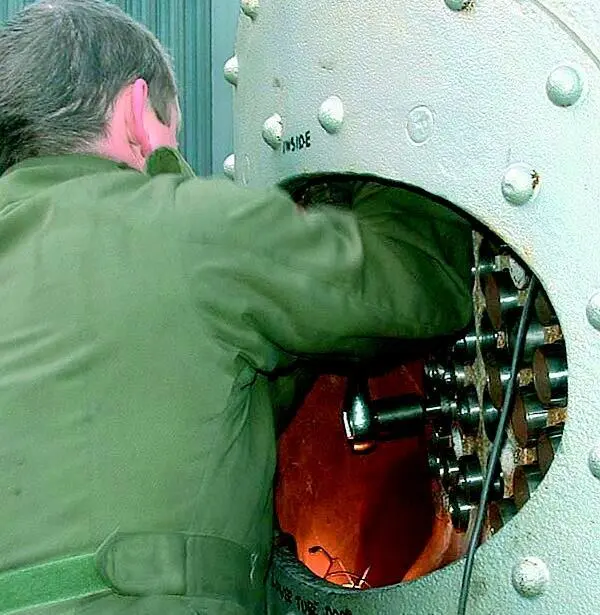
Barloworld is now responsible for the supply and maintenance of a fleet of about 200 pieces of equipment at the port, from container handlers and ro-ro tractors to forklift trucks. It has three workshops and 15 engineers working full-time within the port.
“There have been many benefits to us from this way of working, ” says Port of Tilbury managing director Perry Glading.
“First, there was much better identification of the equipment we needed – this was evaluated by Barloworld, who went carefully through our business profile. Second, by close monitoring, we have better transparency of the utilisation of the equipment and therefore how this can be improved. Third, maintenance and downtime has clearly improved. Fourth, we have flexibility, which is essential as our business profile changes. The last thing you want is to carry fixed costs as you go forward, because the business changes all the time.”
Health and safety was also an issue. “Before this deal, our equipment was old. It was breaking down. The workforce saw it as a risk and didn’t like it.
“By outsourcing we know we are keeping the fleet up to date, modern and well maintained; any health and safety concerns that may have been raised in the past have certainly been eradicated. There is improved productivity, too.”
Port engineering activities have a habit of growing into the land available, says Glading, and Tilbury’s in-house operations had ended up occupying “quite an expansive land area.
“So we said, OK, there is a requirement for Barloworld to have workshop facilities in the port. But after that, we were able to release valuable land for further port developments.”
“When Barloworld arrived at Tilbury, it was clear that both the age profile and the specifications of the equipment needed changing in order to get maximum efficiency out of the equipment, ” says Steve Barlow. “We were able to reduce the fleet in the conventional business from 180 to 130 pieces. We also agreed an age profile for each type of equipment.”
Not only are engineers thin on the ground these days but relentless advances in technology can also present difficulties for ports.
“We employ 750 engineers and do an awful lot of training, ” says Barlow. “Equipment is much more technical than it used to be. Keeping engineers up to date with technology is of paramount importance to the business – and that is not the core activity of a port.”
Meanwhile, each year Barloworld learns more about Tilbury’s business and the whole operation becomes more and more seamless, he says.
“We know every ship that goes into the port and all the equipment it needs to be discharged. Therefore we can predict what equipment they need in any particular scenario – and we are getting pretty sophisticated at predicting future needs.”