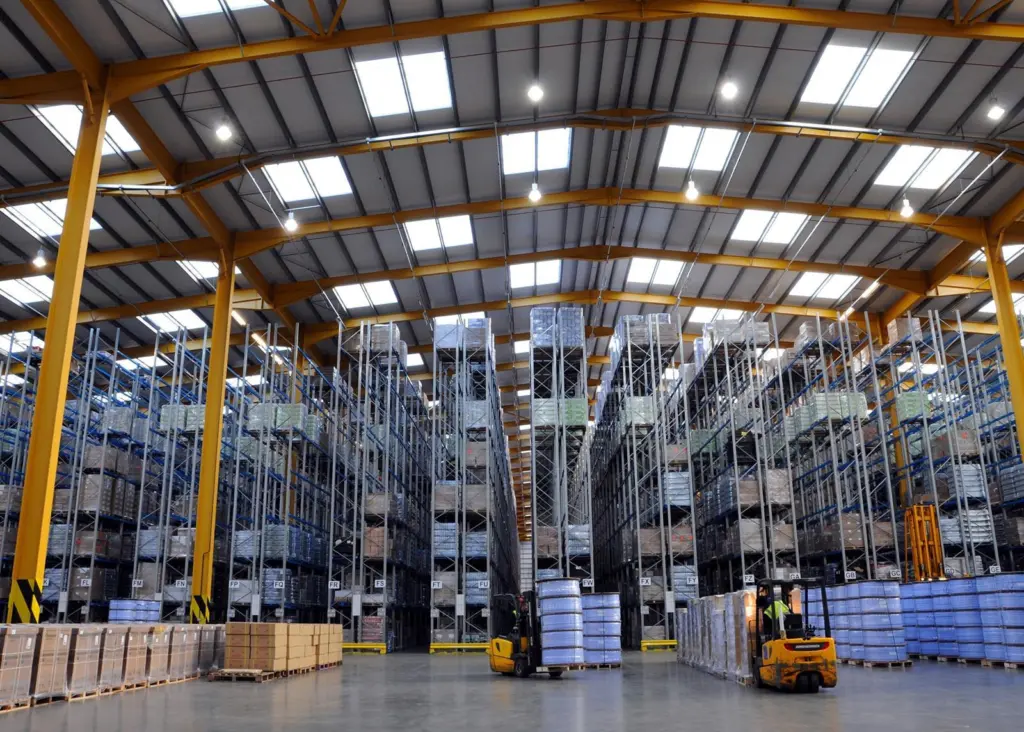
We’ve moved on from the debate about who really did coin the ‘portcentric’ word and these days it’s an unusual port that doesn’t aspire to attract portcentric, or one-stop-shop, business.
In many ways, portcentric simply represents ports going back to what they did pre-containerisation – unloading, unpacking and storing cargo at the port, ready for onward despatch to where it’s needed. As Stephen Taylor, director of PortCentric Logistics Partners, points out, in traditional cargoes the portcentric approach has always been there.
He also emphasises that portcentric solutions can fit with the business models of small and medium sized ports just as well as they can with the larger ports – and that this is far from being a UK-centric or Europe-centric idea.
“The concept of portcentric is about having distribution centres at the port or near the port rather than trucking [containers] into the middle of the state or country and distributing out, often doubling mileage,” says Stephen Taylor, director of PortCentric Logistics Partners. “The business case is the same in a lot of countries.”
He believes that the business case for portcentric logistics is stronger today than it was even 12 months ago, particularly because of the increasing price of oil and consequently higher cost of road haulage.
“Any steps that can be taken to reduce the number of miles by road in a supply chain that starts in Asia and finishes, say, in Norwich, will reduce cost in the supply chain and bring down the eventual cost to the consumer,” he says.
Many ports and logistics experts believe that the UK is set for a major switch to portcentric logistics, as many of the original 25- or 30-year leases for distribution centre facilities in the ‘golden triangle’ of Lutterworth, Daventry and Milton Keynes come up for renewal. “Some of the leases for major facilities that importers are locked into are ending in the next two years – leaving them free to start looking at alternative locations,” says Mr Taylor. “There is a view that could lead to a clear shift of activity to port-based facilities.”
He believes that DP World’s London Gateway will be well placed to accommodate some of this activity, thanks to the 9m sq ft warehousing and logistics park being developed alongside the container port.
“If you look at investments at the moment, London Gateway is clearly an outstanding case study of applying portcentric logistics thinking to container port development and I believe it will create a new dynamic in the south-east,” he says. “It isn’t going to be ‘click your fingers and overnight there will be a full logistics park’, but it will happen over time.”
Some significant shifts in logistics patterns are expected in the US when the expanded Panama Canal opens. Mr Taylor has already worked with Port Manatee in Tampa Bay, one of Florida’s largest ports and the closest deepwater port to the Panama Canal. Port Manatee is surrounded by nearly 5,000 acres of land available for development.
“Because of the Panama Canal expansion, the port is creating new container terminal facilities; as part of its business case for developing the port, it believes portcentric logistics can be a magnet for investment,” he says. “Manatee is serving a local, but huge, market; there are about 12m people living within 150 miles of the port.”
Are US shippers/importers interested in portcentric as a way of reducing the carbon footprint, improving efficiency, eliminating empty road miles, and so on? “Absolutely,” says Dan Flaherty, vice president/general manager, port logistics, at Schneider Logistics.
Schneider has a ‘transload calculator’ [http://www.schneider.com/logistics/PortLogistics/TransloadingCalculator/index.htm] which demonstrates average savings, including carbon savings and environmental impacts, based on transloading at the port versus moving freight intact farther inland.
“For example, an importer moving 10,000 containers by truck annually from the Los Angeles ports to Denver would, on average, save almost 10,000 tonnes of CO2 by transloading the freight in Southern California instead of moving it to Denver. There is also typically a significant transportation cost savings for the importer as well,” says Mr Flaherty.
The portcentric approach has caused a significant shift in ports’ own marketing strategies and in who they want to talk to. “Traditionally, ports looked out to sea and regarded their customers as ships coming in,” says Stephen Taylor. “Now there is a shift in thinking; they are looking at the land side and the market they are serving, and finding new business. Ports need to look at the local market and see what opportunities there are for helping to take costs out of the supply chain by reducing miles.”
If shipping lines were once the chicken, and the freight they carried was the egg, the situation now is often the other way round.
In the UK, Nissan’s plant at Sunderland and its close working relationship with the Port of Tyne, and the Tesco and Asda import centres at Teesport, are excellent examples. “There is a real opportunity for middle-ranking ports; if shippers build a facility at or near a port, the port can attract feeder services,” says Mr Taylor. “Both the Tees and Tyne have grown their container volumes through the recession, because of the magnetic attraction to shippers.
“Overall, I think the business case for portcentric logistics continues to get stronger because shipping lines themselves have slow steaming and have had to reduce fuel costs.”
This year, the Tyne has bagged another new customer, with the Co-op Clothing Company deciding to ship all its imports for the UK market exclusively through the port. Other portcentric users include Argos, JML and Tetley.
Availability of land and speed of response to a shipper’s interest are key. Teesport had the advantage in moving ahead quickly, thanks to a huge land bank within the port estate, which did not require regular planning consent.
Mr Taylor believes that recent government announcements on a simplification of the UK’s planning processes will help move portcentric logistics forward.
“This has been a headache for a lot of developers in terms of getting planning permission through,” he says. “If they are looking to build a new warehouse, they don’t want to wait three years for the planning process to go through; they want to make the decision and create the facilities quickly.”
Geoff Lippitt, business development director for PD Ports, says: “We do feel that we are years ahead of much of the competition. You have to have not just land availability but the secret of our success has been the frequency and range of vessel calls we have. It is a symbiotic process; you can’t have one without the other.”
PD says it now has more than 3.5m sq ft of warehousing on the port estate or close to the port, occupied by shippers using Teesport for import or export activity. “We see our business not as a node at the end but as a hub – or many hubs,” says Mr Lippitt. “We focus on our long-term relationships with our customers. It is the cargo owners who are key to deciding where cargo goes; the shipping lines are important and I am not discounting their relevance as customers but it has to be a lot more collaborative these days, so we try to work with shipping lines to solve supply chain problems for their customers, or the other way round.”
PD’s portcentric customers are largely retail-based, but that is set to change as the port works towards a target of two or three smaller new customers a year, and one new larger customer [taking 500,000 sq ft upwards] every two years. It will be looking at different sectors, including automotive, technology and manufacturing.
What PD has witnessed is a change in the model for larger customers, says Mr Lippitt. “People want something more scaleable and agile, so we have had to look at different markets. What people won’t go for is massive fixed costs upfront; they are looking for supply chain partners to share the risk.”
For example, Clipper Logistics’ 1m sq ft warehouse at nearby Wynyard is due to open in September. Asda has signed a ten-year deal with Clipper to handle its George clothing at the Wynyard site – replacing existing DC facilities at Darlington and Leeds. However, Clipper is also looking to attract other retailers to the centre on a shared-user basis, requiring no major capital investment.
PD also has about 400,000 sq ft of shared user warehousing on Tees Dock, used by much smaller importers, and the aim is to double that over the next three to five years, says Mr Lippitt.
Alongside this, the port is working on ideas for ‘reverse logistics’ in order to generate more export volumes of products for recycling or reprocessing: “We are looking at a portcentric facility where we could semi-process paper and plastics so they are ready to go for manufacturing and recycling at the other end,” he says.