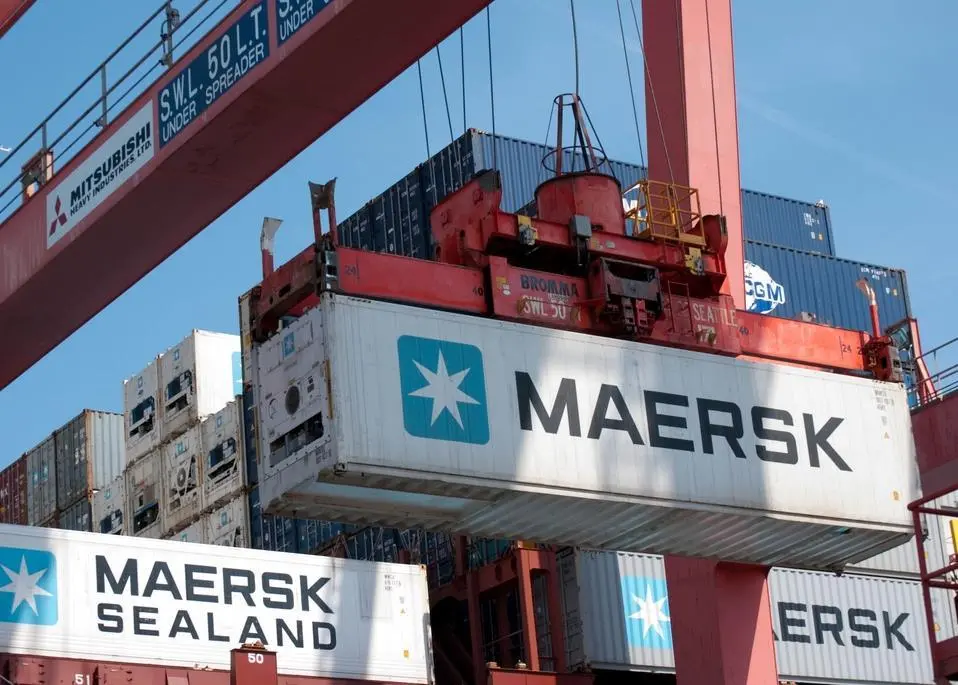
Assuming final confirmation from the International Maritime Organization’s Maritime Safety Committee in November this year, a new amendment to the Safety of Life at Sea (SOLAS) Convention is due to enter into force in July 2016. Half a century after containerisation first emerged in the world of shipping, regulations will – at last – require the weight of containers to be verified.
This landmark decision has prompted a flurry of reaction from various industry bodies.
Among them, the European Sea Ports Organisation (ESPO) welcomed the committee’s decision ‘by which it is the shipper’s responsibility to submit the verified gross weight of containers before loading on to the ship and stressed that the weighing of containers should not burden port handling activities.
“The verification of the containers’ weight can indeed play an important role in enhancing safety in maritime transport and the whole transport chain,” it said. “Ports confirm that misdeclarations of container weight occur and entail safety risks.”
However, said ESPO, it was hoped that the individual states’ implementation of the amendment further clarifies the shippers’ responsibility “and avoids that in the end this responsibility is transferred to ports and terminal operators”. The weighing should take place before entering the port area and preferably by the shippers at the place of origin, said ESPO.
Meanwhile, the European Shippers’ Council is urging states to allow container weights to be calculated, rather than requiring containers to be physically weighed; but the International Transport Workers’ Federation wants to make it a legal requirement that containers are actually weighed.
ESPO secretary general Isabelle Ryckbost has called for “the most practical solution for all players in the transport chain”, adding: “We should at all times avoid that this weighing operation burdens the handling activities in the port and increases congestion in the port. This could happen if misdeclared container weights are only being detected at a late stage, in the port or port terminal area.”
Weighing or calculating?

As with so much maritime regulation, interpretation of the amendment will vary between different states, says Peregrine Storrs-Fox, risk management director at the TT Club.
“Enforcement agencies in the different jurisdictions may well take quite diverse approaches and that is one of the issues,” he says. “Most of the enforcement agencies have been scaled back considerably these days and are typically looking in directions other than the weight of containers – for example, drug smuggling and human trafficking are clearly going to be much higher up the agenda. So to a large extent, this is going to be industry policing rather than regulatory policing.”
Whether the straightforward weighing or the calculation method is used, the verified weight has to be communicated to the shipping line and terminal through the shipping document “sufficiently in advance to be used in the preparation of the ship’s stowage plan”, says Mr Storrs-Fox. He believes that many countries will veer towards the calculation method, for which they will need to set up a validating/auditing process, “so in a sense ports may not need to be worried”.
Having said that, ports will have joint responsibility with the master for refusing to load a container if the verified information is not available, so they do seem set to inherit a policing role, although the guidelines don’t set out any sanctions if they fail to take action.
In fact, Mr Storrs-Fox says: “I would very strongly recommend that ports look at ways to up their game and take actions that would help ensure things are correct. For a long time we have said ports are key nodal points where weight can be checked fairly easily.”
A lot of ports have got very worried about whether container weighing will slow down operations, “and of course, that is a possibility, depending on how they do that”, he says – for example, traditional weighbridge operation could well cause some problems. The TT Club has been championing the use of twistlock load sensing on yard equipment, which would also identify whether a container was eccentrically loaded, another massive safety issue.
“This technology offers medium to large-size container terminals the option to measure weight and communicate that information into the stowage plan,” says Mr Storrs-Fox. “The ability is there to do it, and pretty much seamlessly; a fairly accurate result can be delivered within ten seconds of the lift, so it will not disrupt yard operations, the information will be available, and it can be checked to ensure it is what has been declared as verified.”
Value add
He believes that ports could actually put themselves at a commercial advantage by providing a box-weighing service. “To my mind, there is a commercial edge to this; ports that embrace this opportunity from the regulatory and safety perspective may well be at an advantage if others don’t.
“We generally encourage our membership and the industry as well to look seriously at doing things that will cover both. But the reality is that a lot will say ‘we are not going to invest in this – at least initially, until we know where lines will go’.
“The end of P3 will have an effect on port rotations and volumes, so I suspect a number of terminals will be conservative and reluctant to invest unless and until they have the certainty around lines’ attitudes and some sort of recognition for installing additional technology. However, fast-forward a decade and I would be surprised if something like load-sensing technology isn’t very much the norm from a safety perspective.”
For its part, the International Transport Workers’ Federation (ITF) wants all containers to be physically weighed. “This is the best way to ensure safety and you can’t put a price on that,” says ITF president Paddy Crumlin.
“However, the SOLAS amendment now includes a second method of verification. If this [calculation] is used, there needs to be a way to ensure/monitor its implementation. We are still seeking clarification on how governments would do this, as the method seems complicated. Implementation is key. Independent spot checks are needed to monitor implementation. If implementation fails, then a mandatory option will need to be considered.”
As for the question of adding an extra burden for ports, Mr Crumlin says: “Many ports already have systems in place to identify overweight containers, such as weighbridges, and there are technologies out there which enable containers to be weighed quickly.
“We do not view container safety as a burden. We do view the misdeclaration of contents, including dangerous goods and weight, along with improper packing of containers, as an extra burden for terminal operators as well as posing significant risks to a large number of people involved in the transport chain and the wider public. Misdeclaration and improper packing are factors that threaten the smooth flow of cargo.”