Commenting on the Supercharged Free Ports: The ultimate boost for Britain’s economy report, Richard Ballantyne, BPA chief executive, said: “Establishing a free port alone could be quite a challenging exercise, but combining other stimulus in areas such as enterprise and planning would enable ports to grow and develop.
“Should these zones be taken forward, we would expect them to be voluntary and implemented in a similar way across the country in a [manner] that does not distort competition.”
Mr Ballantyne added that ports are economic areas that have been built up over many years, supporting jobs and businesses, and are often at the heart of their communities backing trade, offshore industries, fishing, leisure and tourism — and offering pivotal transport connections.
Mace’s idea of including enterprise stimulus in free ports is similar to the BPA’s “‘port zoning’ proposals”, which could feature planning, consenting and enterprise advantages for UK ports of all kinds and locations, the BPA said in a release.
The BPA also claimed that free ports do not offer a solution to possible customs and border requirement challenges, presented by the UK’s EU departure, for gateway ports, where freight simply moves through a dock, but could deliver benefits to ports where added value and industrial processes occur.
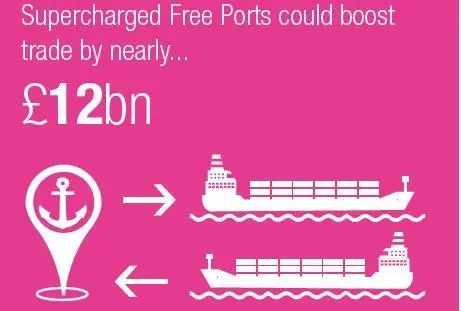
The report from international consultancy and construction firm Mace, which also called for the designation of seven Free Ports in northern England, argued that combining free ports with Enterprise Zones (designated areas in England that provide tax breaks and UK Government support) “would be a powerful force for economic growth and job creation”.
“We need to look for fresh and creative ideas for a post-Brexit economy that ensures that no region is left behind and businesses are allowed to effectively compete in the global race,” it said.