As the world’s economies flex and squeeze around each other like financial tectonic plates, there are bound to be winners and losers.
And so it is with the port industry in the Western Mediterranean, with fluctuations in the economic climate changing the face of shipping in the region.
Earlier this year, the rising cost of fuel played a part in sinking plans for a collaboration between the Port Authority in Marseilles and Italian company Grandi Navi Veloci (GNV), who had intended to work together to develop a terminal to handle large ships on western Mediterranean routes. An agreement was signed in April, but GNV invoked an escape clause.
There are no hard feelings, says the Port of Marseilles, acknowledging that the project came to nothing principally for financial reasons, but that nevertheless leaves the French scouting around for new customers on short sea, ro-ro, international ro-pax and traditional passenger ferry business.
It’s a different story in the French hinterland, where powers granted to the country’s ports three years ago are re-shaping the way freight is carried by rail. Control’s been switched from national railway company SNCF to the ports, which is seen as a golden opportunity to strengthen rail’s share of pre- and post-forwarding traffic, and to facilitate faster development of multimodal projects like those at Fos and Mourepiane.
What that means until January next year is that the Port of Marseilles manages more than 100km of track, which it’s been doing since spring this year, including setting tariffs, leaving the maintenance function with SNCF. From January there’s due to be a new agreement, with PMA managing a tendering process of interested parties – including SNCF.
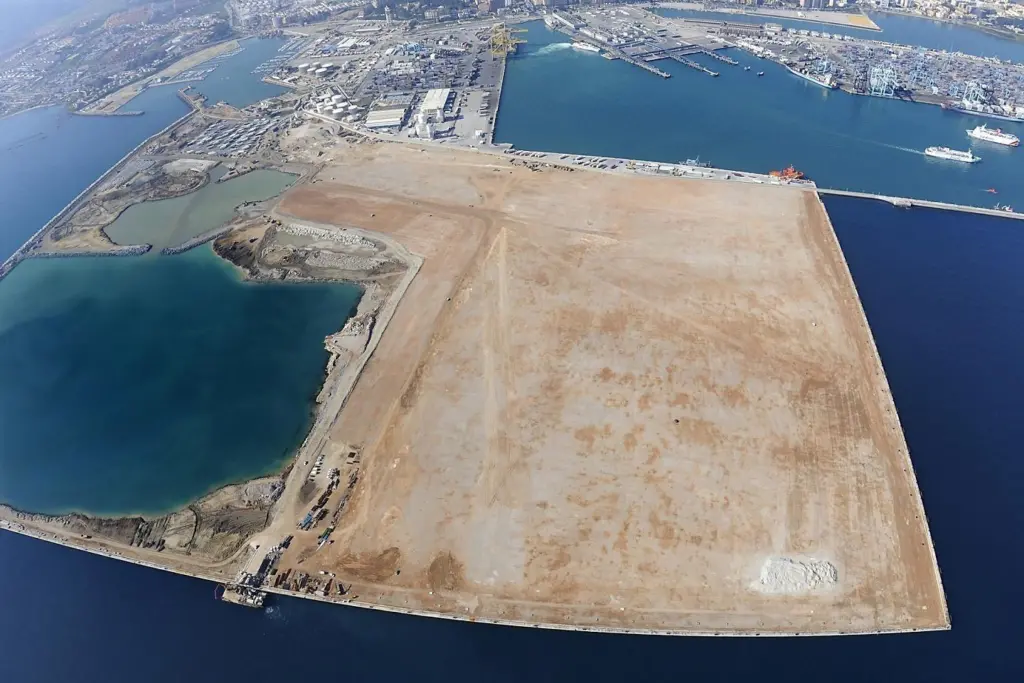
No such terminal problems in Algeciras, nestling just about as far west as it’s possible to get without leaving the Mediterranean altogether. It’s the yin to Marseilles’ yang, and is to be the home of a third container terminal, due to be ready for traffic in the summer of 2010.
Authorities there have reached agreement with South Korean Total Terminal International Algeciras (TTI) for the £44.5m ($81.5m) development, the first of its kind by an Asian shipping line in Spain. The facility will have more than 1,200 metres of quayside at a semi-automatic public terminal, with some cranes driven manually and others remotely, and will be able to accept vessels of up to 10,000 teu.
TTI has been created by Hanjin Shipping, whose chief executive Jeong Won Park says the terminal will allow his company to launch a trade offensive into Africa, but also sets it in a broader context. “It also allows us to secure an optimum hub port for making our presence felt in northern Europe, the US east coast and South America.”
In terms of service development they’ve put a toe in the water with the introduction of a new feeder service with a 1,000-teu vessel connecting Malta, Koper and Venice on a weekly basis.
Hanjin Shipping expects the launch of this service will help secure the rising demand in the Mediterranean, as well as extend the scope of its service in the nearby regions including Hungary, Slovakia, southern Germany and Austria.
The development could hardly have come at a better time for Algeciras, Spain’s largest container port, where throughput of almost 801,000 teu in this year’s first quarter was almost 2% down on the same period last year.
Forging ahead with the Algeciras project shows huge confidence from the Koreans, in an area previously dominated by one major player: AP Moller-Maersk. Recognising the eminently-suitable location for transhipment activity at the entrance to the Mediterranean, the Danes won’t be caught out, and are in partnership with local organisation Akwa Group, busy adding to their footprint in the area with the development of a terminal at Tangier.
Activity there is growing, with expectations that it will employ 700 by next year, and will have handled 1m teu in its first year, due to end in March next year.
With Algeciras working at virtual capacity until the new terminal comes on stream. APM Terminals expects its developments to shift the balance of commerce in the western Mediterranean by giving Morocco a growing role.