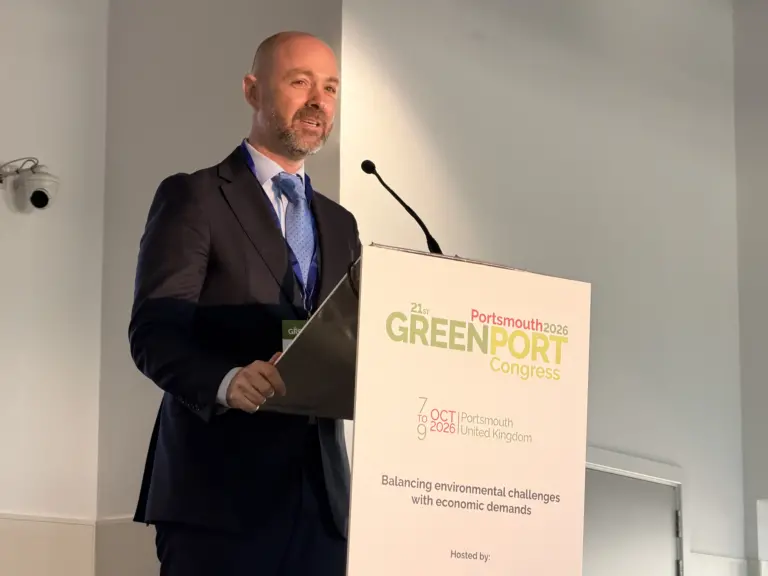

Mr Hambleton told PS that a picture of ‘simple, upward growth’ extrapolated from the past is not going to return easily, as port operations are going to continue to be impacted by market variations and increasingly influenced by factors such as route deviations, vessel capacities and a greater inter-liner consolidation. This means that so called ‘captive’ local markets will have a bigger part in keeping a terminal’s operations as stable as possible.
SCCT itself is discussing with the Ministry of Transport, the Egyptian National Railway and other stakeholders, taking advantage of the Egyptian market with the aim of running trains on an existing – although at present unused – rail line between Port Said and Cairo. The link has languished partly because of a significant subsidy on truck haulage that – so far – has helped to beat the rail out of the competition.
He added while regional volumes have been vulnerable to economic shifts, SCCT is steadily gaining market share: recently SCCT has won services of the UASC from its competition. Further, the terminal posted a very healthy 11% rise in throughput during the worst of the downturn when all around were counting losses.
The terminal, says Robert Hambleton, is looking to consolidate its gain on all three fronts – traditional transhipment, the local Egyptian market, and relay shipments.
Interestingly, he has reason to believe that relay shipments are gaining in popularity as lines grow closer together. He points out that the bigger ships will keep coming, and the downturn opened the doors to route consolidation, greater vessel sharing and closer cooperation between lines, giving a much more varied picture. One of SCCT’s recent route gains was from an eight vessel service (two from each line) made up of the United Arab Shipping Company, China Shipping , Hanjin and Hyundai – a mixed handful drawn from across different alliances.