
After decades of hesitancy over change and innovation, organisations across the container logistics supply chain are finally beginning to ramp up investments in digital solutions in order to provide reliable visibility, differentiate offerings, lower costs and grow revenues.
PwC authors Andrew Tipping and Peter Kauschke noted in a recent report: “The potential [for digitisation] is huge, but the industry has thus far been slow to seize it.” Indeed, only 28% of transportation and logistics companies responded they were operating at an “advanced level” of digitisation today according to a global survey conducted by PwC.
This is due to what Tipping and Kauschke consider the biggest challenge for the transportation industry: the lack of a “digital culture” and adequate training. As they note: “The next few years will be critical: companies that don’t start soon risk being left behind permanently.”
There is, however, valuable progress being made. As digital transformation evolves from being a “wish list” item to a tangible and strategic initiative for port authorities, terminal operators, shippers and vehicle carriers, the industry is seeing technology’s very real impact on the way that freight – and indeed, global commerce – is moved around the world.
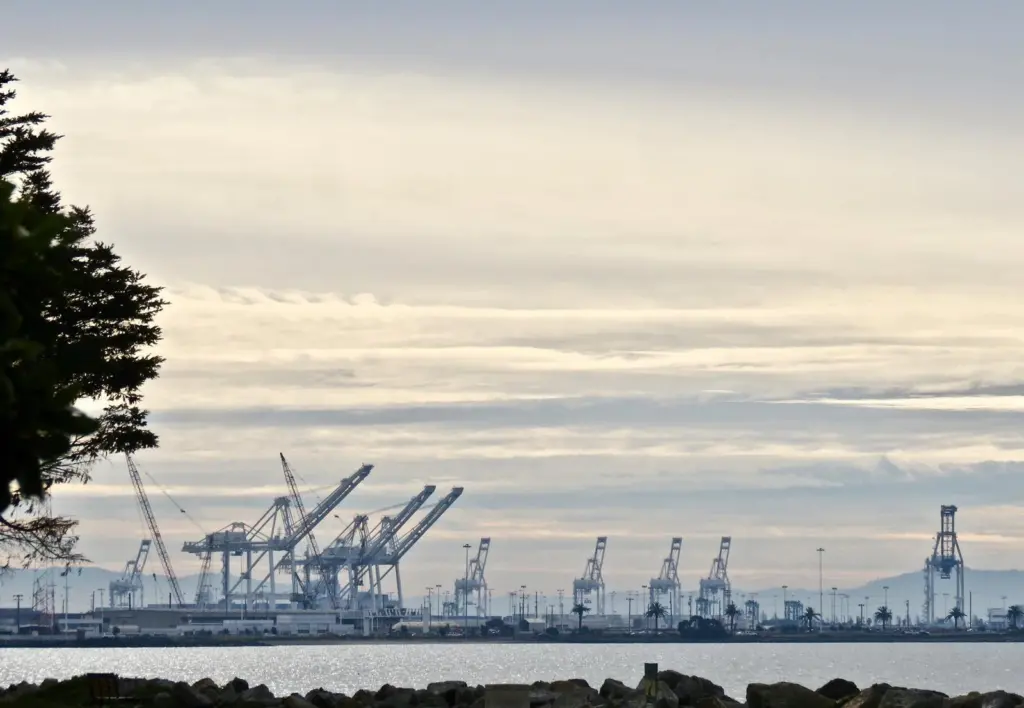
Take the Port of Oakland as one example of an innovator that is incorporating digitisation to boost efficiency, gain visibility and share information among its supply chain stakeholders.
In May, the port announced a digital shipping platform called The Oakland Portal designed as an online gateway that allows beneficial cargo owners, agents and freight hauliers a single window through which to gain insight on their cargo.
The Oakland Portal consolidates information from Oakland’s four active marine terminals including vessel schedules, up-to-date cargo status and live camera views of port and terminal thoroughfares. This enables supply chain operators to better manage trade flow by knowing with greater precision when to expect their cargo. Trucking companies can know exactly when and where to dispatch drivers for container pick-up and marine terminals can benefit from more efficient movement of cargo in and out of the port.
Investment in technology and infrastructure like its online portal is helping to boost Oakland’s global trade status. Oakland’s container port is the seventh-busiest in the US by cargo volume.
Improvement needed
The work in Oakland underscores many of the process improvements that those working in the global supply chain have been seeking for some time.
A global survey from the Business Performance Innovation (BPI) Network of more than 200 executives found that the biggest challenges facing the industry included poor co-ordination between partners (57%), too little transparency and visibility (50%) and inefficiencies with the supply chain (37%).
Respondents then noted the areas most in need of process improvement: carrier-to-terminal coordination and planning (35%), supply chain visibility and information sharing (35%), terminal operations (24%), cargo flow visibility and predictability (24%) and co-ordination across carrier and shipper alliances (24%).
Another promising area impacting the logistics and transportation industries is blockchain technology. Blockchain is a digital ledger in which multiple disparate parties involved in a contract or transaction can be authenticated automatically thereby providing opportunity to eliminate paper, waste and financial costs (typically levied by banks as one party pays another for a service). Many companies are beginning to experiment with blockchain in relation to global supply chains, which are often fraught with complexity, and comprised of a diverse network of stakeholders, each with its own set of objectives.
The logistics and transportation industries are at a pivotal point in their life cycles due to the impact of digitisation. After years of hibernation, it would seem the giant has been awakened! Over the next three to five years, this industry will continue to evolve and modernise; the digital culture that some see as currently lacking will begin to thrive and flourish. Industry stakeholders – from shippers, port and terminal operators, to vehicle carriers and truckers – all stand to benefit from this movement. Those who stand idly by may not only lose market share but also their place in this digital revolution which is already underway.
Parvez Mansuri has more than 20 years of IT management and system development experience and co-founded Advent Intermodal Solutions in 1995, where he has held a variety of management positions including chief information officer and chief executive.