
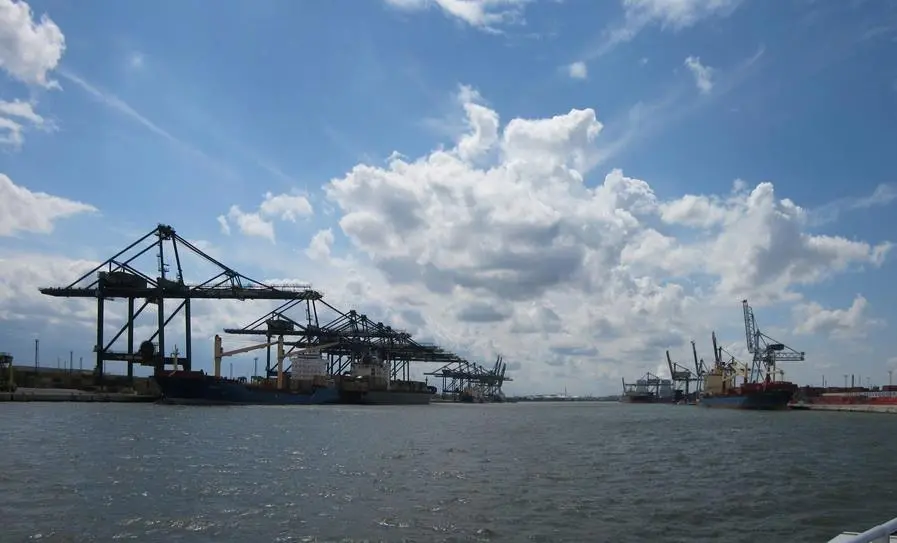
Criticism that ports have been slower to adopt security profiling systems and technology is to some extent unfair or misdirected, according to industry sources.
Cargo volumes are so much greater and port areas so much bigger that a different approach has to be taken. Even more important is the contrast in security emphasis. A US security analyst notes that “government and public ears prick up” at new security systems aimed at passenger traffic, while interest wanes when cargo security is mentioned.
The result has been that much more government and taxpayer money has been channelled into airports and aviation, while ports have had to drum up more private sector funding.
Furthermore, equipment development has hit some snags. Technology providers are said to have faced unofficial pressure in some countries to develop products separately for airports and ports, because government officials are nervous that the technology can easily be copied if adapted for too many uses. Some have found it more profitable to concentrate on aviation.
But ports have an advantage over aviation in the form of established police and security departments that are unmatched – born out of stowaway detection, anti-smuggling and counterfeit goods tracking. Anti-terrorism measures have leap-frogged from there.
Outside influence
Added to this is US pressure, sometimes direct and threatening, to conform to US standards and methods – C-TPAT being a prime example. Supply chains extending beyond ports have been made more secure and vehicle gate monitoring made more sophisticated and efficient.
To apply for C-TPAT a company must submit a security profile to Customs and Border Protection, which performs an extensive background check.
Almost 11,000 companies have been registered and must follow strict guidelines, especially container inspection. The reward is quicker passage to the US – CBP says cargo from these companies is likely to be inspected on arrival only one sixth of the time compared with non-registered companies.
Coupled with C-TPAT is the Container Security Initiative with individual countries, under which CBP officials work at foreign ports and check vulnerable cargo shipments. About 60 ports are involved in the scheme, through which more than three-quarters of US cargo passes.
Under the US Security and Accountability for Every Port Act shipments through the 22 main ports are earmarked for radiation screening.
Europe watch
Europe is governed by EU Regulation 725/2004 (the ISPS code), which makes some measures mandatory while leaving others up to the discretion of individual ports and countries. Coupled with this is EU Directive 2005/65 ordering each port to have a security plan for the entire port area.
Says the Port of Antwerp: “Spot checks of the port facilities and of the port security plan are carried out by the National Authority for Maritime Security, and regular audits of the port security plan and of a number of sites are carried out by the EU Commission (DG Move). Finally, Antwerp as an important European port for North America receives regular visits by the US Coast Guard.
The Port Authority plays an organising and facilitating role for all inspections by the supervisory authorities.
Many terminal operators are keen to extend security profiling. Peter Richards of Gulftainer sees profiling as becoming “very much” more important. “The terminal security initiatives are driven more by the port authority than ourselves, but nonetheless we have a responsibility in our terminal’s security. Profiling has always been key to identifying scanning efforts and any cargo from specific regions (eg Iran/Syria/Pakistan) is subject to mandatory scanning or physical inspection. Sharjah Port intends to increase scanning and this is reflected in their plans for the new entrance gate.”
But equipment costs are high. “The initial outlay is expensive,” says Gulftainer’s Peter Richards.”Installing a scanner costs up to $4m but after purchase costs are relatively stable for operating and routine maintenance. We are working with the port authority in researching the new passive systems that are the latest technology. Initial costs are similar to x-ray scanners but the safety benefits are substantial.”
Inspection time
Antwerp, for its part, pays close attention to the International Ship and Port facility Security (ISPS) code laid down by the IMO, which awards certification for five years at a time based on inspections. In 2011 alone there were 67 interim compliance inspections at the port.” In addition, spot checks of the port facilities and of the port security plan are carried out by the National Authority for Maritime Security, and regular audits of the port security plan and of a number of sites are carried out by the EU Commission (DG Move),” says the port.
But improvements can’t be made in silo: it is important that both origin and destination terminals are able to provide the facility to inspect, scan if required and confirm the commodities against the documentation, says Gulftainer. As scanners become more prevalent in origin ports, shipping lines will gain comfort that the manifested cargo is that being shipped.
A definite improvement in the worldwide security network has been better cooperation from government agencies, especially customs, which in turn have been able to secure state funding previously inaccessible to the private sector.
Central government rules have dictated the path that development and implementation of security systems takes. As a result, cruise terminals in most of Europe use the same procedures and equipment as airports, and security profiling is becoming more common. Container terminals differ in their approaches, preferring to concentrate on detailed monitoring of goods moving through the yard portals.
National pride
In Belgium, a national authority leads the way in maritime security, while each port has a local committee for security. The Harbour Master’s Office of the Antwerp Port Authority heads the local committee.
Keeping tabs on people in European and US ports is largely being undertaken in the form of individual, scannable personal identity cards, with the federal TWIC system in place throughout the US. A number of card systems operate in Europe, such as the Alfapass at Antwerp. “The terminals themselves decide whether to grant access rights to Alfapass holders,” says the port, “and also which access rights to grant.” About 36,000 have been issued.
In Australia the national Maritime Security Identification Card operates, with all holders undergoing a background check and allowing them to work unescorted or unmonitored in a maritime security zone, valid for up to four years. Individual ports issue their own cards on top of that.
In other regions, security is up to the individual port operators. Says Gulftainer: “For anyone to get a port pass, an application has to made via the security department. They will investigate anyone of a nationality they perceive to be of risk. However, for low risk categories, only a UAE Police Record check is done.”